
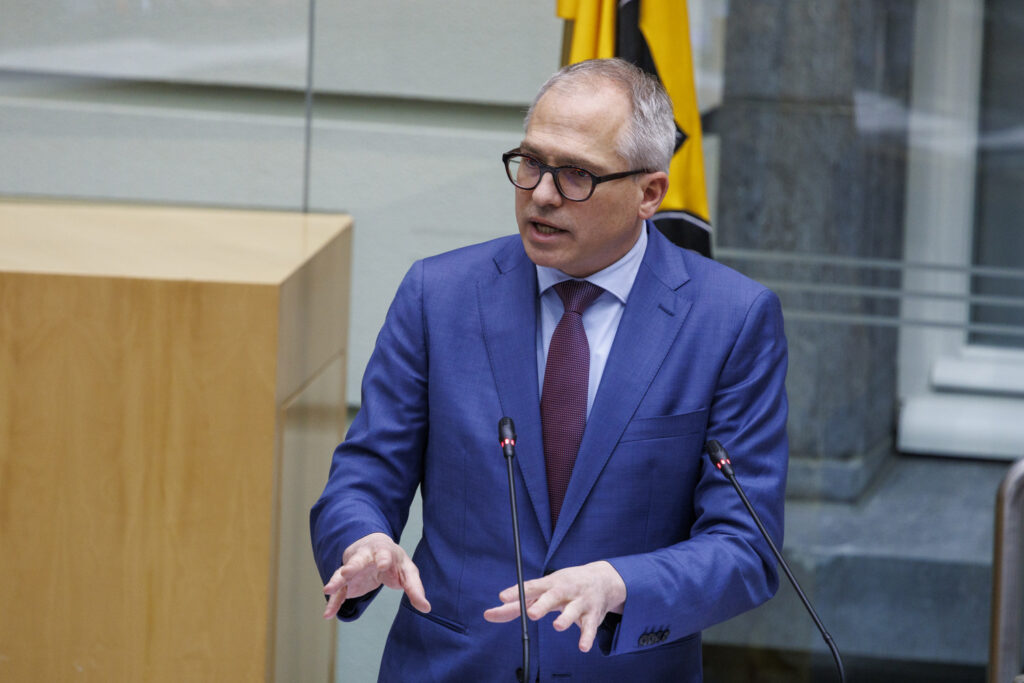
A more efficient European internal market could generate more than €8 billion in revenue for Flanders every year, according to Flemish Minister-President Matthias Diependaele (N-VA).
Estimates by the International Monetary Fund (IMF) show that the remaining obstacles in the EU's internal market are equivalent to 50% customs duties on goods and even 110% on services.
The service sector – which accounts for 75% of European GDP – remains hampered, for example, by complex national licensing requirements and certification procedures. European studies indicate that these barriers could eliminate up to 30% of potential economic gains.
For Flanders, where a growing number of companies are active in logistics, digital, and industrial services, this represents a structural obstacle.
No new structures, but fewer rules
The new trade deal between the European Union and the United States will take effect on 1 August. In a written question submitted to Diependaele, Flemish MP Inge Brocken (N-VA) argued that international cooperation is important, but that Flanders primarily needs a functioning internal market.
"A well-functioning European market generates billions for Flanders, without new taxes or treaties," she said. "No new slogans or structures, but fewer rules, clear agreements, and respect for Flemish interests."
Europe recently published its Single Market Strategy, a roadmap for strengthening the internal market. "As Flanders, we have used our influence at both the Belgian and European levels to influence policymaking," Diependaele said.
"We have done this by contributing to the Commission's consultation procedure, but also by putting forward our positions in the European Council working groups and in bilateral contacts with other Member States," he added.
