
Extensive archaeological findings from the Protohistoric period (2300-52 B.C.) and remnants of military campaigns from the modern era (17th-18th centuries) have been uncovered during development work at the Tournai Ouest 3 zone, initiated in 2018, announced the Walloon Heritage Agency (AWaP) on Wednesday.
The excavations assessed approximately 90% of the 105-hectare area.
Significant discoveries include a Bronze Age (2300-800 B.C.) burial site with circular enclosures and in-ground cremations, as well as numerous habitation zones featuring post-built structures, granaries, silos, multi-purpose pits, and boundary ditches, dating to the late Bronze Age and both Iron Ages (1200-52 B.C.).
By the end of 2024, AWaP conducted an archaeological assessment of the zoning’s final plots.
This assessment, covering nearly 10 hectares, uncovered relics from two major chronological phases: a Gaulish occupation from the late second Iron Age (around 200-50 B.C.) and sporadic military encampments from the modern era (17th-18th centuries).
Excavations conducted from April to early July revealed many habitation zones, bordered by ditches forming a series of interlocking enclosures, reflecting a dynamic of gradual creation and abandonment.
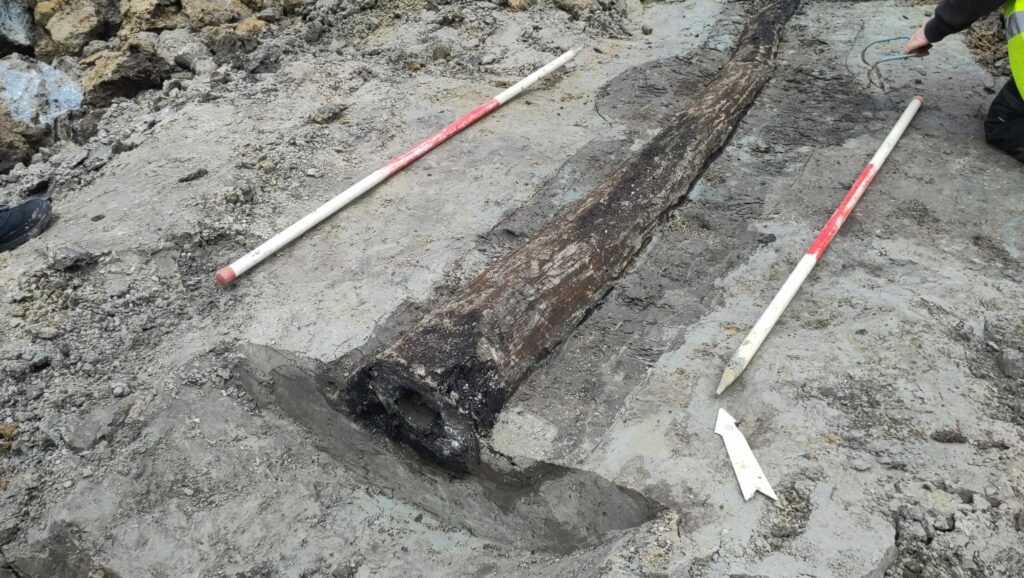
Within these enclosures, various buildings, storage structures, and pits were uncovered. Notably, a well over five metres deep was excavated, revealing ceramics, animal bones, slag, flint and stone tools, wood comb fragments, and several weapon fragments (sword or dagger). At the bottom of the well, the original wooden lining, showcasing Gaulish craftsmen’s expertise, was still preserved.
