
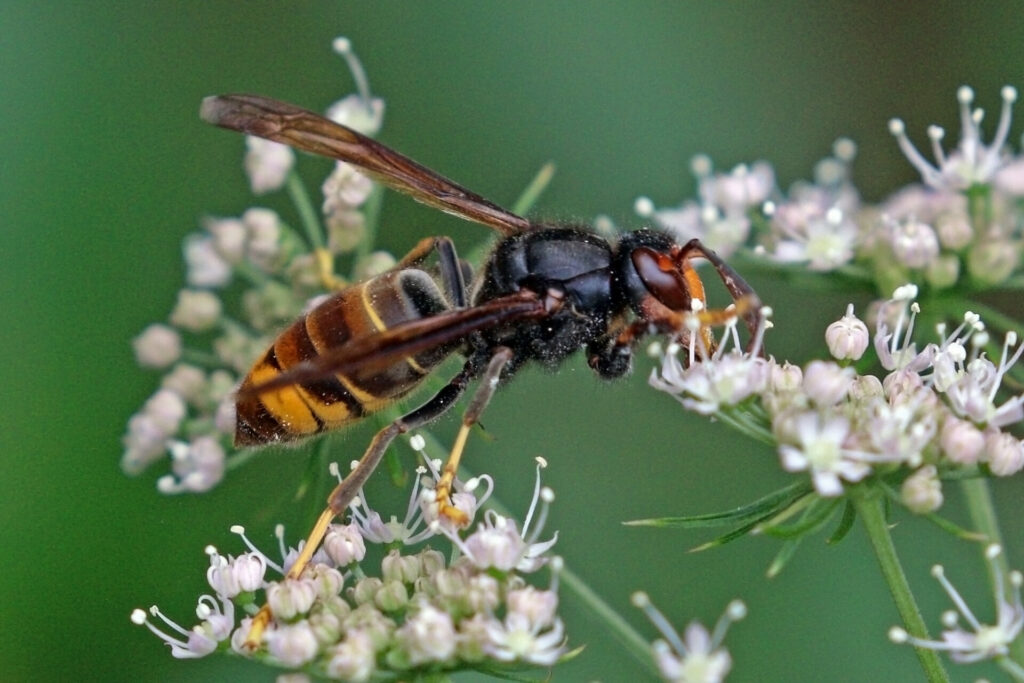
Asian hornets are increasingly making their way to Brussels lately. With over 100 nests reported in the Capital Region, professionals have noticed a definite rise compared to last year.
In recent weeks and months, Asian hornets have regularly made headlines in Belgium, and 112 Asian hornet nests have been reported in Brussels this year alone, according to figures from Brussels Environment.
"We are still in the middle of the season, so the figures are provisional. The Asian hornet usually stays around until the first frost," a spokesperson from the agency confirmed to The Brussels Times.
'Serious problem in Brussels'
The Asian hornet is an invasive species, which likely arrived in Belgium through a shipment coming by boat from Southeast Asia in 2004. Since then, the problem has only grown, according to exterminators.
Pest control service Bye Bye Wesp estimates a five-fold rise in the number of nests they removed compared to last year. "We have a serious problem in Brussels," Olivier Van Sintejan of Bye Bye Wesp told Bruzz.
Asian hornets are also a danger to public health: they are very protective of their nests, and are not afraid to attack if people come too close to them. "In the most dramatic cases, such a group attack can even be fatal."
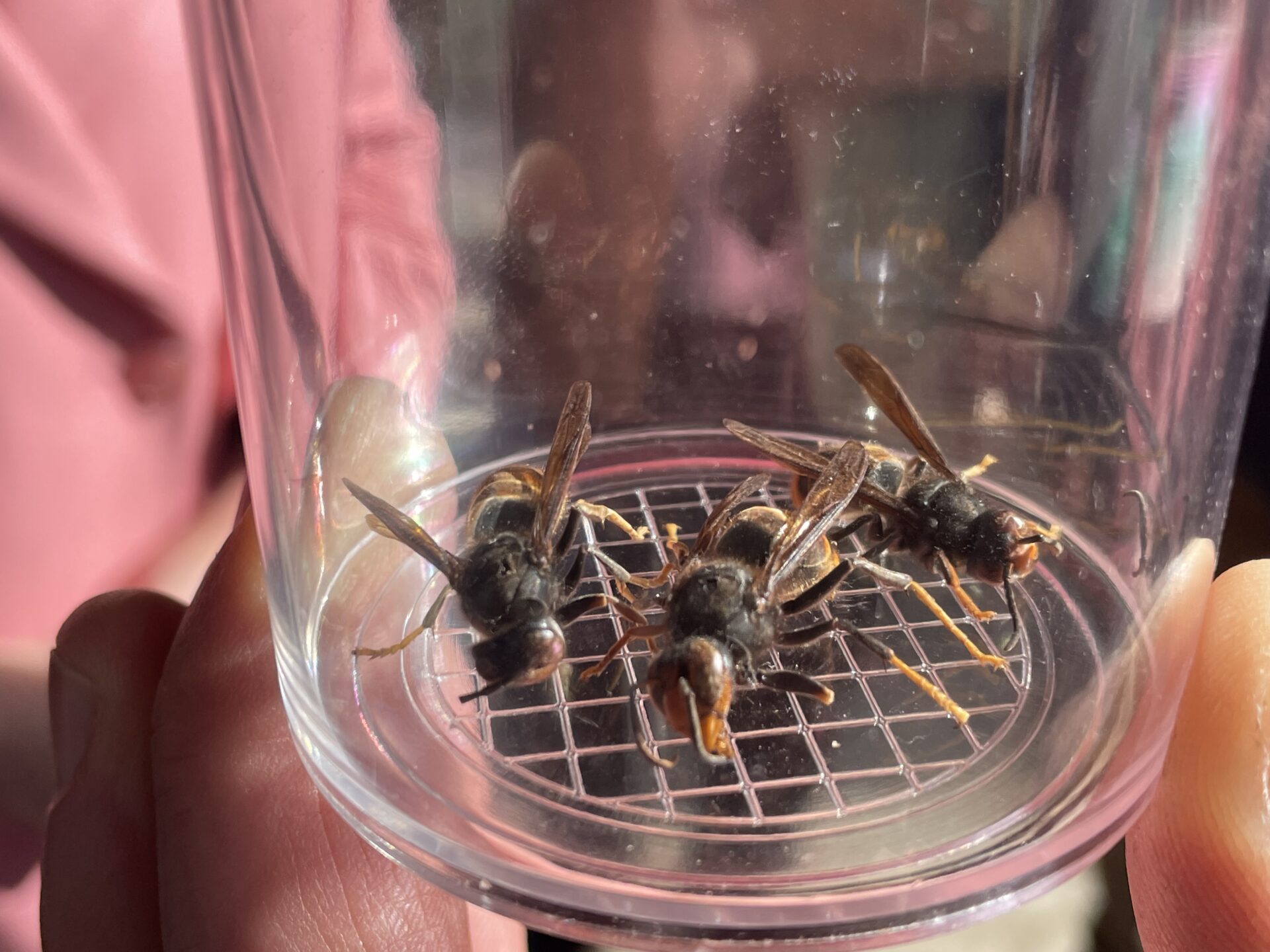
Asian Hornets during a press moment about the fight against the invasive species, March 2023. This exotic species is a threat to the native and necessary bee populations. Credit: Belga
Just last weekend, a man from Aalter (in the East Flanders province, between Bruges and Ghent) ended up in hospital after being attacked by a swarm during a football match. While hornet attacks on humans are rare, they can occur if people approach their nests too closely. They are no more aggressive than common wasps, but they can sometimes attack in groups, posing a bigger danger.
The impact of the Asian hornet is also disastrous for biodiversity, as a single nest consumes over 10 kg of insects (including bees) every year. Hornets can treat a beehive "like an all-you-can-eat buffet," potentially affecting honey production and plant pollination. This leaves fewer bees to pollinate plants or flowers, which leads to fewer flowers and plants in the long run.
This, in turn, also impacts fruit traders and beekeepers (and even market vendors selling fruit or fish/meat products in areas where these hornets are prevalent) – meaning the Asian hornets could also form an economic threat.
More awareness needed
A survey by COLOSS, a global network organisation of around 1,500 bee researchers from all over the world, found that beekeepers and researchers are reporting Asian hornets "almost everywhere" in Belgian bee colonies this year. The fact that the Asian hornets are particularly numerous this summer is partly due to the mild spring: almost all the queens survived the winter.
Almost one in five (17.7%) participants saw them invading beehives, and just under one in ten (9.2%) reported finding empty bee colonies due to Asian hornet attacks, despite all kinds of protective measures being used.
Additionally, there is less awareness about the insect in Brussels, according to bee researchers. "In Flanders, people recognise the nests more quickly and report them to the authorities. Brussels residents often do not recognise them, which means they are not removed in time."
However, removing or destroying the nests as quickly as possible is "crucial," as Asian hornets have no natural enemies in Europe.
People who see a nest of Asian hornets are advised to stay away from the nest and report it on the nature platform Waarnemingen.be. Contacting an exterminator is possible via the regional initiative renature.brussels. In case of immediate danger, contact the fire brigade at 112.
