
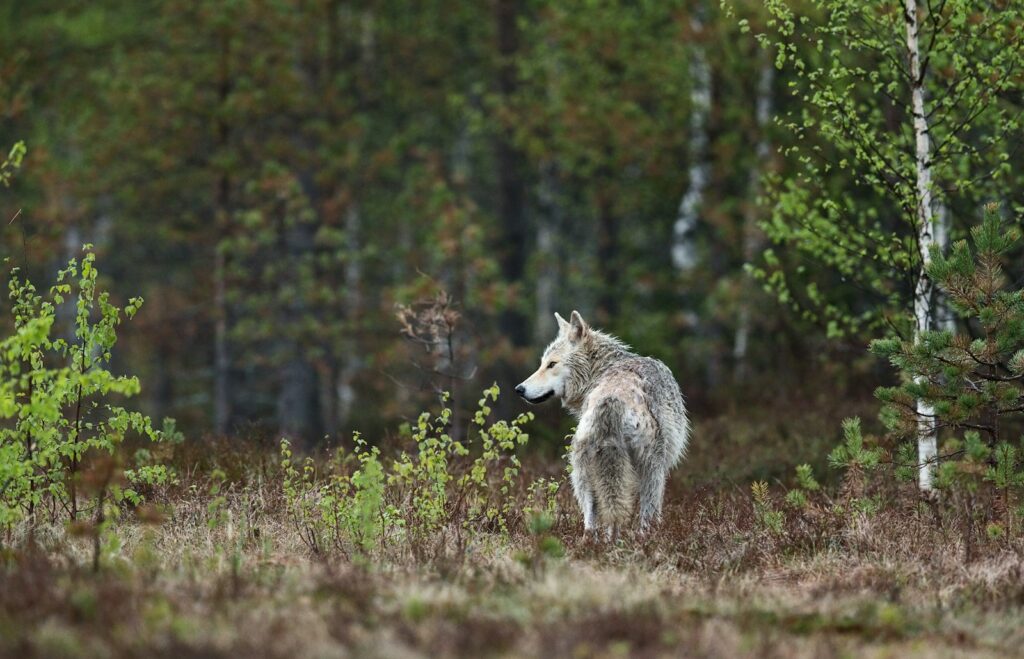
A so-called ‘problem wolf’ has attacked a six-year-old boy in the Netherlands, sparking safety concerns for ramblers.
The boy was walking with his mother and younger brother in Den Treek nature reserve in Utrecht province when the incident happened.
His mother told RTV Utrecht that she saw the wolf appear out of nowhere and jump on her son. She claims the animal then dragged the boy into the woods before two passers-by stepped in to rescue him by "beating the animal with sticks". The boy reportedly suffered bite wounds, scratches and abrasions on his back.
The child’s father told the broadcaster: “We’re shocked by what happened, and we both have a sense of how lucky we were. It’s not like we were going for a walk deep in the woods where no one normally goes.”
Warning issued about 'problem wolf'
A wolf nicknamed ‘Bram’ with the official designation GW3237m has been blamed for the attack on the boy. Bram is suspected to have carried out other recent attacks on humans in the area, including one against a hiker in May.
In July, local authorities were granted a shooting permit to target Bram, who is reportedly the father of five wolf cubs.
Last week, the province issued a warning to people to stay away from forest and nature reserves in parts of Utrecht province.
"As long as the wolf remains on the Utrechtse Heuvelrug, it is unsafe for it to remain there," wrote the province, calling the wolf's behaviour “abnormal and concerning”.
Environmental activists have objected to what they deem to be a heavy-handed approach by the authorities. Next week, activists from Extinction Rebellion are planning to take to the streets of Maarn to demonstrate against the decision to shoot Bram.
In spite of their ordeal, the parents of the boy who was attacked by the wolf are relaxed about the presence of wolves in the Dutch countryside, where there are thought to be at least nine wolf packs. “We have to learn to live with the fact that there are wolves again,” the boy's father said.
Wolves in Belgium
Wolves have made a comeback in the Benelux over the past decade. They first appeared in the Netherlands in 2015 after crossing the frontier with Germany. The following year, a wolf was detected in Belgium for the first time in 124 years.
In Belgium, unlike other countries, wolves returned naturally. They were not reintroduced by humans, but instead came into the country from France and the Netherlands.
According to the World Wildlife Fund (WWF), the last recorded attack by a wolf against humans in Belgium was several centuries ago.
The total number of wolves in Belgium is estimated at around 20: three established wolves in Flanders and three packs of roughly five or six animals in the High Fens.
This week, the Agency for Nature and Forests (ANF) announced that a new small wolf has been roaming the northern part of Bosland National Park since early July.
The Flemish government is facing legal action for allegedly failing to protect wolves in northern Belgium. The case has been brought by Landschap vzw, a nature organisation that is leading the ‘Welkom Wolf’ campaign.
The organisation accuses the authorities of systematically violating European and Flemish wildlife conservation legislation. Wolves are protected by the law and are on the list of endangered species.
