
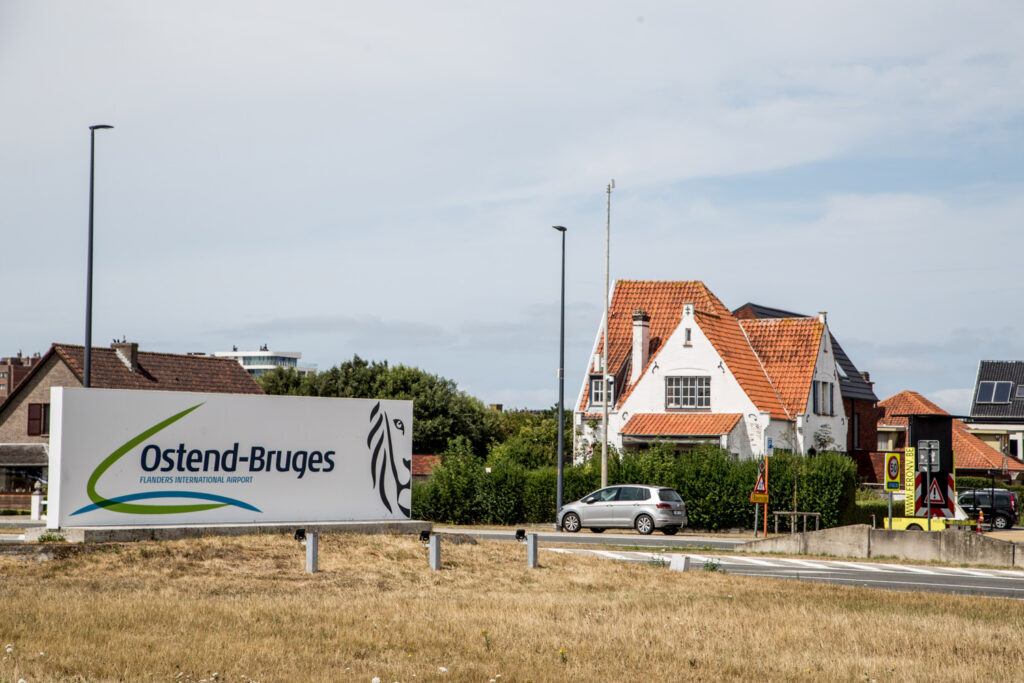
Last year, the regional airport in Ostend reported an operating profit of €392,000, according to the financial statements of LEM Ostend, but the figures suggest looming troubles with declining revenue and stagnant growth in both air cargo and passenger numbers, alongside a €1.3 million accumulated loss.
“Essentially, Ostend is facing the same issues as the regional airport in Antwerp,” says Wouter Dewulf, an aviation economist at the University of Antwerp. “The revenue that airports generate through passengers and cargo is clearly lagging. The 30,000 tonnes of cargo handled is quite minimal, especially for an airport positioning itself as a cargo hub.”
For the year 2024, Ostend’s total operating revenue amounts to approximately €19.3 million, derived from €11.3 million in subsidies added to a turnover of €7.4 million. Notably, there is a one-off operating income of €525,000, possibly from solar panels around the airport, although this remains unconfirmed.
“This one-off income boosts the overall results somewhat artificially,” Professor Dewulf continues. Without the €525,000, the airport would report a loss instead of a profit. “So, there is a profit, but the method is somewhat artificial.”
Meanwhile, the airport’s total debt has risen to €12.5 million, with almost €4 million owed to suppliers. These suppliers could be at risk if the prolonged discussion between the Flemish government and the airport regarding the management agreement—and consequently the subsidies—remains unresolved.
The financial statement notes, “The granting and collectability of claims from the Flemish government concerning additional subsidies for the financial years 2020, 2021, 2022, 2023, and 2024 remain uncertain,” and adds that “the confirmation and signing by the Flemish government of the adjusted subsidy agreement is also uncertain.” According to Dewulf, this uncertainty could pose a “tremendous problem” for the airport’s future.
In summary, Ostend’s solvency appears rather poor, though government capital subsidies keep the equity positive. Additionally, yesterday it was revealed that the airport in Deurne is also in financial trouble, being structurally loss-making and increasingly dependent on government support and shareholders, particularly the French company Egis.
A notable aspect of the financial statements, available through the National Bank of Belgium, is the absence of a report from the General Meeting or the company auditor this year, applicable to both Ostend and Antwerp airports. A source close to the airport suggests that the auditor may have refused to approve the accounts, potentially due to the longstanding legal dispute between Flanders and the airport over subsidies.
Attempts to contact the auditor and the airport for comment on Thursday were unsuccessful. Flemish Minister Annick De Ridder (N-VA) has stated that she will comment after her holiday.
