
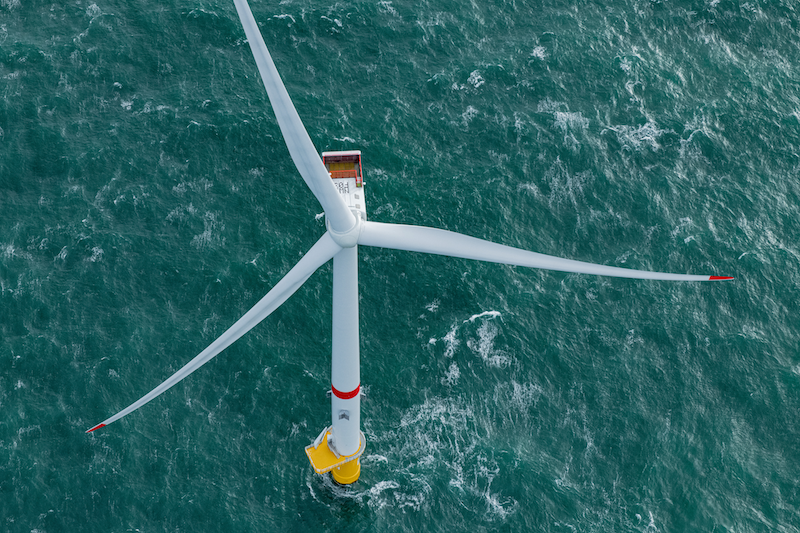
Generating power from the wind is one of the greenest and cheapest forms of energy but the sector is currently experiencing a tough time of it, especially offshore. There are positive developments among the bad news stories though.
Wind turbines are an ever more common sight in many countries. Governments are betting big on the power of the winds to reduce costly energy imports, increase security of supply and hit their climate targets.
The technology is constantly evolving as well. New offshore wind turbine prototypes, which are less limited by issues like planning permission compared to their onshore cousins, are getting bigger and more powerful.
Imagine the Eiffel Tower and turbine blades the size of London’s Big Ben and you’ll have a good idea of the scale of these 21st Century behemoths.
But all is not well in the world of wind power. The technology might be making leaps and bounds but the underlying economics and ecosystem of the sector have taken a bit of a battering lately.
This week, in Germany, the latest offshore wind auction round failed to attract any bidders. That means that the 2.5 gigawatts of capacity – enough to power every home in the city of Cologne – does not have anybody to start developing it.
Many sector experts have pointed to the fact that Germany’s way of auctioning off wind project rights is no longer fit for purpose and needs to be reformed. After this result, it’s hard to argue against that.
Currently, Germany operates a negative bidding system, where developers lodge bids for what they are prepared to pay to get the rights to the project. Normally, this means that the firm making the highest bid wins.
But that is not particularly attractive for investors, especially those that have seen how other countries are auctioning off wind projects.
In places like Denmark and the United Kingdom, governments are offering contracts for difference, which set a minimum and maximum price that developers will be paid for the power generated by the wind farm.
The UK recently extended its CfD scheme by five years, meaning that developers now get to look forward to 20 years of relative business certainty. Or if not certainty, at least clarity, which is itself worth a great deal these days.
So whether Germany will take the hint and make this change remains to be seen. This new failure has put the energy transition back once more in the Bundesrepublik but it might end up being a valuable lesson that is hard to ignore.
Trump’s latest salvo
United States President Donald Trump hates wind power. He is on record as saying they cause cancer and kill whales. Other falsehoods include his claims that they are more expensive than fossil fuels and that all the technology is made in China.
This personal, misinformation-laced crusade, came to a head before the summer when the landmark Inflation Reduction Act and its lucrative subsidies for wind and solar power was amended to cut those perks way ahead of their original deadline.
The IRA gambit was followed up with more rule changes that might mean wind power will essentially be banned on federal lands. Trump is also seeking to make it as difficult as possible for developers to build any wind on private land.
This week, the president has instructed the Federal Aviation Authority to look into whether permitting for wind farms is in keeping with aircraft safety protocols. Projects currently need approval so that they are not too high or too near airports.
Essentially, Trump wants the FAA to say that the system needs an overhaul and that no licences will be issued while that is happening, which would essentially jam the brakes on the entire wind sector across the country.
The industry should be worried, because recent history shows that Trump is likely to get his way, as vested interests that want to delay the advent of clean energy as long as possible have enough power and influence to make it reality.
One potential sliver of light comes from the fact that Republican state governors are starting to question whether the IRA and other rule changes were in fact a good idea. Nevada's governor this week asked the government for more guidance on how to keep building solar panel, for example.
If the penny continues to drop then there could be a groundswell of support for these technologies to keep generating clean power. Maybe.
Spain plays catchup
Spain has invested big in wind power and is hoping to meet its ambitious climate goals by installing a lot more turbines. But in the windy northwest of the country, in Galicia, very few turbines have been built lately.
That is because ongoing legal action against the Galician authorities has prevented new projects from getting off the ground.
According to the plaintiffs in the case, the rules governing permitting are not in keeping with EU or Spanish law. But a court has now ruled that this is not correct and that the current regime is legal.
That opens the door for projects to resume and for Galicia to start building out much more clean power. Whether the stall has soured investor interest in the long-term or whether it is just the tonic needed to spur growth will be a key question.
Want more updates and analysis of what is happening in the world of energy and climate? Interested in finding out more information about public tenders and consultations? Sign up to our Energy Rundown newsletter here!
