
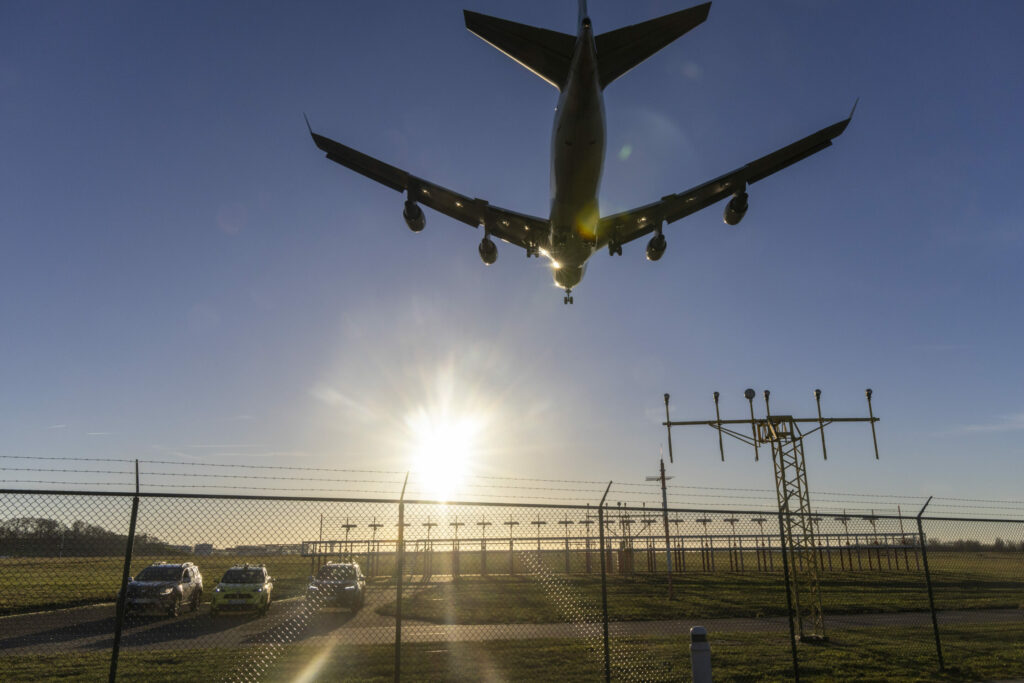
A Belgian airport has been used as a transit point for a series of controversial airlifts carrying rescued donkeys from Gaza.
The airlift operations are led by Israeli NGO Starting Over Sanctuary (SOS). The sanctuary claims the mission is carried out on a humanitarian basis and only extended to animals in critical condition. However, critics have argued the airlifts are politically charged - an allegation denied by SOS.
In a social media post, the charity announced it had completed its 10th donkey flight on 29 July. This involved transporting 50 donkeys to southern France, where they will be placed in various animal sanctuaries.
The post said: “After touching down in Liege, Belgium, we're now heading to the South of France. Fifty more donkeys will find their forever homes on several sanctuaries there, enjoying wonderful shelters and endless green spaces, everything our sweet donkeys deserve.”
Since October 2023, the group says it has evacuated around 600 donkeys, mostly through the "Donkey Flying Project". According to SOS, the donkeys and horses they rescue and rehabilitate undergo cruelty and abuse.
'Tools of survival'
There has been vehement opposition to the airlifts in certain quarters. Critics claim that the donkeys are essential to daily life and survival in Gaza, and should remain where they are.
Writing in Israeli newspaper Haaretz, Palestinian political analyst Ahmed Najar claimed the animals were being used as a "PR tool".
“Donkeys are not symbols of suffering in Gaza – they are tools of survival,” he said. “They are how Palestinians carry water jugs when trucks can't get through.”
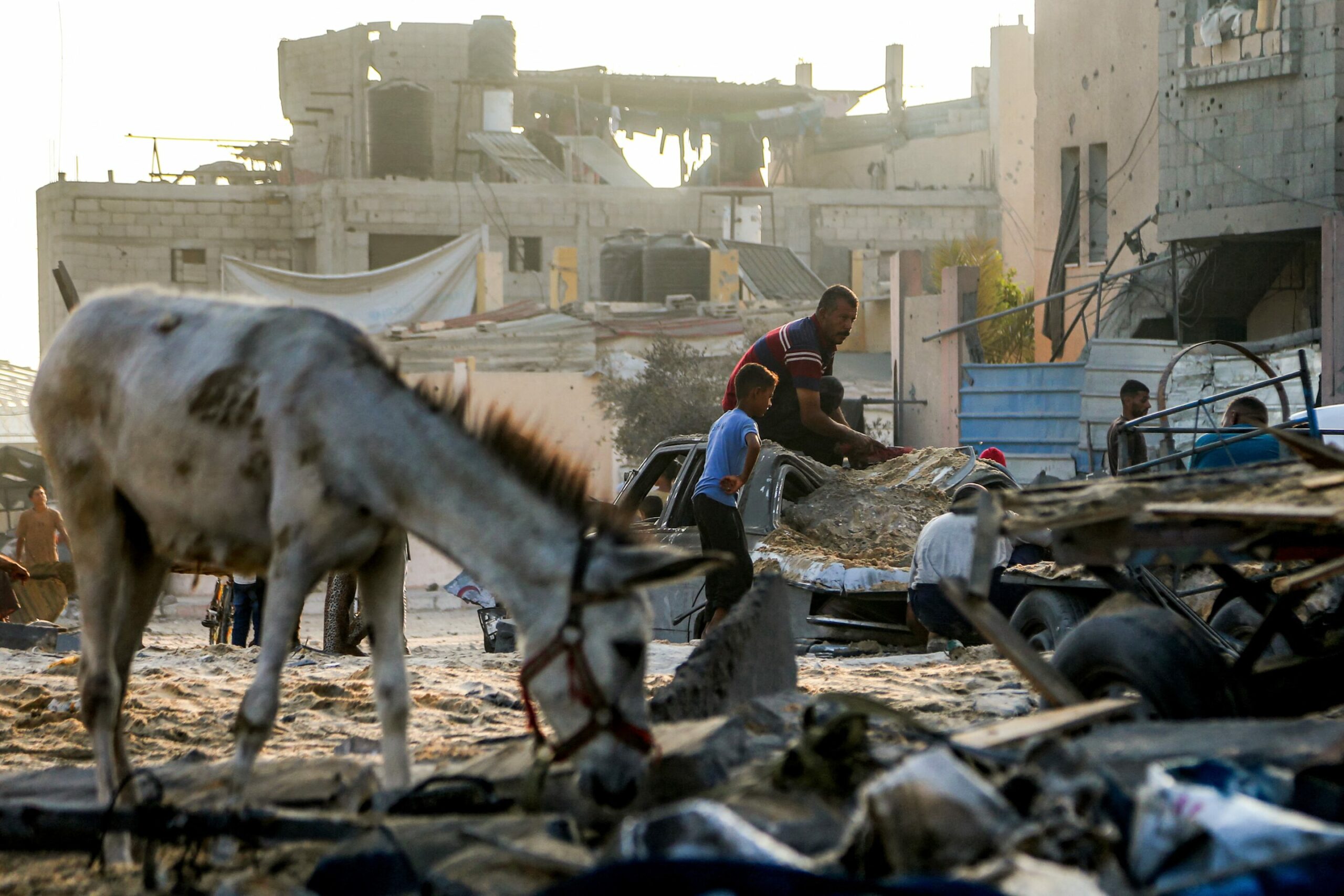
A donkey feeds near people gathering at the site of a destroyed building in Gaza.
Credit: AFP via Belga.
SOS maintains that its work is politically neutral and motivated by "compassion and a deep respect for life". In a statement released on social media, the charity said: "Our sole purpose is to rescue animals in distress. We operate under strict ethical principles, focusing exclusively on animal welfare and avoiding any unrelated activities."
It added: "We must clarify that most of the donkeys rescued from Gaza are simply too ill to be transported, given their serious medical conditions. For this reason, they've remained under our care at the sanctuary. Our only objective is to ensure they receive the medical attention and rehabilitation they desperately need."
A spokesperson for Liège Airport confirmed to Belga News Agency that the airlifts had taken place, but stressed that the airport plays a passive role. “We simply provide the infrastructure. The animals stay here for less than 24 hours before continuing their journey. Most arrive in poor health.”
Delcourt added that the airport is one of Europe’s main hubs for transporting live animals, particularly horses, with up to 7,000 handled annually. However, donkey shipments remain rare.
According to Belga, the donkeys are being rehomed in France, rather than in Belgium, with Liège simply being used as a transit point.
Before the war broke out, a Walloon farmer took in 28 donkeys from Gaza, but recent changes to regional legislation now prohibit the import of foreign animals for private care.
