

This summer, the battlelines have been drawn for an environmental showdown in the Swiss Alps. Last week, discussions on a global treaty to end plastic pollution started in Geneva, after the final round of talks in South Korea broke down last December.
In one corner is the so-called ‘High Ambition Coalition’ of countries including Norway, Australia, the EU and South Korea, who are seeking a cap on global plastic production as well as the avoidance of ‘problematic plastics’ that can easily be replaced, such as straws and cutlery.
Last month, these nations reaffirmed their commitment to an ambitious global treaty at a conference in France, dubbed ‘the Nice Wake-Up Call’. The declaration asserted that any treaty which did not include production limits or was strictly voluntary would “not be effective to deal with the challenge of plastic pollution”.
In the other corner is a loose collection of mostly oil producing nations that want to avoid any restrictions on plastic manufacturing. Last year their opposition derailed a treaty backed by over 100 countries that would have created a path for a global plastic reduction target and fulfilled the UN’s resolution to pass a binding legal instrument on plastics by 2024.
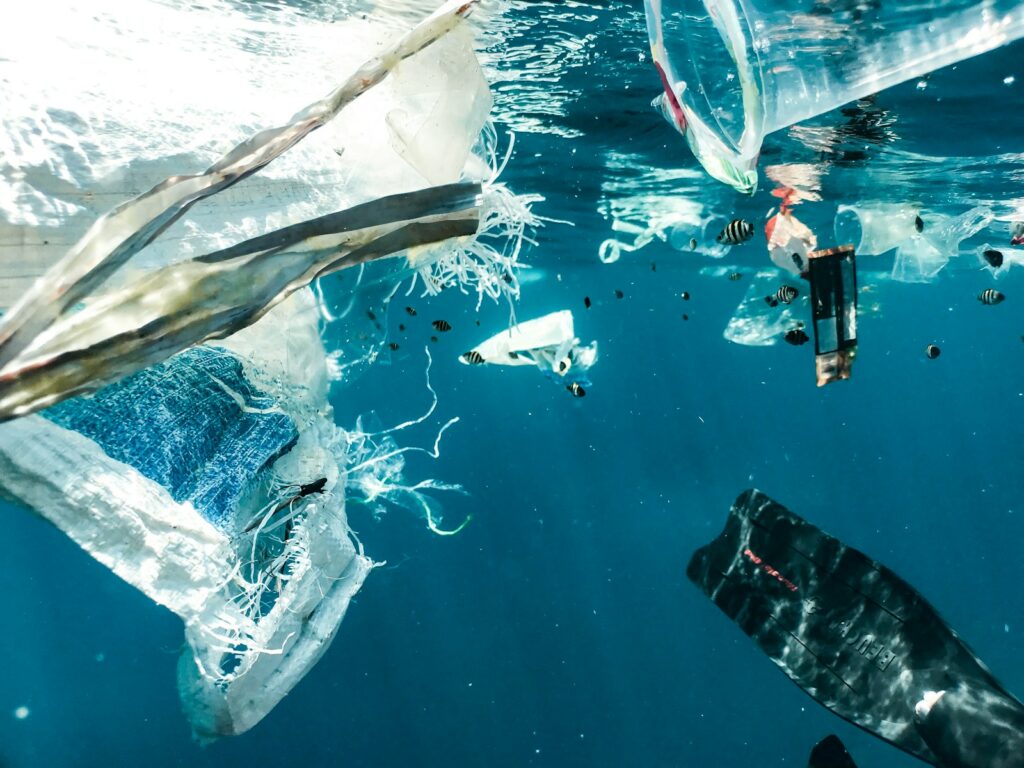
The stakes could hardly be higher. Since 1950, 8 billion tonnes of plastic waste have been produced globally, of which only 10% has re-entered the economy. According to the OECD, plastic waste is set to triple by 2040 unless decisive action is taken. As plastics continue to pollute oceans and drive-up greenhouse gas (GHG) emissions, this is not a problem we can simply recycle our way out of.
Businesses – particularly consumer goods companies - are highly attuned to this issue. The problem impacts practically all consumer groups and is a strong determinant of shoppers’ behaviour. According to an Ipsos survey in 32 countries, 87% of respondents agree it is essential to reduce global plastic production. Meanwhile, in an L.E.K. study of shoppers across ten countries, 73% try to avoid single use plastics.
As a result, many companies have already started taking action. Analysis of the Fortune Global 500 shows that 72% of the world’s largest companies are committed to reducing plastic pollution. In June more than 290 organisations – including Unilever, Nestlé and PepsiCo – signed an open letter calling on UN negotiators to deliver harmonised regulations for plastics that include phase outs, better product design, and extended producer responsibility.
Where businesses struggle to meet their plastic reduction targets, it is often due to the risk of no longer being price competitive with their less sustainable rivals. Recycled or reusable packaging, for instance, is harder to source and more expensive than simply using virgin plastics. At the same time, chemical recycling has little bearing on the GHG emissions from plastic production, so these same sustainable companies may struggle to meet their carbon reduction targets without limiting their overall plastic usage.
A cap on virgin plastic production would drive up costs for heavy plastic users and level the playing field, while still delivering on consumers’ priorities. It would also encourage the take up of readily available no- and low-plastic alternatives. Cartons made with paperboard, for example, contain a fraction of the plastic used in a PET bottle and contribute up to 73% fewer GHG emissions.
Capping production would spur further investment in such technologies that have been stifled by decades of global subsidies for the petrochemicals industry. Some of these innovations are already showing promise – at Elopak we are investing in paper-based caps to potentially eliminate one of the last remaining plastic components in our cartons. Now imagine if the whole packaging industry was similarly geared towards reducing plastics.
Finally, a cap on global plastic production could potentially benefit the oil producing countries themselves. A report last year by the Institute for Energy Economics and Financial Analysis identified 17 major oil and gas infrastructure projects in the past five years that have suffered delays, cancellations or weak financial performance because of the global transition away from petrochemicals.
The authors predict that slower economic growth, coupled with consumers’ desire for more sustainable options, means that global petrochemicals supply will quickly begin to outstrip demand, damaging profitability. Rather than hamstringing the industry, the report’s authors say a plastic cap could serve to “modulate and stabilize growing supply and demand imbalances”; pumping the breaks on runaway overproduction and creating a soft landing for oil-producing economies.
From the perspective of the packaging industry - which accounts for more than a third of total plastics produced – the writing is on the wall. Companies and consumers are desperately looking for more sustainable options that limit virgin plastic pollution. While the polymer will always have a part to play in protecting perishables or keeping medical equipment sterile, it will progressively occupy a smaller role. The question that next week’s alpine summit will answer is whether this transition can be accelerated enough to have a meaningful impact on the health of our planet, and ourselves.
