
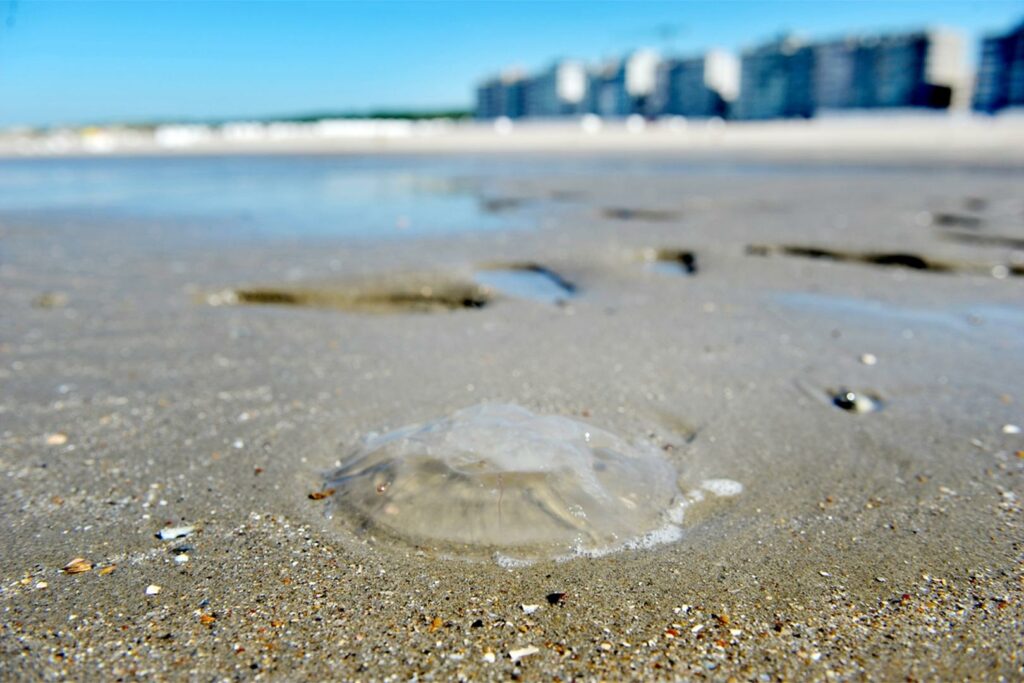
Four nuclear reactors in the northern French coastal municipality of Grevelingen, about 30 kilometres from the Belgian border, were automatically shut down on Sunday evening due to the presence of jellyfish in the cooling water filter systems.
The news was first reported by BFMtv, and the information has been confirmed by energy company EDF. The latter said there was a "massive and unforeseen presence of jellyfish" in the non-nuclear part of the plant.
This led to the automatic shutdown of reactors 2, 3, 4, and 6 between 23:00 on Sunday evening and 06:20 on Monday morning. There are "no consequences for the safety of the installations, personnel, or the environment," the company added.
Belgium not affected
The reactors at the Grevelingen nuclear power plant are cooled with water pumped from a canal connected to the North Sea. Several species of jellyfish are found in the North Sea, which often move closer to the coast when temperatures rise.
The six reactors each produce over 900 megawatts, resulting in a combined capacity of almost 5.5 gigawatts. Because reactors 1 and 5 were already shut down for maintenance, the entire nuclear power plant was shut down.
The problems in Grevelingen have no impact on the stability of the high-voltage grid in Belgium, according to grid operator Elia. "There is more than enough production to meet demand during this period," said spokesperson Marie-Laure Vanwanseele.
