
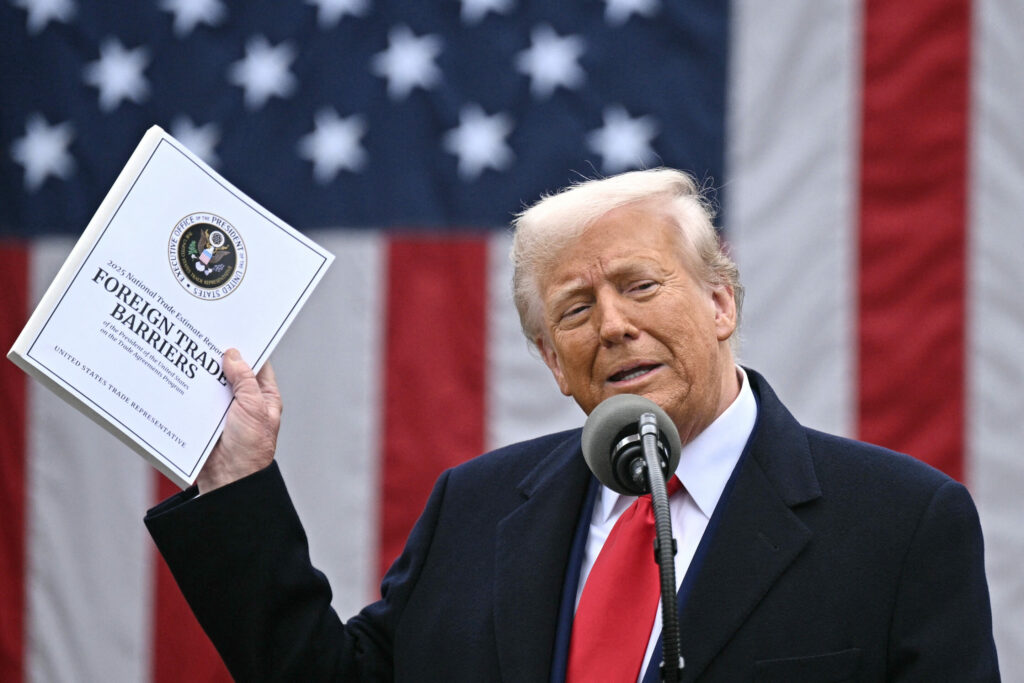
Belgian exports to the United States fell by 12.5% in the second quarter of the year, according to trade balance figures released Thursday by the National Bank of Belgium.
In the first quarter, exports to the US had increased by more than a fifth, in anticipation of the import tariffs announced by US President Trump in early April.
Belgium's trade balance recorded a surplus of €11.6 billion in the first six months of this year, compared to €10.4 billion a year earlier. The slight improvement is explained by the value of imports, which fell more sharply than that of exports.
Both imports and exports, as well as imports, declined: -1.3% to €240.9 billion and -0.7% to €252.5 billion.
Dynamic exports
The improvement in the trade balance is mainly attributable to the machinery and electrical equipment sector, as well as to chemical and pharmaceutical products, which experienced "more dynamic" exports.
"The latter sector, in particular, benefited from the strategy of some companies to anticipate the increase in customs duties that the United States had announced for April. This led to stronger growth in sales to that country in the first three months of 2025, which was not followed by trade compensation in the following quarter," the explanation reads.
Belgian exports of chemical and pharmaceutical products rose by 1.3% in the first half of the year, while imports fell by 1.4%.
Looking only at the second quarter, the country's economy saw a 4.4% decline in imports and a 1.2% decline in exports. Exports to the US, for example, decreased by 12.5%, while imports from the US increased by 9.5%.
It also appears that the value of international goods trade stabilised at around 80% of gross domestic product (GDP) in the first half of 2025, following the sharp fluctuations caused by the Covid-19 pandemic and the war in Ukraine.
