
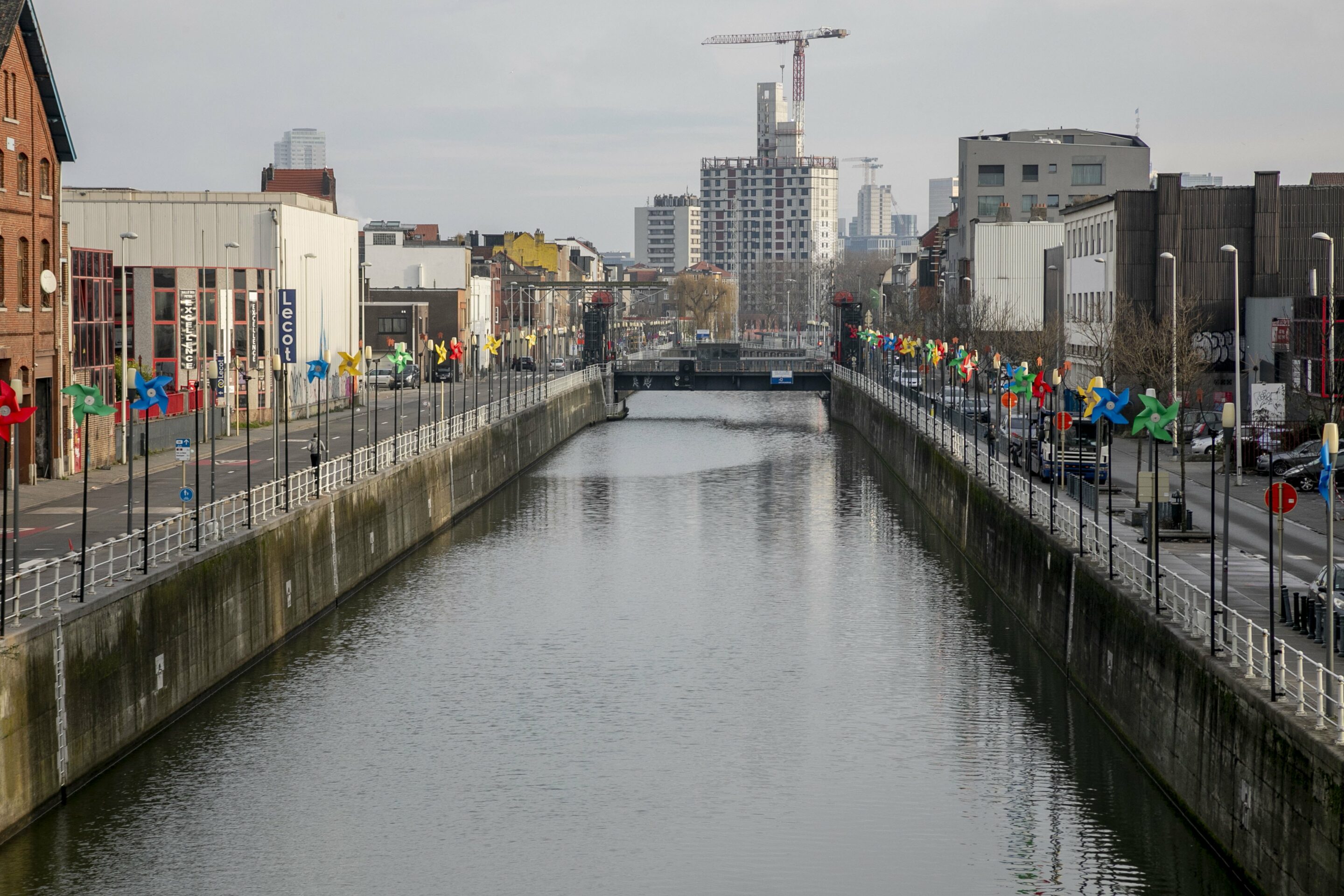
Molenbeek, typically a stigmatised area of Brussels, is looking to "flip the script" by running for European Capital of Culture in 2030.
24 March 2025 fell in the middle of the Muslim celebration Ramadan, the Christian tradition Lent and the Jewish holiday Purim. Molenbeek-Saint-Jean saw a golden opportunity to brings its 140 nationalities under one roof to celebrate its diversity.
Around 500 people had gathered for iftar, the meal that breaks the fast during Ramadan, in the Catholic Saint-Jean-Baptiste Church. Meal-goers hustled and bustled around long tables laden with breads, meats, sweet treats, tea and more, all set to a mixed live soundtrack including the Muslim call to prayer and Christian hymns.
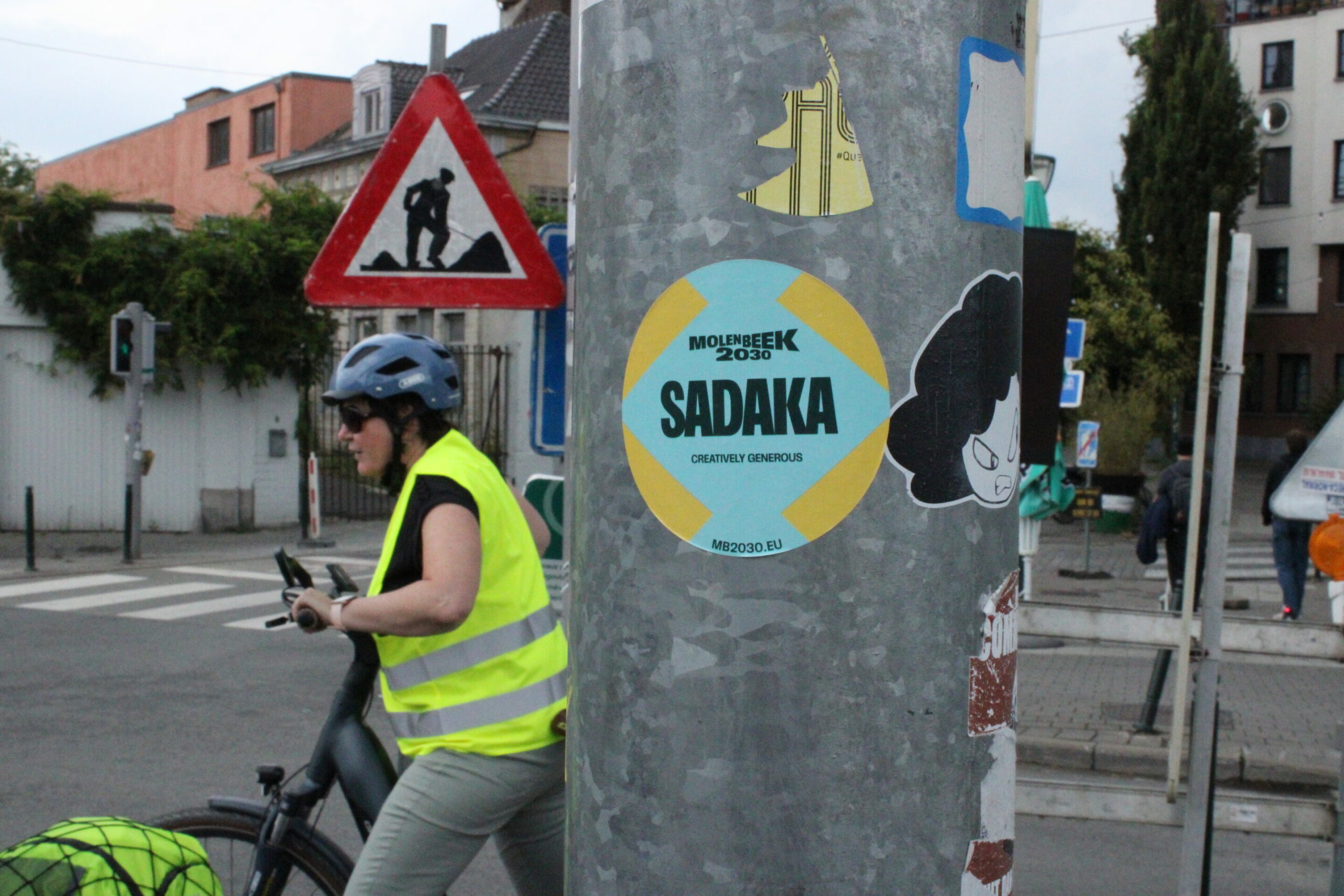
Molenbeek for Brussels 2030 organised the feast as part of its bid to become European Capital of Culture (ECOC) in 2030. Under the message 'Sadaka' – meaning 'generous' in Hebrew and several other languages – the campaign aims to create an alternative, more hopeful narrative for the unfairly stigmatised area, which it describes as "misunderstood" and sometimes even "maligned".
"These values of solidarity and generosity, reflected in the spirit of Sadaka found in various cultures, are at the core of this candidacy," the organisers stated. "This is what we want to showcase to Europe."
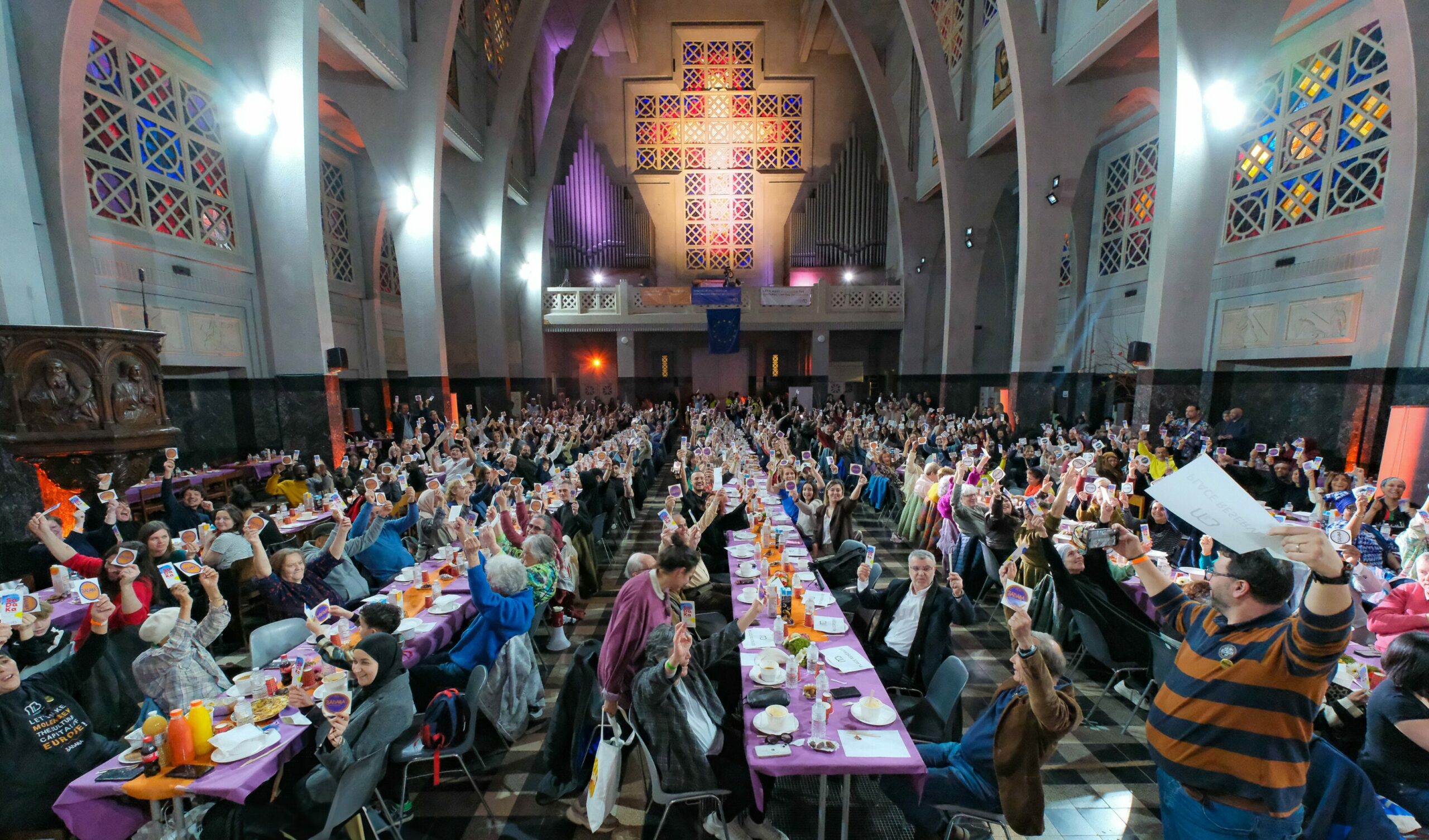
Credit: Veerle Vercauteren / MB2030.
'Little Manchester'
Sitting next to the canal, industrialisation in Molenbeek began in the early eighteenth century, earning it the nickname 'Little Manchester' in its heyday. The commune mostly housed canal workers flocking in from Flanders and Wallonia up to the 1970s.
Industry has shifted away from the water now, but simple housing from that era has remained and is now host to a diverse immigrant community, who co-exist alongside gentrification in the form of Tour&Taxis, KBC and bourgeois housing unattainable to the area's less economically advantaged population (31.5% were at risk of poverty in 2024 – the second-highest rate in Belgium after Saint-Josse-ten-Noode).
Bert De Bisschop has given tours of Molenbeek with the organisation Brukselbinnenstebuiten since he moved to Brussels from the outskirts in 2000.
"Second- and third-generation immigrants in Molenbeek didn't have a right to vote until the 90s, so there was no investment in public space," he told The Brussels Times. "This was a disaster. But once they got European citizenship, they got more political attention."
In a meandering tour that emphasised socio-economic dynamics over the usual touristy topics, De Bisschop explained the many obstacles Molenbeek has faced over the years. For instance, metro lines 1 and 5 cut through valuable public space without any consideration, while on the other side of the canal (typically considered the “nicer” side of town) the tracks slot perfectly under pre-existing streets.
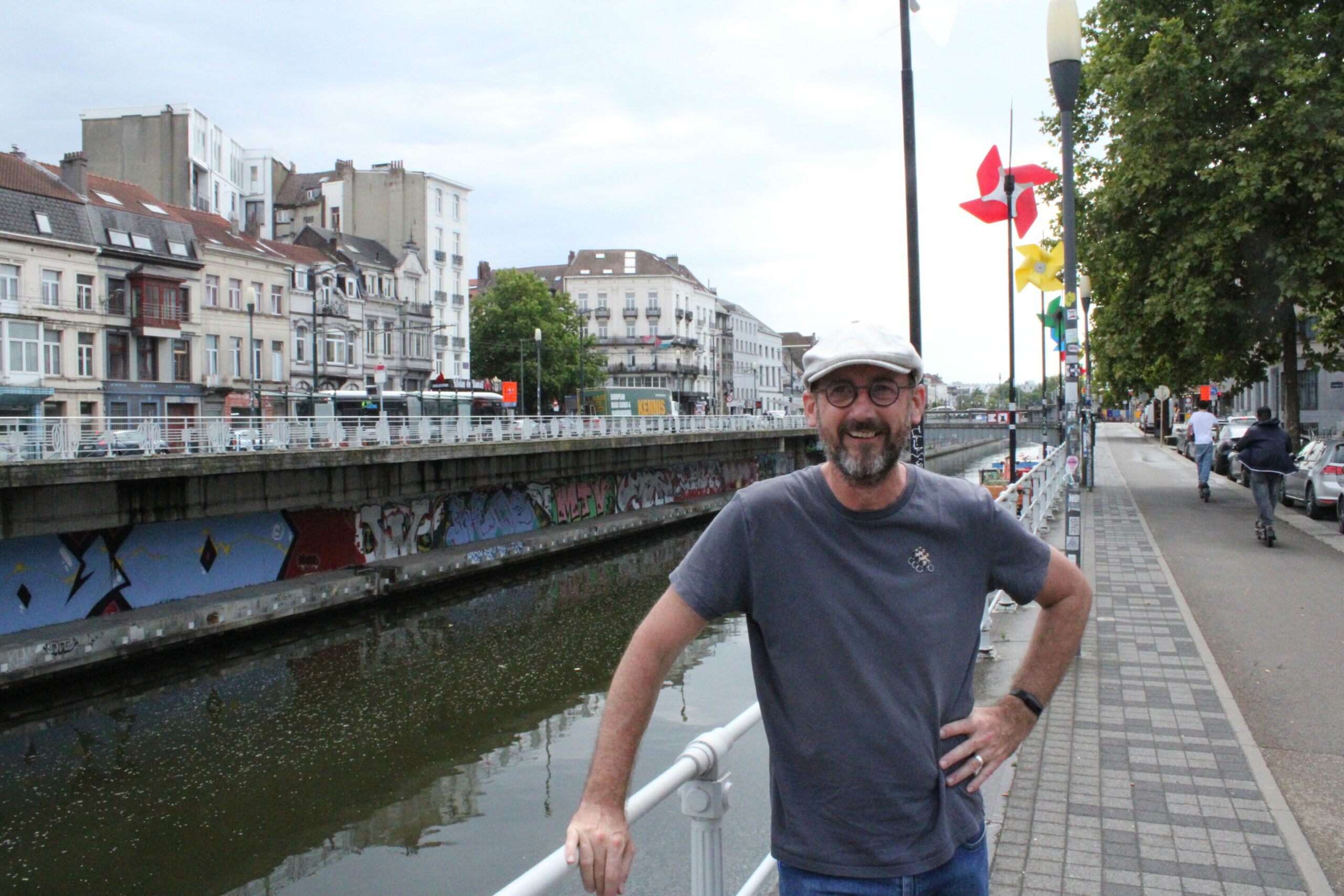
Bert De Bisschop of Brukselbinnenstebuiten. Credit: The Brussels Times
On top of entrenched inequalities, Molenbeekois have been dealt a harsh reputational blow. Following the discovery that 10 out of 94,000 Molenbeek residents had been involved in the 2015 Paris attacks and the 2016 Brussels attacks that killed 130 and 32 people respectively, international press descended on the area, painting a picture of "the jihadi capital of Europe".
"When you travel to different parts of Europe and you ask the audience if they have heard of Molenbeek, 75% will say they know it, which is a good thing. But the problem is that they often known it for terrorism, and the media didn’t help with that," Fatima Zibouh of the Molenbeek for Brussels 2030 campaign told The Brussels Times. In her view, the ECOC nomination is "an opportunity to flip the script, to create resilience and to break the stigma."
Culture has already proved a way to defy this narrative. In 2016, the now-closed Millennium Iconoclast Museum of Art (MIMA) opened to "shed the negative image of the area most recently linked to the deadly attacks there and in Paris". The owner of the dance initiative Strictly Niceness said "Molenbeek is not just a town with fanatical bearded men […] it is above all a very beautiful town with lots of great people who live there!" when he described the project the same year.
Now, Molenbeek has been shortlisted as ECOC in 2030 along with Belgian cities Leuven and Namur.
Considering the area's issues – the unemployment rate is the second highest in Brussels (32.5% in 2024), the radical Islam stereotype is hard to shake and the lack of a Brussels Government is compounding falling faith in politics – De Bisschop says both Brussels and Molenbeek "need" the nomination.
"When Brussels became the Capital of Culture in 2000, it was enormous," he said. "Suddenly we had the Museum of Musical Instruments, Kai Theatre, the Zinneke Parade … People became proud of their city. And as this is fading, I have the impression that Molenbeek as Capital of Culture could be an anchor to develop a new feeling across the city."
Brussels and its bubbles
For Zibouh, the nomination is more about the journey than the destination. The team she co-leads has been working tirelessly to put Molenbeek on the map whether they are successful in their bid or not – the 2030 Capital of Culture will be announced on 24 September.
"The project is a great opportunity to tackle significant social issues in Brussels through culture," she said. "It is the most diverse city in Europe but there are a lot of bubbles that co-exist without knowing each other. The project speaks to everyone – working-class people, people in the EU institutions – to show that we share common values and a space we all love."
Her colleague Jan Goossens spent over 15 years as Artistic Director at the Flemish Royal Theatre (KVS), where he tried to make cultural initiatives more accessible.
Credit: The Brussels Times
"We made huge steps, but towards the end of my time there, I got the feeling that I had hit a glass ceiling, because KVS remained a cultural institution within its own building," he said.
Goossens sees the ECOC nomination as the perfect way to transcend prohibitive artistic scenes and involve people from all walks of life in the creative process.
He describes a project that will "transform Molenbeek's public space", with free exhibitions to prevent economic obstacles and "co-created" artwork that will see creators immersing themselves in Molenbeek’s everyday realities and collaborating with locals at every step.
Asked to reflect on their favourite moments of the campaign so far, both Goossens and Zibouh mention Molenfest with fondness. The five-day festival will run again between 3 and 7 September and will showcase local talent and lore: circus, dance, debate and more, all carrying the message of 'Sadaka'.
"Brussels is not just Schuman," says Zibouh. "Brussels is also its working-class neighbourhoods where solidarity is strong and has a lot to offer for the future of the European project."
