
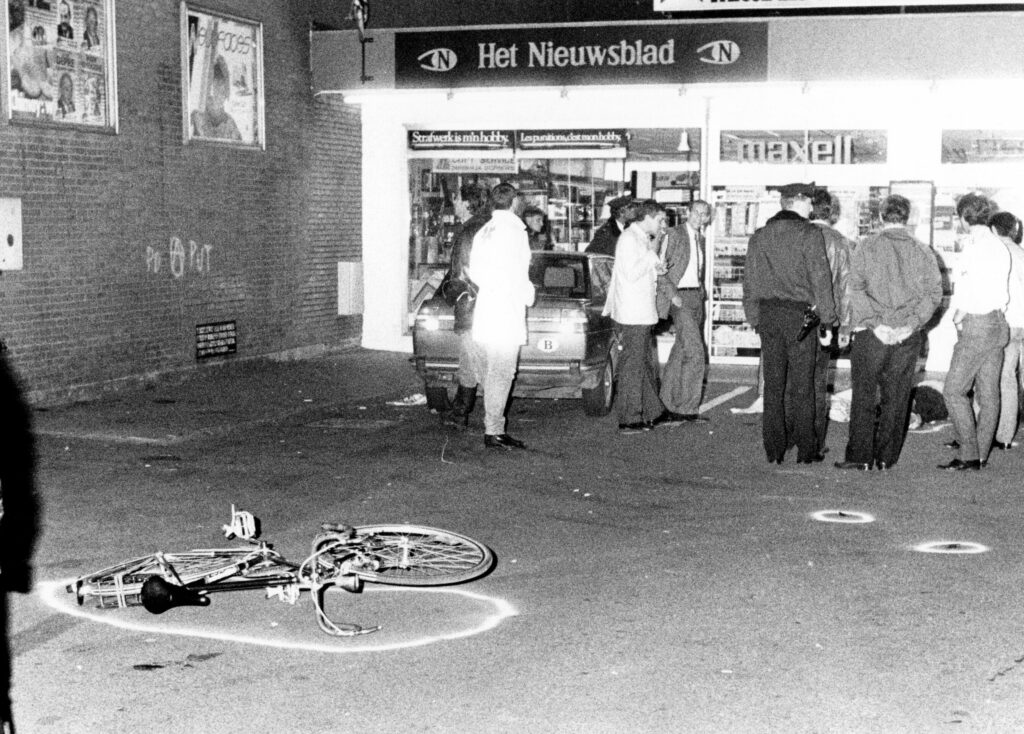
With the investigation into a lead of two known French gangsters, there is renewed hope that the members of the so-called Brabant Killers gang will be finally identified. The gang were responsible for a spate of violent robberies in the 1980s which killed 28 people.
Between 1983 and 1985, the Bende van Nijvel (in Dutch) or Tueurs de Brabant (in French) committed several masked robberies, mainly at supermarkets, restaurants and arms shops. One of these was a robbery at the Delhaize supermarket in Aalst, in which eight people were shot and killed.
Despite the violent deaths, none of the masked suspects were ever caught, convicted or even identified in the intervening 40 years. At the time, the police investigation was criticised for being haphazard, amid concerns that some members of the police were compromised over ties with militant far-right groups and other criminal figures.
Yet amid dozens of theories, Belgium's largest cold case remains unsolved. In June 2024, Belgium’s Federal Public Prosecutor Office officially closed the case citing no leads being actively followed due to a lack of evidence, to the dismay of the victim’s families and survivors.
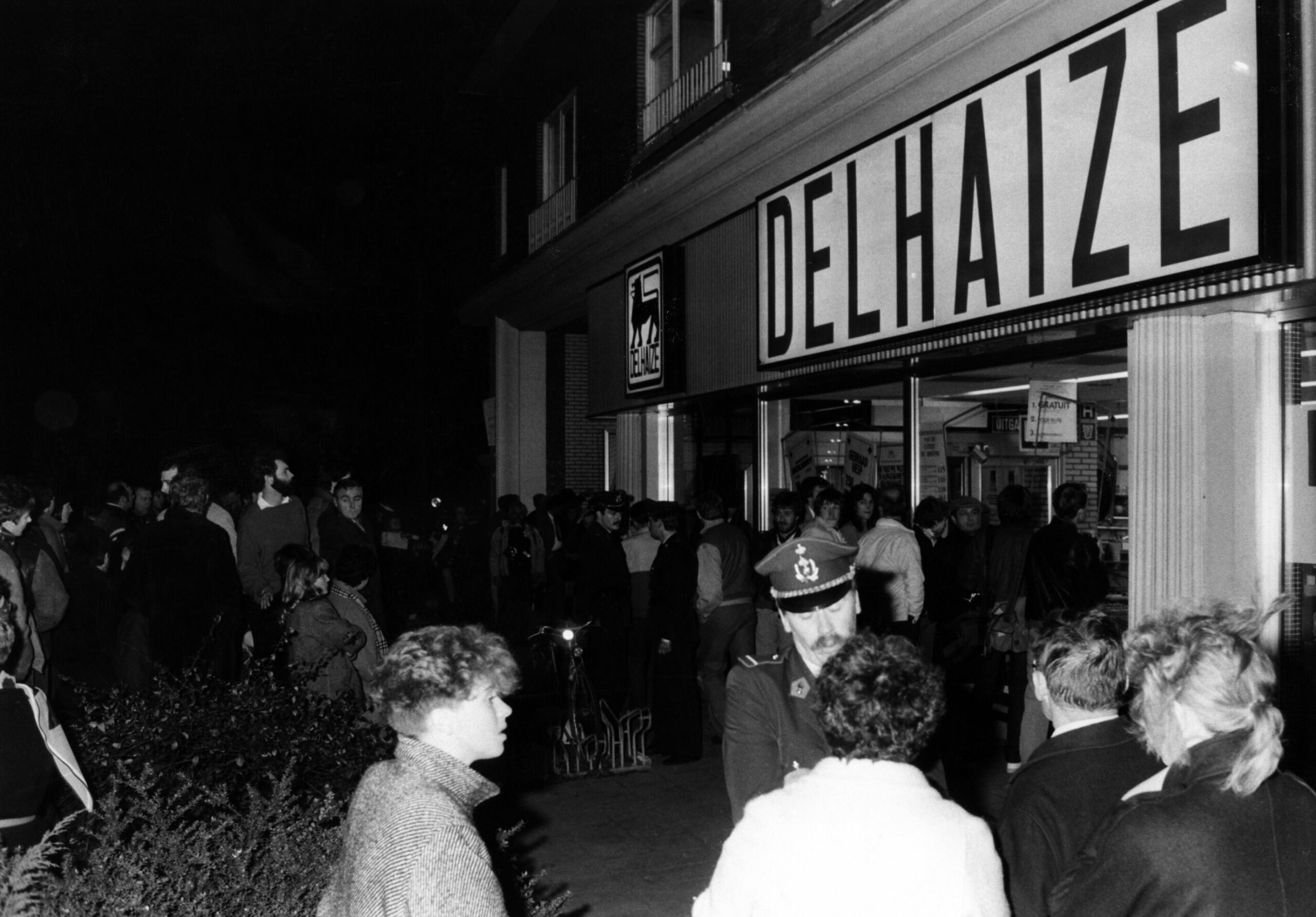
Picture dated 9 November 1985 is about the Brabant killers attack of a Delhaize supermarket at Aalst. The attack made 8 casualties and some wounded. On the picture : people in front of the supermarket where the shooting took place. Credit: Belga
David Van de Steen, who was seriously injured in the Aalst Delhaize attack when he was 9 years old and lost both his parents and his sister, denounced the case's closure and the "incompetent and corrupt judicial system."
However, civil parties were still given the option of requesting additional investigations from the court.
In January, a lead from two boys who wrote down the number plates of cars involved in a Brabant Killers attack in November 1985 did not produce any results.
Breakthrough?
However, since April, another lead was also requested to be investigated concerning two French gangster brothers, Thierry and Xavier Sliman.
Hailing from northern France, they were known criminals who had committed several robberies in their area during the Brabant Killings period. They had already appeared on the police’s radar in one of the many theories at the time.
Yet, this lead was not properly followed up at the time, according to former police officer Jean-Pierre Adam, who has already written two books on this specific trail. He believes there are several indications that they may have been the Brabant Killers, even if the two have since both died.
For example, when Adam was investigating the murder of a restaurant owner in 2000, he found a wanted notice in Xavier Sliman's file at the French court for the robbery of arms dealer Dekaise in Wavre, one of the earlier crimes allegedly committed by the gang in 1983.
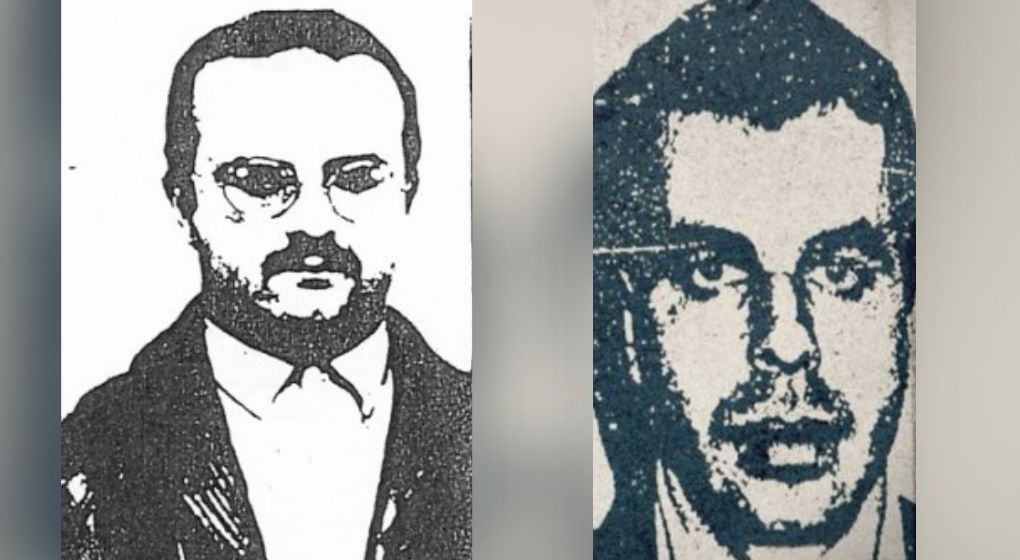
Xavier and Thierry Sliman
Sliman was said to resemble the description of the suspect in the wanted notice, but this information was never passed on to the Belgian investigators.
Xavier Sliman is also said to have been imprisoned on 19 March 1984, and Thierry on 30 September of the same year, until mid-1985. This is precisely the period during which the gang did not commit any crimes in Belgium.
Another clue is the similarity of one of the suspects sketched in the wanted posters to one of the Sliman brother’s accomplices. The sketches illustrated three suspects, nicknamed the "the Giant", "the Old Man" and "the Killer”.
Adam believes a man he refers to as 'Pierrot M.' resembled the 'Old Man'. Another suspect is 'the 'Giant', who he believes was a bodybuilder who went under the nickname of ‘Monmon’.
Adam passed on his information to the Federal Public Prosecutor's Office, but according to him, nothing was done with it.
French-Belgian investigation
At the request of French lawyer Patrick Ramaël, who represents several victims in the case, the Mons Chamber of Indictment ordered in April this year to investigate this lead.
Following the chamber's decision, the lawyer also submitted a request to Minister of Justice Annelies Verlinden (CD&V) to set up a joint French-Belgian investigation team to conduct the investigation.
"We are currently working on the requested investigative measures," said the Federal Public Prosecutor's Office on Tuesday. "A request for judicial cooperation has been sent to France for this purpose."
There have been other clues which could add weight to the case against the northern French gangsters.
A testimony from one of the Sliman brothers’ close friend and reformed Belgian gangster Patrick Verdin (who refutes any participation in the attacks) was aired in a documentary in April this year on France 2. Verdin claims Thierry Sliman knew Belgium very well, and that he had often crossed over the border – in many cases with him.
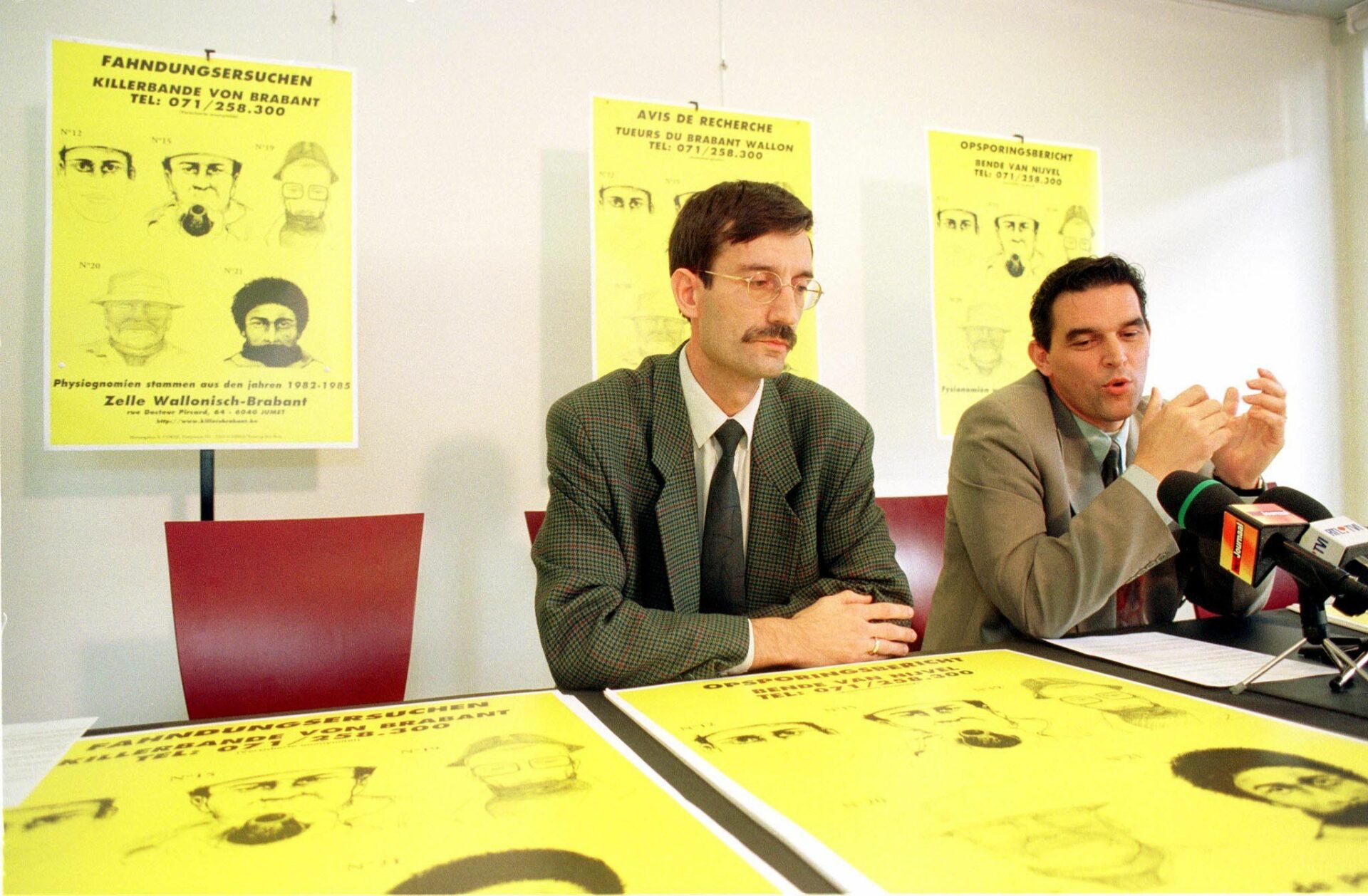
Police press conference in 1998 releasing new sketches of suspected members of the Brabant Killers. Credit: Belga / Geert Vanden Wijngaert
One day he confided in him: "I've spilled blood here. I traumatised them. You'll find out because journalists will come to see you to talk to you about me. They'll tell you I was crazy."
Verdin, who has written a book about his collaboration with Thierry Sliman, also believes in the extremist far-right theory: he claims Thierry had been a member of the French Gaullist militia SAC, which could mean he was able to evade justice despite killing 28 people.
SAC were a Gaullist militia born to defend General Charles De Gaulle's policies, but were disbanded in 1981. They had become a feared group combining violence, criminal infiltration and state secrecy. They were led by a far-right activist, Pierre Debizet.
Face-to-face
Another victim, Geneviève Van Lidth, was one of the few people to have seen one of the Brabant Killers without a mask. In 1983, she had her car stolen at gun point outside her house in Plancenoit, Walloon Brabant.
She described him as having southern European origin and had short, curly black hair. A photofit picture was made of the suspected perpetrator. He spoke impeccable French gave the impression of being "well-educated".
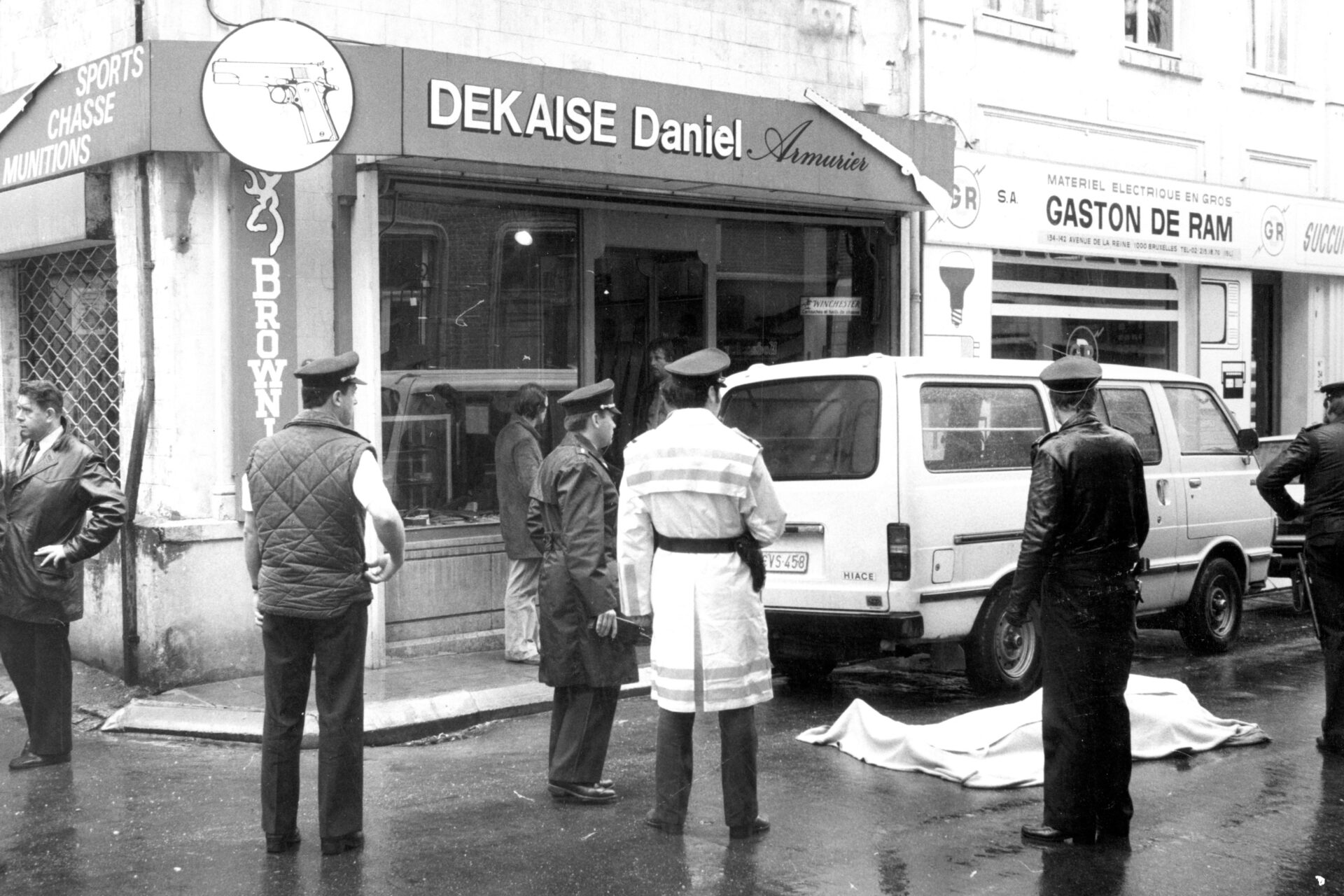
Brabant killers, a group (or groups) responsible for the attacks of supermarkets, restaurants, stores and weapon through Walloon Brabant depots between 1982 and 1985. Credit: Belga Archives
The man driving off with her car was swiftly followed by a Peugeot 504, later identified as having been used for an attack at the Delhaize supermarket in Genval. Both cars were later found abandoned, but on separate days.
"I always said he had a northern French accent, that he wasn't Belgian," Van Lidth told France Info in May. When looking at the photo of Thierry Sliman, she said she was "99% sure" she recognised her attacker.
Now, the victims' families will need to wait and see whether France accepts Belgium's request for judicial cooperation on this case – hoping they it can yield some much-needed answers after over 40 years.
Related News
- 'Incompetent and corrupt': Belgium officially closes unsolved Brabant Killers case
- The enduring mystery of the Brabant Killers, Belgium's biggest cold case
- Belgian series '1985' on Brabant Killers highlights country's language divide
- Belgium and France called on to jointly investigate Brabant Killers case
