
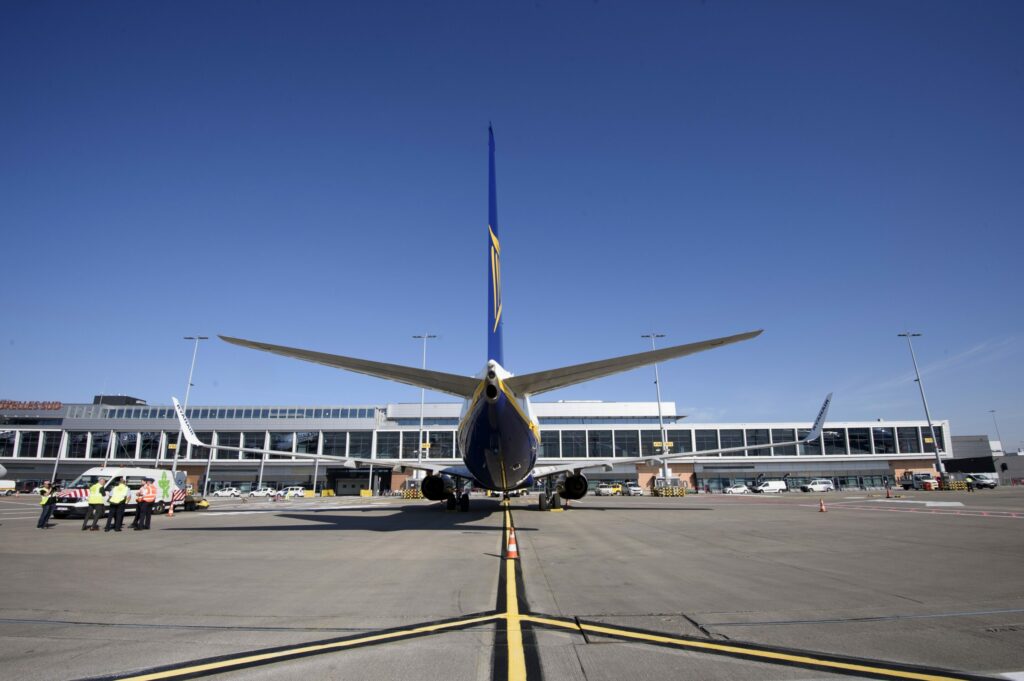
While enthusiasm for travelling by long-distance train instead of aeroplane is rising, the high cost of crossing borders on rails is a major hurdle for many. A new Europe-wide study shows that flying is still cheaper than taking the train on the majority of cross-border routes.
A new major report, called 'Flying cheap, paying dear: How airlines undercut rail and fuel the climate crisis' and written by environmental organisation Greenpeace, found that flights are dominantly cheaper than trains on 54% of 109 cross-border routes across 31 European countries – with low-cost airlines dominating through unfair pricing.
This is not due to efficiency, but to political inaction that lets airlines undercut rail at the planet’s expense, argue Greenpeace.
"Even as the climate crisis worsens, Europe's tax system continues to favour the most polluting way to travel. It is absurd that a flight from Barcelona to London can cost just €15 while the train on the same route is up to 26 times more expensive," said Herwig Schuster, transport campaigner for Greenpeace Central and Eastern Europe.
Unfair privileges
The report compared ticket fares for 142 routes, including 109 cross-border and 33 domestic trips, in almost all European countries. It only included routes under 1,500 km air distance, which can be reasonably travelled by both rail and air.
Low-cost airlines such as Ryanair, Wizz Air, Vueling and easyJet dominate European skies, with ticket fares often starting below airport and ticket fees. These low prices are possible because of untaxed aviation fuels, and a VAT-exemption on international flight tickets.
Meanwhile, rail operators often pay full VAT, rising energy costs, and high track access charges.
"Aviation enjoys unfair tax privileges, while train passengers are left to pay the price. These prices do not reflect a functioning market – they reflect a rigged system," Schuster said.
Credit: Canva
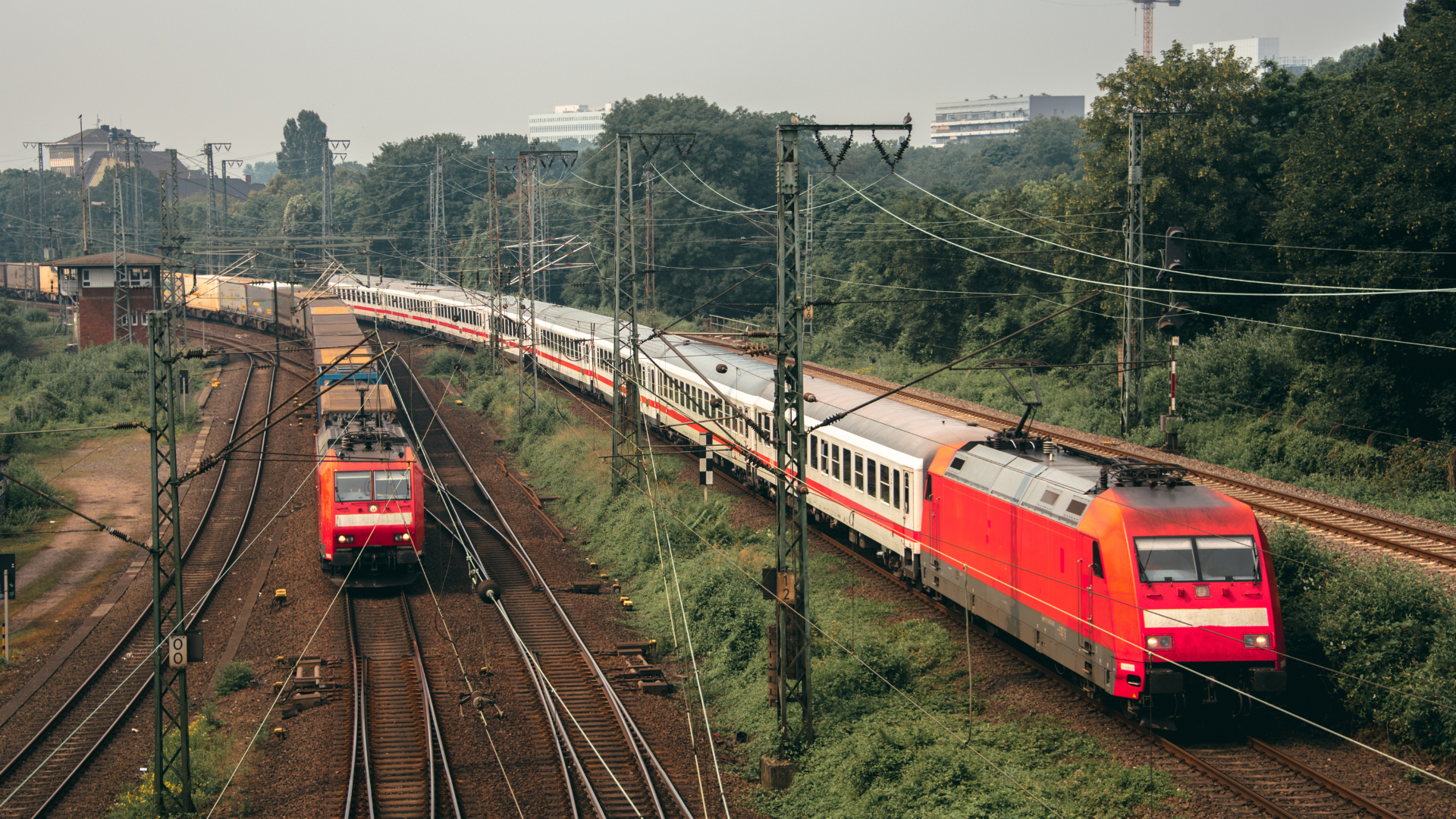
For its analyses, researchers checked fares for nine different days for each route, across different time booking periods (short-, medium-, and long-term). They found that on 54% of cross-border routes, flying was (much) cheaper on at least two-thirds of the analysed days.
While trains were clearly the most expensive option, the report found that they were 'always' or 'almost always' cheaper on 29 cross-border routes – many of them in Central and Eastern Europe, particularly in the Baltics and to and from Poland.
In France, Spain and the United Kingdom, however, trains were more expensive than flights on up to 95% of cross-border routes. The most extreme example the researchers found was a train trip that cost almost 26 times more than a flight: on a specific date, Barcelona to London cost just €14.99 by plane, compared to €389 by train.
What about Belgium?
Belgium (along with Romania and Norway) ranks as the sixth-worst country in Europe for its share of cross-border routes per country, where the train was predominantly more expensive than the flight – clearly performing worse than the other Benelux countries (Luxembourg and the Netherlands).
Belgium and its capital Brussels can be reached from most other European capitals by train within a day, or by taking a night train followed by a connecting train – including from Madrid, Rome, Stockholm and Zagreb.
While the country's main airport, Brussels Airport, is primarily served by traditional airlines, low-cost carriers mainly operate from the nearby Charleroi Airport.
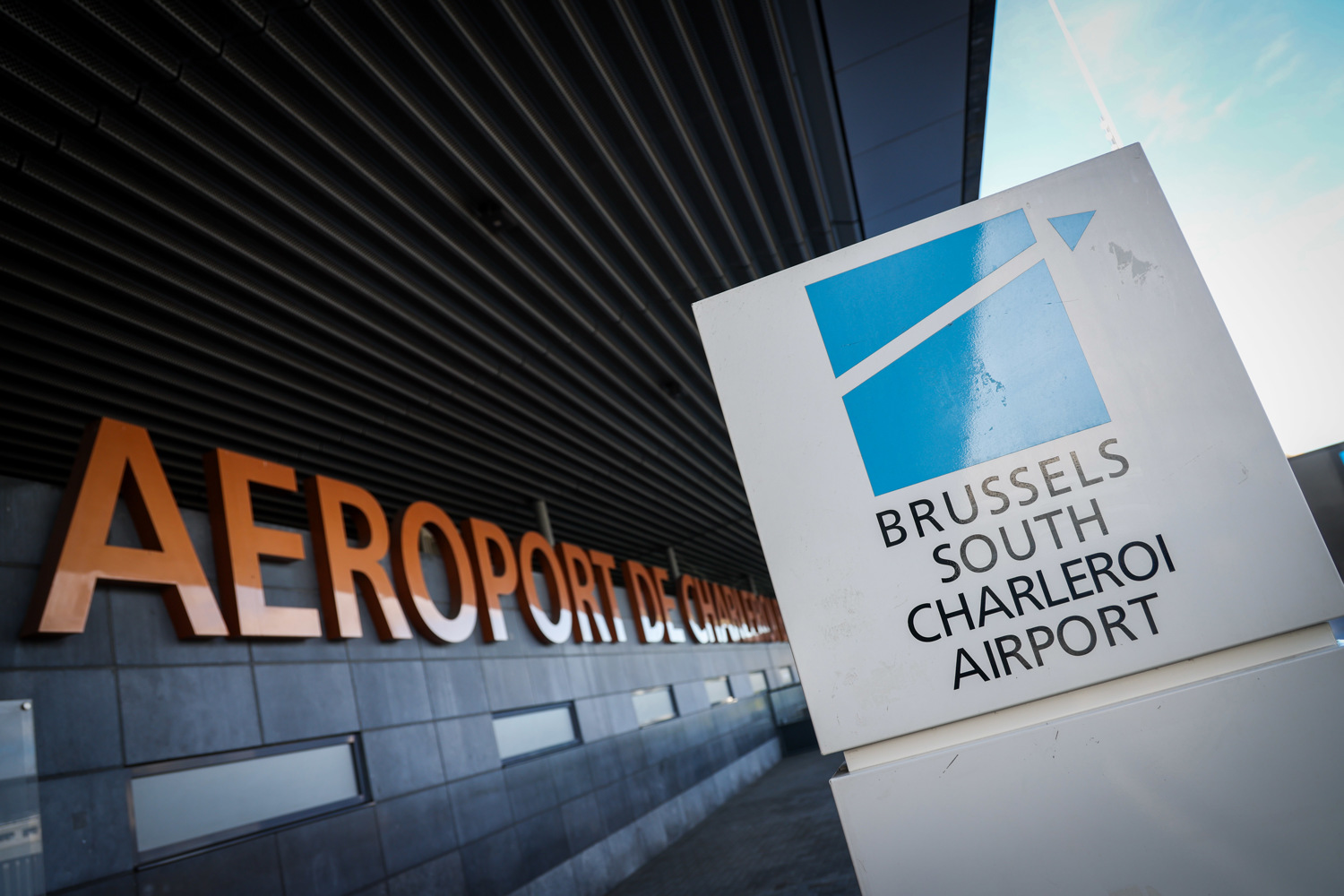
Brussels South Charleroi Airport. Credit: Belga / Virginie Lefour
The majority of the routes (six in 10) analysed for Brussels – Copenhagen, Vienna, Madrid, Bratislava, Prague, and Budapest – are predominantly cheaper by plane. Meanwhile, three routes – Berlin, Hamburg and Zurich – were found to be predominantly cheaper by train.
Despite a very short train journey of two hours to London, the flight was found to be cheaper on about half the occasions.
The largest difference between rail and flight fares was found on the Madrid–Brussels route, with the train costing 11.5 times as much as the flight for a mid-term trip (€240.50 for two separate tickets from the Spanish state railway company Renfe and the French SNCF, vs €21 for a Ryanair flight).
Better rail, fewer flights
The environmental cost of low-cost flights is "huge," Greenpeace stressed. Flights emit five times more CO₂ per passenger kilometre than trains on average. If railways used 100% renewable electricity, their impact could be over 80 times worse.
Still, the report concluded that what Greenpeace refers to as "artificially low" airfares continue to push travellers toward flying.
However, since the first major report on flight and rail fares in Europe in 2023, the share of routes where trains are dominantly cheaper has increased by 14% points. This is mainly due to better rail links and fewer ultra-cheap flight connections via hubs like London or Dublin.
Additionally, night trains, which offer a climate-friendly alternative for long-distance travel, are often more affordable than high-speed trains, but the report found that they can still not compete with "heavily subsidised" air travel.
Greenpeace is urging the EU and national governments to reform transport policy by ending subsidies for aviation, introducing a simple rail ticketing system and investing more in public rail infrastructure.
The organisation also advocates for the introduction of affordable "climate tickets," which would be flat-rate passes valid across national and cross-border public transport.
"Every route where a plane is cheaper than a train is a political failure," said Schuster. "We cannot keep rewarding the most polluting form of transport. Europe must make trains the cheapest and easiest option — not the last resort."
