
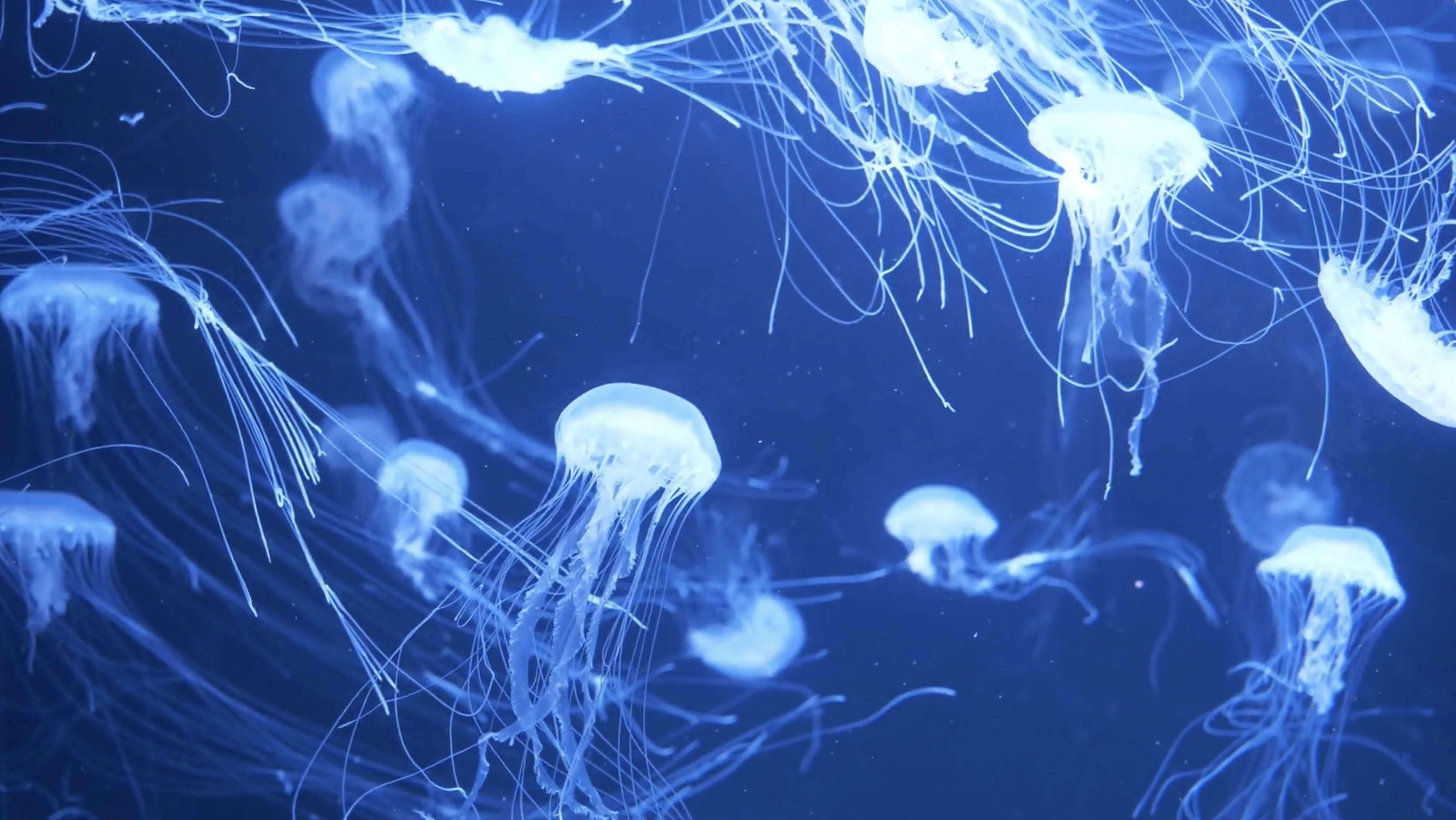
France’s nuclear power fleet was disrupted this month by jellyfish. What sounds like a ludicrous situation should actually be a lesson for energy system planners.
Nuclear reactors require constant cooling so that they can churn out carbon-free electricity 24 hours a day. This is normally achieved using water from rivers or from the sea.
That is why nuclear power stations are almost always located near bodies of water, although there are a limited number of reactors that use other materials like gases for cooling instead.
In northern France, near the Belgian border, the Gravelines power plant has six reactors, each of which can generate 900 megawatts of electricity. It is an integral part of the French energy system and has been in operation since 1980.
But earlier in August four of the reactors had to be temporarily switched off because the cooling system was disrupted by an unexpected culprit: jellyfish.
The filters used to make sure that the reactors are not clogged with any foreign bodies became overloaded after thousands of the marine animals were sucked up by Gravelines’ cooling system.
In order for the plant to keep operating safely, the reactors had to be ramped down so that workers could remove the jellyfish from the filters. This was eventually carried out but valuable hours of power generation were lost.
Jellyfish blooms are becoming larger, more regular and more widespread due to our changing climate. Warmer waters create the conditions needed for jellyfish to thrive, meaning this incident might become a regular occurrence.
There is no doubt that there will eventually be an engineering solution for this particular problem, whether that is better filters, a redesign of the cooling system or other workarounds to prevent jellyfish disrupting operations.
But the valuable lesson here is that the power system will continue to be disrupted by one of the main problems that the energy transition is trying to tackle: climate change.
Nuclear power stations are not just dealing with jellyfish either. Reactors have been switched off lately due to other climate-induced problems, primarily the increase in river or sea water temperatures.
If the water is not cool enough at source to do the job then there is a problem and even if it can be used, it might not be safe to discharge it back into rivers and the sea, as that is a massive risk for wildlife.
Marine animals are already struggling to adapt to higher temperatures without the addition of reactor-heated water to deal with, so there are rules in place to prevent that from happening.
Other energy generating technologies will have to face these climate questions too. Hailstorms and other extreme weather events are made more likely by climate breakdown, which is bad news for renewables like wind and solar.
Wind turbines can only handle wind speeds up to a certain limit before it gets too dangerous to operate them and there have been incidents of solar power farms being decimated by heavy hailstones. All of this cuts into the profitability of those installations.
Hydropower is another obvious at-risk energy-generating source too: if a country has built its energy system on water power, as Norway and Albania have done for example, then droughts pose a massive threat to security of energy supply.
So there are two main lessons to be learned here, the first of which is that delaying the energy transition from polluting climate-wrecking fuels to low carbon alternatives is a dangerous game.
The worse climate change gets, the more risks to all energy generating technologies there will be. It is a tipping point that humanity cannot afford to reach as there might not be a way back from it.
The second lesson is that all low and zero carbon energy sources are needed, so that the risks they are likely to face, be they hailstorms or jellyfish, can be reduced or at least made less disruptive.
France cannot just rely on nuclear, it needs wind, solar, tidal and hydro for this very reason. The same goes for other countries banking on too few options. If nuclear works for them, they should build it. If it doesn’t, then other alternatives need to be built instead.
Speed and variety then, are the ingredients that the energy transition needs. The jellyfish are a warning and it would be unwise to just wait to see what the next ‘unknown unknown’ might be. There might not be solution for the next one.
Want more updates and analysis of what is happening in the world of energy and climate? Interested in finding out more information about public tenders and consultations? Sign up to our Energy Rundown newsletter here!
