
A Flemish research institute is piloting a project in Melle, East Flanders, to prove that the climate impact of concrete can be reduced by up to 70% without sacrificing quality.
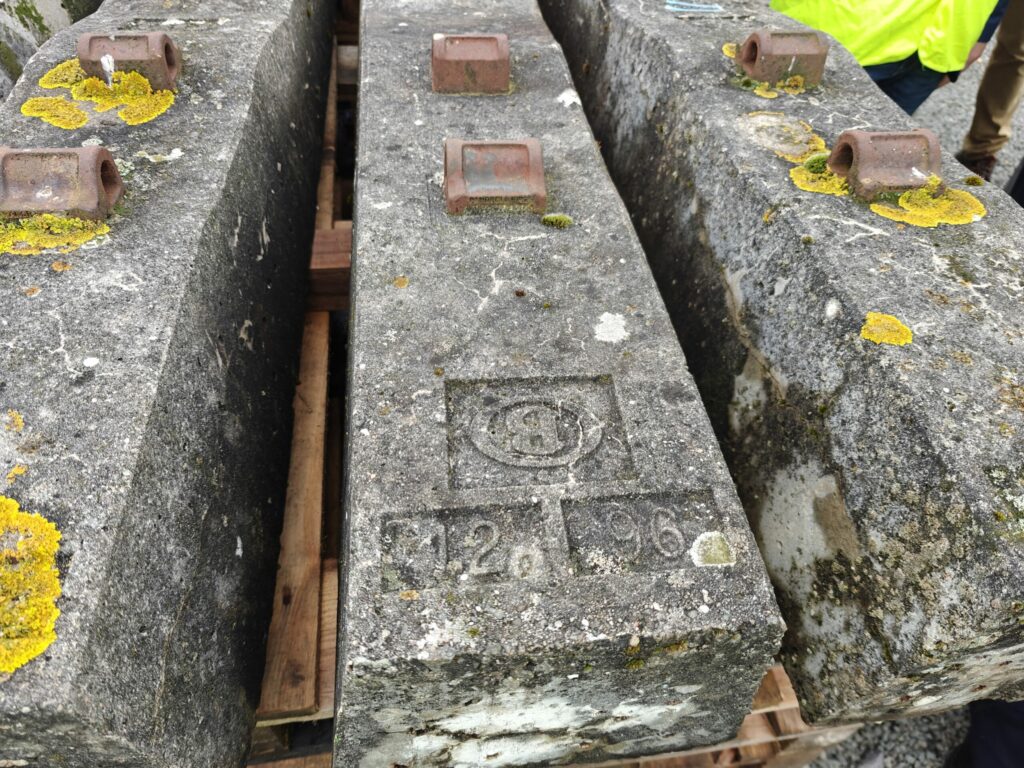
The Institute for Agricultural, Fisheries, and Food Research (ILVO) is experimenting with new forms of concrete while upgrading its silage bunker trenches, which store cattle feed. The site in Melle spans 5,000 square metres of concrete, and three types of concrete will be used for the renewal: traditional concrete, recycled concrete, and cement-free concrete using geopolymer binders.
Unlike traditional concrete, recycled concrete reuses materials through “urban mining”—recovering resources like sand and gravel from existing structures. Cement-free concrete replaces cement, a major source of CO₂ emissions, with geopolymers made from industrial by-products, such as waste from the steel industry.
Researchers will monitor the three types of concrete over the coming years using embedded sensors. The focus is on durability and resistance to agricultural conditions, such as exposure to acids from silage, to demonstrate the viability of sustainable alternatives.
Concrete plays a significant role in global emissions. “In Belgium, we use around 14 million cubic metres of concrete annually,” said Niels Hulsbosch, researcher at Buildwise, the construction sector’s innovation centre. “This accounts for 5 to 6% of Belgium’s total CO₂ emissions.”
Replacing cement with geopolymer binders could reduce this environmental impact by as much as 70%, ILVO researchers estimate. The new material is said to perform as well as traditional concrete in terms of strength and durability and even outlast it in aggressive agricultural environments.
However, costs remain an obstacle. Cement-free concrete is currently 30% more expensive due to limited production volumes. A €400,000 grant from Flanders Innovation & Entrepreneurship (VLAIO) has allowed ILVO to proceed with the project.
The aim is eventually to combine recycled concrete and cement-free concrete for maximum sustainability and efficiency. “That’s the ultimate goal,” ILVO stated, “but first, each alternative must be studied separately.”
ILVO has committed to sharing test results in the coming years, hoping to encourage wider uptake in the construction sector, which is known for its cautious approach to new materials.
