
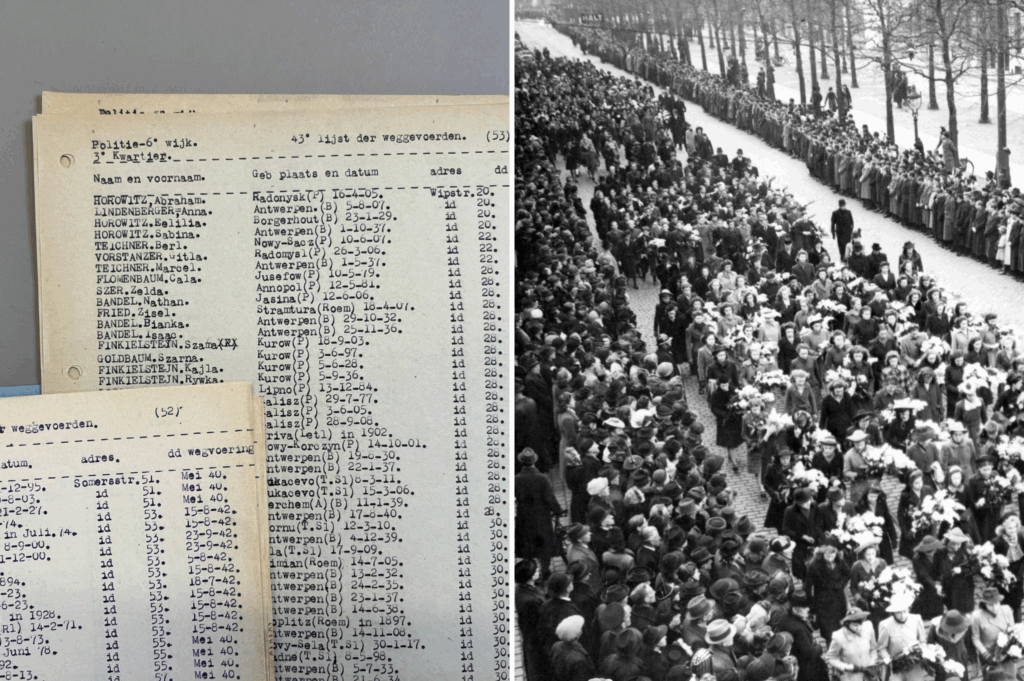
The city archives of Antwerp will receive an official list of people, mainly Jews, deported during the Second World War. It will be made available to the public.
On Wednesday, it was announced that the Antwerp police will transfer a historical list of deportees to the Felix Archive, the city of Antwerp's official archives.
Until now, the list had been kept in at the Antwerp police's Heritage Centre, which holds extensive evidence of the role of the Antwerp police during the Second World War – particularly in rounding up the city’s Jewish population to Nazi concentration camps.
The list of victims’ names, address and deportation dates make this major event in Belgian police history into a reality.
Written sometime after 4 September 1944, the list contains the names with address and date of the deported persons inside the 6th ward police zone. This date was when British tanks rolled into Antwerp for its liberation, showing the list was made to get an administrative record of deportations during the occupation.
'Everyone had died'
Historian Herman Van Goethem believes most Jews and political prisoners on this list were deported around 1942 and 1943. "This document shows how officers tracked down street by street who was left, and who wasn't anymore," Van Goethem told Flanders' Radio 1.
"There are streets where hundreds of people were gone. At that time it was not yet known that almost all of the Jews were dead, or what had happened to political prisoners," Van Goethem said. "Only from April to May 1945 did it become clear that approximately everyone on the list had died."
This police station was responsible for the district which largely corresponds to the district between the city park and the Plantin Moretuslei. It is presumed that every office in town made a similar list following the liberation.
A sensitive issue, the 2023 Belgian film ‘Wil’ depicts the moral dilemmas faced by police officers in war-torn Antwerp during the occupation and the choice between collaboration and resistance.
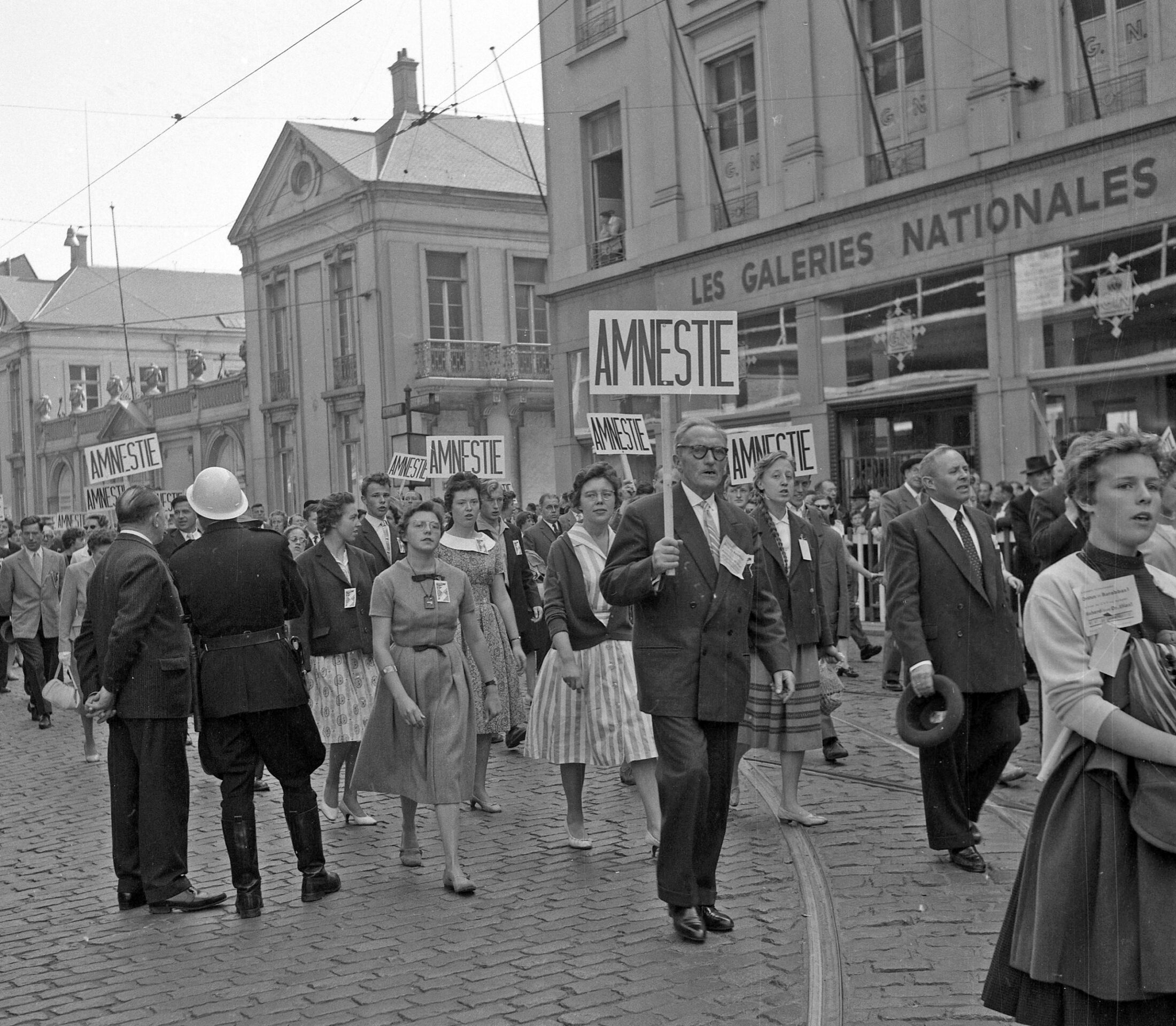
Picture shows people who demonstrate in the streets of Antwerp asking amnesty for Hendrik Elias, former head of VNV nazi party on 20 September 1959. This collaborator was arrested after the end of WW2 and sentenced to death in 1947, commuted to life sentence in 1951 and eventually pardoned in December 1959. Credit: Belga Archives
Barely 5% of the 25,000 people deported from Belgium, survived – about 1,200 people. This included a large part of Antwerp's Jewish population who were murdered in the war.
Deportations in Antwerp were also carried out with the help of Flemish nationalist collaborators, which leave a complicated legacy with the movement today. Belgian Prime Minister Bart De Wever's grandfather was a member of the Flemish National League (VNV), the nationalist party which collaborated massively.
In a statement, the city of Antwerp stressed that these deportations did not involve the entire Antwerp police force, as there was internal resistance to these action. There were also members of the Belgian Resistance within the police’s ranks, which the occupying German forces were also trying to root out by deporting them too.
"This list is no ordinary document. It shows us the faces behind one of the darkest chapters in our city's history, as well as the complex role played by the police force, which included both collaborators and resistance fighters." said Antwerp Mayor Els van Doesburg (N-VA).
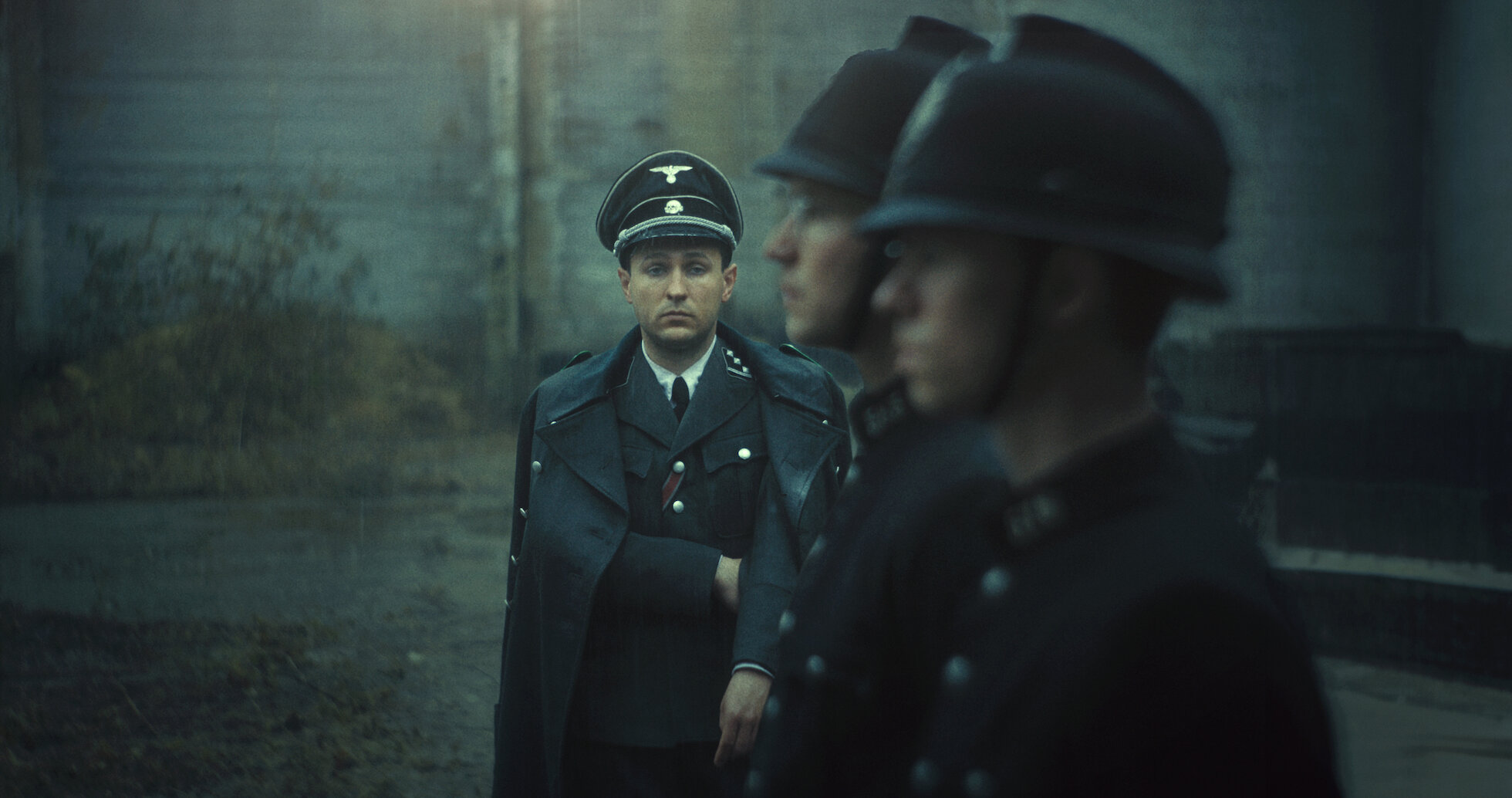
Image from Wil (2023) directed by Tim Mielants, about Antwerp police officers during the Nazi occupation.
"Police officers, too, risked deportation and death in concentration camps. In the Felix Archives, this page gets the place it deserves: not to hide, but to remember, acknowledge and learn," the mayor concluded.
The Heritage Centre of the Antwerp Police Zone holds an array of police history, such as uniforms, weapons, vehicles and documents, that have determined the evolution of the Antwerp police.
Meanwhile, the city of Antwerp’s Felix Archive, the new home of the deportation lists, holds more than 36 kilometres of paper archives and more than 160 terabytes of digital archives.
Two former Nazi prison camps in Belgium today are museums, notably Fort Breendonk in the Antwerp province and the Kazerne Dossin transit camp in Mechelen.
