
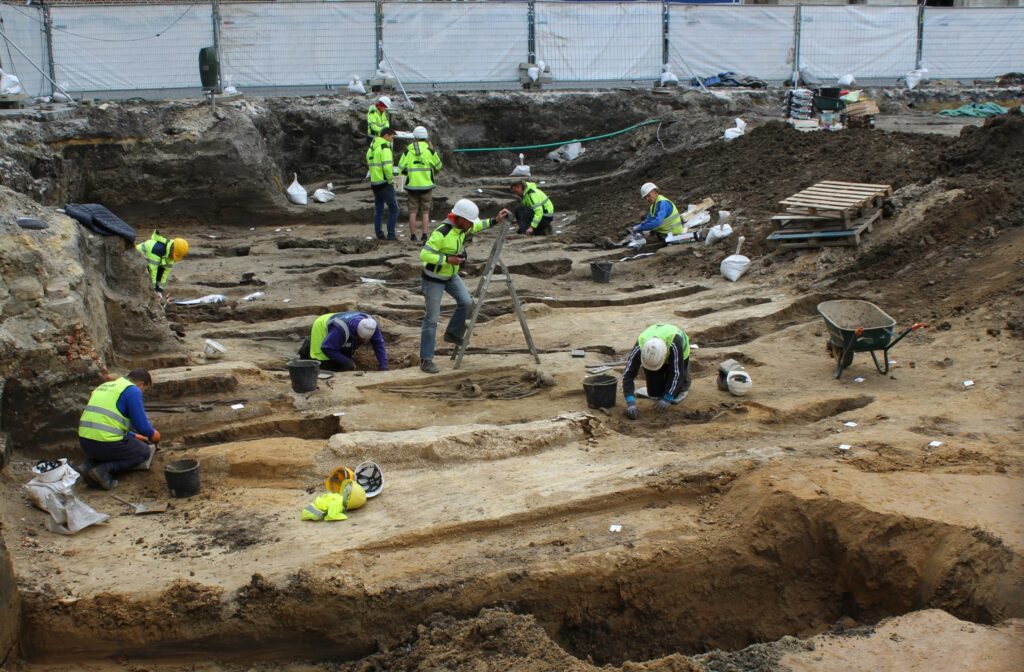
Archaeologists in Heusden-Zolder, Limburg, have uncovered artefacts dating back to around 7500–7000 BC during preparatory works for the expansion of the Dorpshof residential neighbourhood.
The team discovered 400 items, including flint and quartzite tools left behind by nomadic hunter-gatherers.
“This discovery is quite exceptional because the site is not located near a watercourse,” explained archaeologist Nick Van Liefferinge from the consultancy Archeologie. “It provides new insights into the living habits of that period.”
The artefacts were found between Dorpshof and Sint-Rochusstraat, where developer Matexi is building ten flats and nineteen houses. Concentrations of tools were uncovered at two separate sites, each measuring approximately ten square metres. Archaeologists believe the area likely served as a temporary camp where hunting equipment was repaired.
The fieldwork is now complete. The team uncovered a total of 400 items, including fragments of arrowheads, burnt flint, and ecofacts such as charcoal and charred hazelnut shells, indicating the use of fire during the occupation.
A scientific report featuring spatial analyses, illustrations, and dating results will follow. All artefacts and documentation will be preserved in a certified archaeological archive for future study.
