
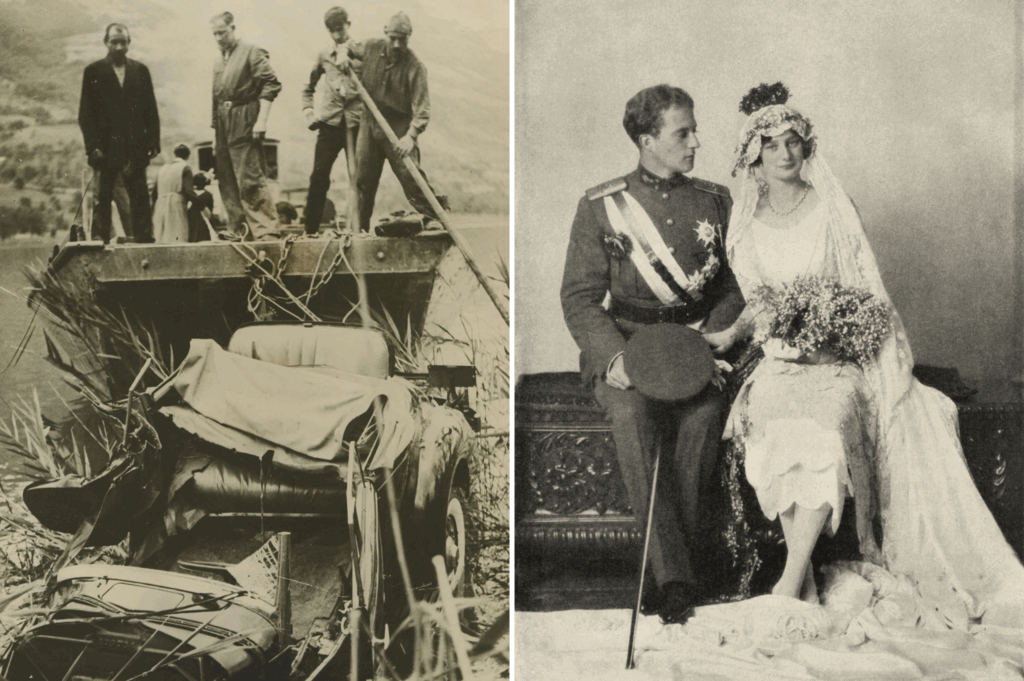
This Friday, Belgium marks the 90th anniversary since the 29-year-old Belgian Queen Astrid was tragically killed in a road accident just off the Lake Lucerne in Switzerland.
The Queen’s premature death transformed her into a folkloric figure in both Belgium and Switzerland, with news of the accident having dominated headlines all over Europe in the following days. Her death and the ensuing outpouring of grief can be compared to British Princess Lady Diana’s death in a car accident in 1997.
On the fateful day of 29 August 1935, Queen Astrid was on holiday in the Swiss mountains with her husband and Belgian King Leopold III. They had travelled incognito to their holiday home, Villa Haslihorn in the Lucerne canton.
The royals had been for a last hike in the mountains before heading home. That day, King Leopold had told the Queen that he wanted to drive the convertible car himself. Their chauffeur sat in the back.
Yet Leopold was inexperienced at the wheel. Between the town of Merlischachen and Küssnacht, he ran over the kerb and crashed straight into a pear tree. Astrid flew out of the open car and hit another pear tree.
The impact killed Queen Astrid instantly, with Leopold having survived with only minor injuries. The car's wreckage landed on the shores of Lake Lucerne.
First at the scene, was a Swiss amateur photographer and dental student, Willy Rogg. He checked the Queen’s pulse, but the 29-year-old had already died.
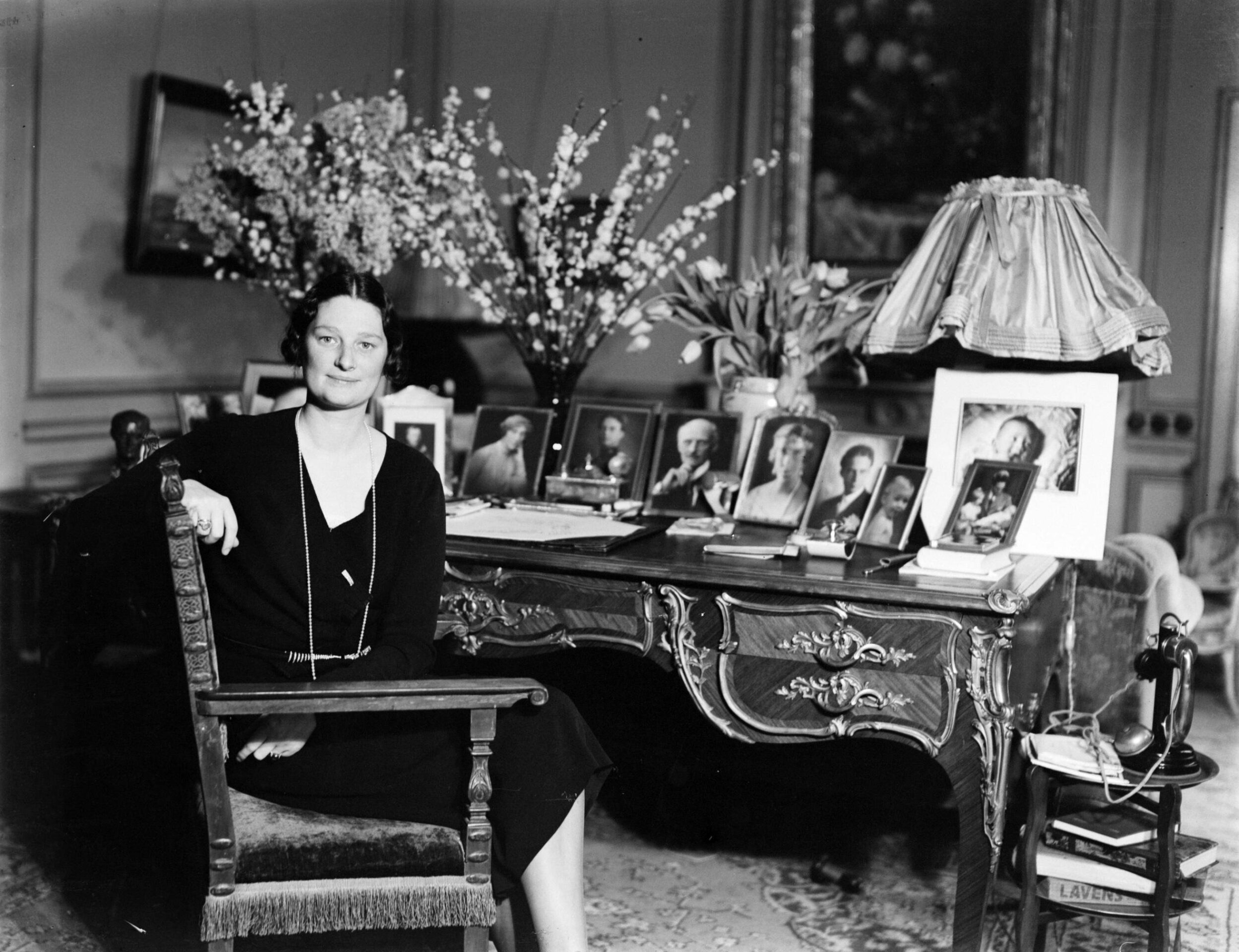
Queen Astrid at her desk in the palace in Laeken
"The dead woman had injuries on the right side of her face, and on looking closely, one could see her temple was dented. In her hair there were still small pieces of the bark of the unlucky tree," he later reported.
Having his camera with him, the dental student photographed the sovereign being placed in her coffin and receiving her last rites. He took five other photos, including of the car wreckage, semi-submerged in the Lake Lucerne.
Rogg cycled off to quickly get the photos developed, selling them to the American news agency Associated Press (AP) for 100 Swiss francs each. He took the photos himself to the Dübendorf Airport in the canton of Zurich, entrusting the precious pictures to Swiss aviation pioneer Walter Mittelholzer.
Despite it being dark, the photos were delivered to London three hours and twenty minutes later, at 00:55. This was Switzerland's first-ever night flight – making not only photographic but also aviation history. The images were published the next morning in British newspapers, with the crashed car appearing on the front page of the Daily Express.
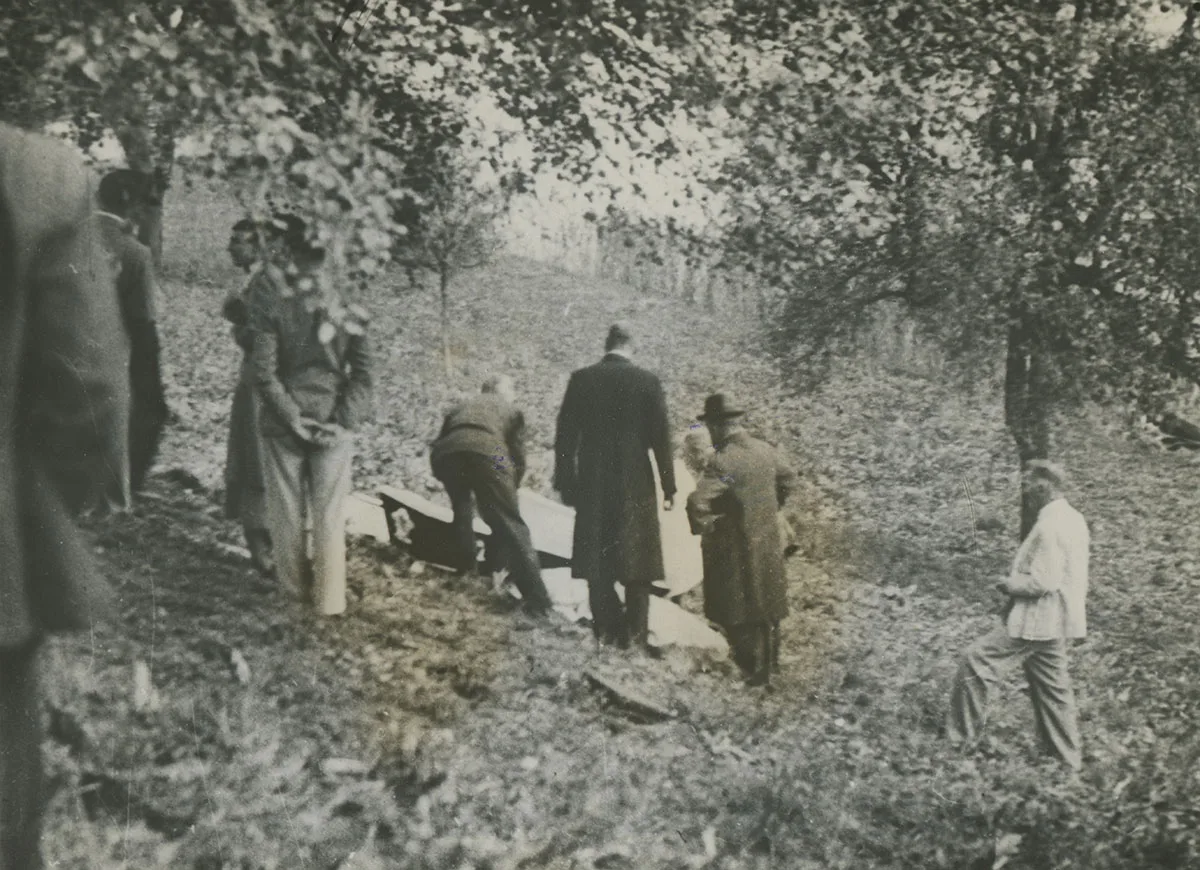
Photo by Willy Rogg: The body of Queen Astrid (under a white cloth) is lifted into a coffin. Credit: Heimatmuseum Küssnacht
Back in Belgium, the death of Astrid plunged the country into deep mourning. It was still recovering from the death of King Albert I a year and a half earlier, after he had fallen from the cliffs of Marche-les-Dames in mysterious circumstances.
Like Princess Diana, Astrid was well-loved by the Belgian people. The Sweden-born queen was viewed as charming and down-to-earth, particularly due to her dedication and support for the country’s most disadvantaged who had been badly affected by the major economic crisis of the 1930s.
On the day of the funeral, tens of thousands of mourners lined the streets in Brussels to pay tribute. Occasional sobs from both men and women broke the gloomy silence as the procession left the St. Michael & St. Gudula Cathedral, according to newspaper reports from the day.
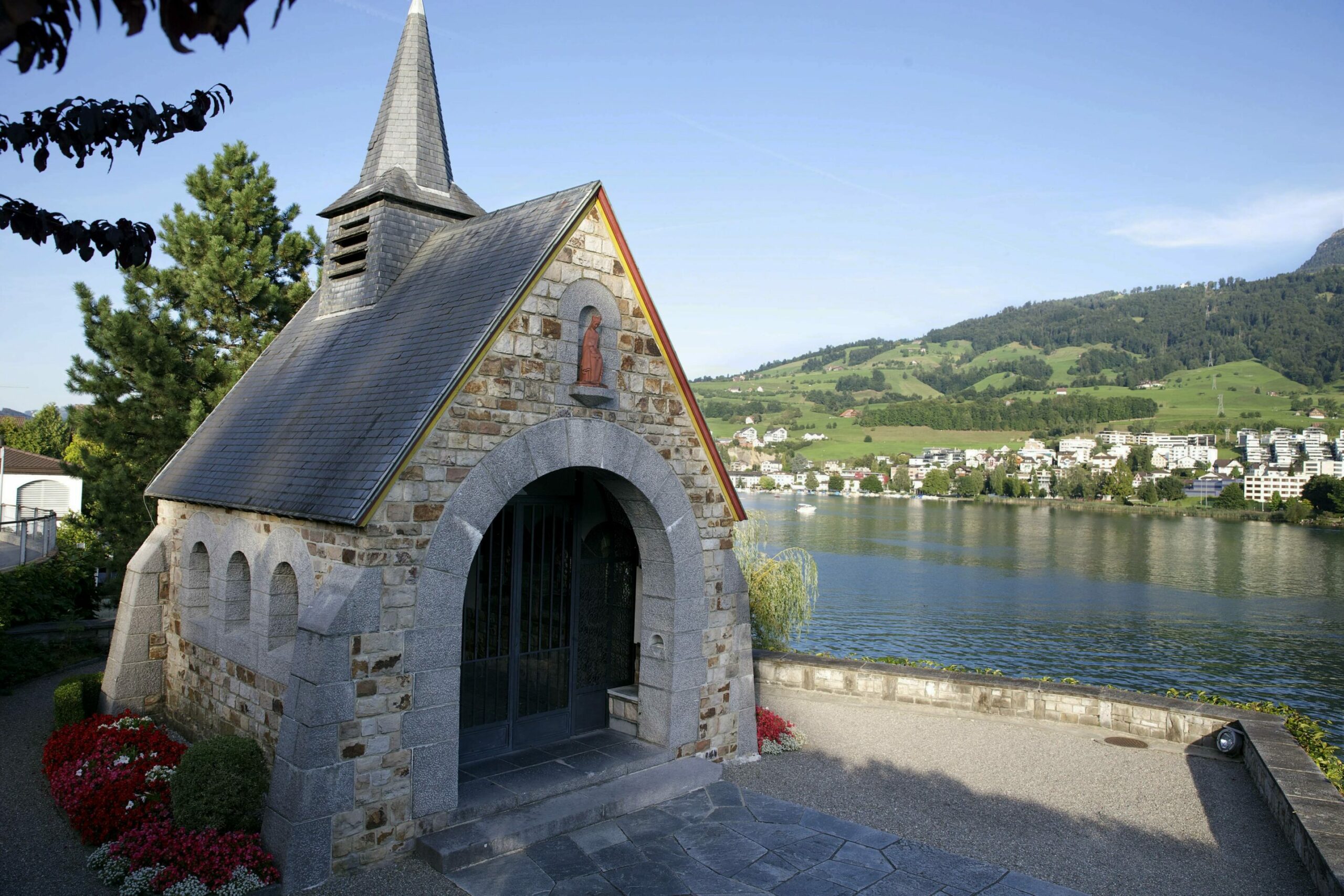
The Astrid Chapel in Kussnacht, Switzerland, Friday 28 August 2015. Credit: Belga / Nicolas Maeterlinck
Having survived the crash, King Leopold appeared that day with a sling around his arm. Queen Astrid's body was carried in a huge hearse drawn by eight black horses covered with black hangings and with nodding plumes, from the city centre to the Royal Crypt of Laeken, where she is interred today.
At the site of the crash in Switzerland stands the Astrid Chapel, which serves as a reminder of the drama of that tragic day. It still attracts the public and mourners from Belgium and beyond.
This Friday, the Royal Crypt of Laeken will be open from 14:00 to 17:00 to allow the public to pay tribute to the fourth Queen of the Belgians.
