
Brussels is revving back into action after the summer congé. A time in the year often coupled with the arrival of new diplomatic staff, trainees, and students to the city.
According to the Belgian foreign ministry, around 8,000 interns travel to Brussels every year, alongside over 19,000 foreign students. The city is home to some 60,000 diplomatic or international staff and their families.
Every five years, another fresh group arrives en masse - new members of the European Parliament, in tow - their staff. In June 2024, almost half of the faces in Parliament changed after the June election, bringing a new group of international residents to the city.
None of this international community, who account for almost 40% of the Brussels population, can vote in regional elections. As a result, the views of non-Belgian residents in the city can often be overlooked by the Brussels-Capital Region.
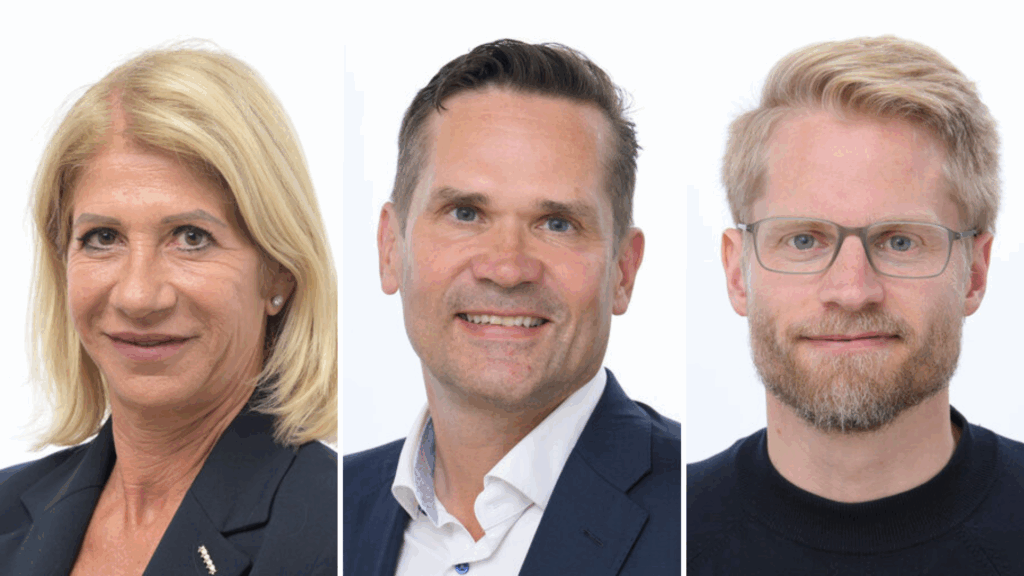
To help bridge this divide, the Brussels Times spoke with three new MEPs from Finland, Italy, and Germany. Just over a year on from their election, what do they think of the city? And is there anything they would change to make it better?
Capital of crime
The levels of crime in the city, unsurprisingly given recent waves, was a topic of conversation. This summer alone has seen over 20 shootings in the city, with the Brussels Public Prosecutor warning at the start of August that "anyone, every Brussels resident and every citizen, can be hit by a stray bullet".
For Kai Tegethoff, a German MEP from the Greens/European Free Alliance group in the Parliament, crime is not just an abstract, but something experienced first-hand.
"I've lived in Brussels for one year now and in that time have not just heard of shootings and drug criminality, but seen it". The new MEP moved to Brussels from Germany with his partner as it was "good to fully commit", as a result, Tegethoff feels he has a more rounded experience of the city, the good and bad.
"What I don't like, now living in Brussels, is the aspects of criminality, it is quite present". In addition to experiencing crime first hand, friends who visited the Volt MEP have also been victims, with their car being broken into and robbed "all within a year."
The reports of crime have been front of mind for the MEPs, Mika Aaltola, from the European People's Party group, shared that crime was something he mostly reads about, but it was hard to ignore. Carolina Morace, from The Left group and a new MEP from Italy, thought that one of the worst things about the city was that it "could be more safe".
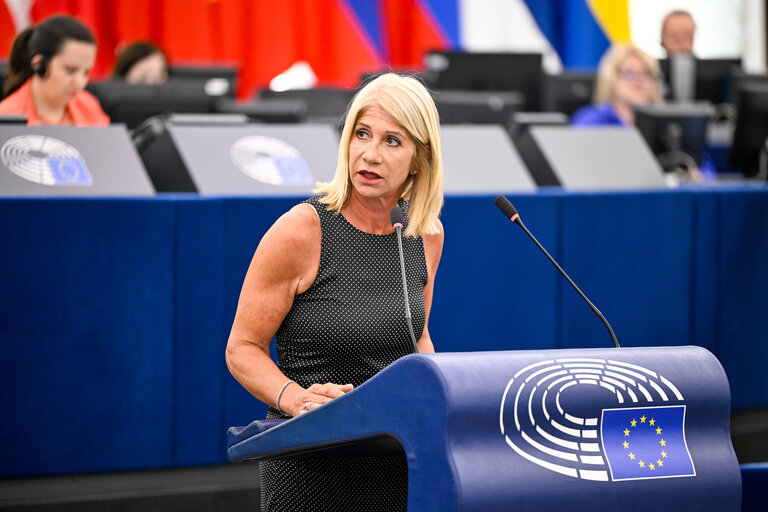
Carolina Morace MEP speaking in an EP Plenary session. Credit: European Parliament
The criminal reality jarred with Tegethoff, who viewed it as "quite ridiculous considering you are in the capital of the EU". More jarring was the fact that everyone knows it exists with people "warning you about moving to areas", he continued.
These "violent expressions of gang activity" were not a good sign, reflected Aaltola, a new MEP from the National Coalition party in Finland.
He suggested that the problem was more global than Brussels-specific, with transnational youth gangs getting their money out of drug dealing and having turf wars "it is a global city and with that you get global ills [...] connectedness can mean connected to extreme elements as well."
This criminal 'second side' of Brussels was seen by the MEPs as something you only recognise once you live here, there was a hope that something would happen given everyone was now talking about it.
The identity of Brussels
Brussels as a 'global city' was a common phrase used, more often as a positive. The MEPs described the city as lively, diverse, and a representation of Europe.
Aaltola, who has previously lived in New York, said the two cities felt similar. In Brussels, "you can see it is the capital of Europe and it is a global city with people coming from distant parts of the world".
The MEP who has not committed to living in Brussels, and changes hotels regularly to see new parts of the city, felt that "the street life is good in Brussels, it is very lively."
However, even with this, he felt that Brussels was a good balance between large and small "the soul of the city is still a small town, where people like to take it easy."
This was a view shared by Tegethoff, who felt that "you really feel that Europe comes together in Brussels". One of his main connections with living in Brussels is the ability to sit outside a neighbourhood bar, drink a beer, eat fries, and relax. For him, the surreal sight of bright green parrots squawking above a beer terrace captures the odd charm, a "Mediterranean city in northern Europe".
"Life here is peaceful, not like in Rome", shared Morace, who represents the Five Star Movement party, she enjoys going to Sainte Catherine to enjoy the fish options, partly to counter the food in the supermarkets, where the quality was not up to Italian standards.
Asked about Belgian identity, the MEPs had some difficulty putting their finger on it. "I ask myself this question as well", confessed Tegethoff, "it is probably this diversity, having different cultures and identities, in a way a symbol of Europe". Morace was more blunt, "it is difficult to have an identity when you have three languages".
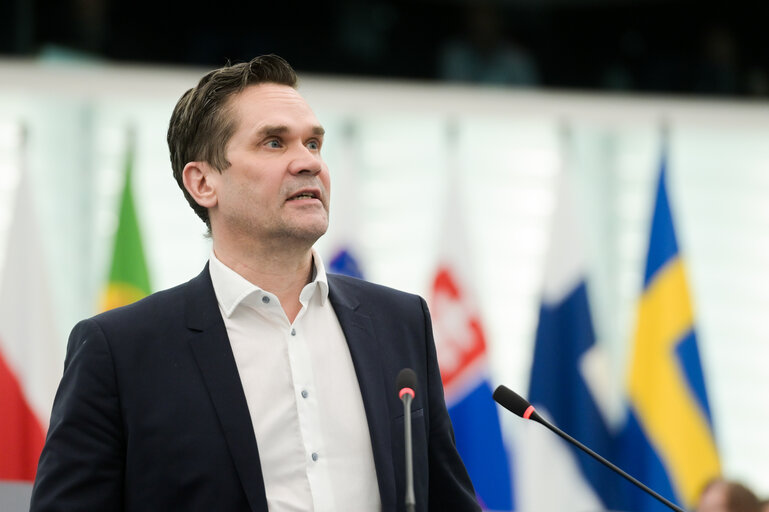
Mika Aaltola MEP speaking in an EP Plenary session. Credit: European Parliament
But Aaltola took a different view, "Finland has two official languages as well, and still there is strong national sentiment", however he accepted that "sometimes you need a strong enemy next to you to develop a strong identity", something Belgium fortunately lacks.
Reflecting on the lack of a Brussels-Capital Region government, Aaltola alighted on one aspect common to the Belgian experience "it is not the government that holds Belgians together, it is something else."
Most of the reflections on Brussels were naturally based on comparisons with their home countries. For example, how the weather or prices compare naturally differed between Finland, Germany, and Italy. But in one area, all three agreed - the charm of the city.
Brussels is a "beautiful city to live" expressed Morace. This is high praise from the MEP who has not only travelled the world in a previous career as an international football striker and coach, but also as someone born in Venice and who has lived in Rome. "When there is sun, you can take a coffee, it is enjoyable".
Aaltola, who explained that a morning run was very important to him, said he enjoyed that there were lots of parks. While he didn't have one spot in mind, Tegethoff thought that the availability of green spaces so close to the city gives "the opportunity to escape city life for a moment".
The chaos and complexity of Brussels
Few cities embody chaos and complexity quite like Brussels, where, during the pandemic, crossing a single street could mark the difference between wearing a mask or not. While the days of the pandemic are far behind, that complexity is something that the MEPs have already picked up on.
Brussels, according to Aaltola, has "more government than there is in any other capital city in Europe" there is a "bit of an unplanned aspect to Brussels", while the Finn doesn't live here full time, he shared some insight from the wider pool of MEPs about the city's reputation "I hear from my colleagues if I move here I will bump into bureaucracy".
Tegethoff also reflected on the high degree of independence of the communes, "in the end, the overarching system is not well coordinated."
Some of this is represented in the transport system that feels unplanned and where cycling is more of an "adventure", according to the German. Instead, he chooses to walk "because the connection by public transport would give no more than a five-minute advantage".
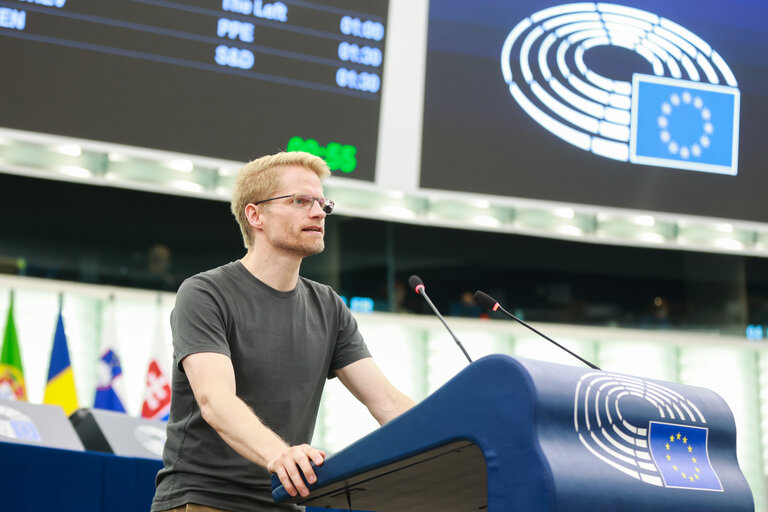
Kai Tegethoff MEP speaking in an EP Plenary debate. Credit: European Parliament
Walking may be preferable for another reason, to escape Brussels' chaotic roads. Improving this is an opportunity for the communes and Brussels-Capital Region, according to Morace, who said reducing the number of cars is what the city needs to think about, especially as "the air is not the best" with a lot of pollution.
The city would be better, according to Aaltola, if road traffic was organised differently, one of the negative sides for him was the "traffic jams, everyone in Belgium wants to own a car". Morace's advice for someone moving here for the first time was to "prepare yourself for the traffic, because sometimes it is completely crazy".
A fifth of the Brussels economy depends on the activities of its international community, and Belgium as a whole benefits. This is something the Belgian Prime Minister knows too well, having felt forced to apologise for the Brussels-Capital Region 'begging' the EU institutions for money for public works in June.
As party leaders meet to try and form a new Brussels-Capital Region government, over 400 days since the election, they may be tempted to see things through a 'you can't sit with us' linguistic lens. However, it may be beneficial to take a broader perspective and reflect on what is important to the international community, who have come from across the world to Brussels to collaborate in creating something better.
For all its flaws, the MEPs agreed on one thing: Brussels is beautiful. For a city that survives on first impressions, this is important. The bigger challenge is keeping first-timers as advocates for the city. That starts with listening to them.
