
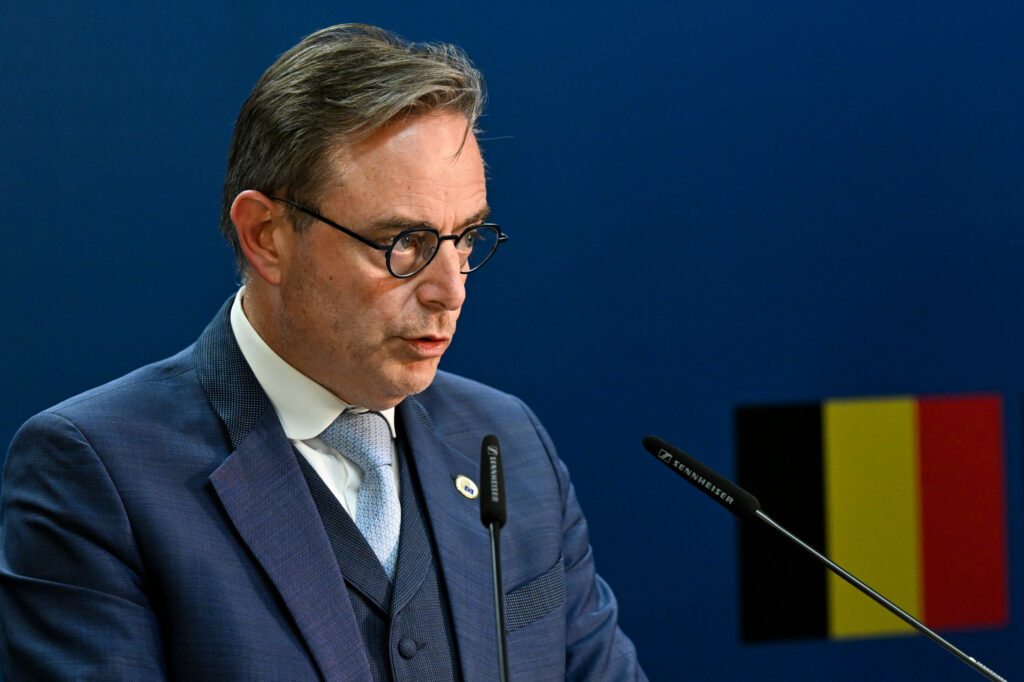
With budgetary challenges, social reforms, security, divisions on Gaza, EU-US trade tensions and a Brussels police zone merger on the agenda, Belgian ministers have a lot to deal with. Autumn is set to prove both busy and challenging as the Federal Government seeks to push forward with its reforms.
In July, the Federal Government concluded its 'Summer Agreement' right in time for the Belgian National Day. The agreement dealt with a "pension reform, tax reform, modernisation and flexibilisation of the labour market," Prime Minister Bart De Wever (N-VA) said at the time.
However, the agreed reforms – the rise of the official retirement age, a reward for those who work longer, and a loss of (part of) pension for those who stop before the official age – are proving to be controversial. Additionally, as the government believes that social protection has made the Belgian labour market inflexible, a disputed reform of the labour market is also due to be approved.
Since the Federal Government announced its intention to make big cuts to social spending in order to narrow the budget deficit, the trade unions have been organising several general and nationwide strikes to denounce what they call the government's "anti-social measures."
While the Federal Government touted the 'Summer Agreement' as a huge accomplishment that would make the economy more competitive, it will still need to be approved by the Federal Parliament this autumn.
Meanwhile, the security situation in Brussels (which has seen numerous drug-related shootings since the start of the year) will also have a prominent place on the agenda, as the Council of Ministers approved the merger of the six police zones in the Capital Region. However, it is expected to take much time, effort and political debate before the merger is concluded.
'Major' government crisis?
Before the ministers and MPs could get around to these issues, however, they first had a big international hurdle to clear.
While the new political term was supposed to start on Monday 1 September, it began early this year. In the last week of the summer recess, the divided Federal Government held a meeting to discuss the Palestine issue, following Israel's latest assault on Gaza and the widely recognised famine gripping the besieged enclave.
Before the summer, Flemish socialists Vooruit, Flemish Christian-Democrats CD&V, and Francophone centrists Les Engagés already wanted Belgium to continue with sanctions against Israel, but recently they increased the pressure.
For the three governing parties, the issue was even worth "a major government crisis" unless firm action was taken. While no one wanted to bring down the government over this issue, CD&V and Les Engagés had explicitly threatened that they were willing to block other government plans if no decision was made.
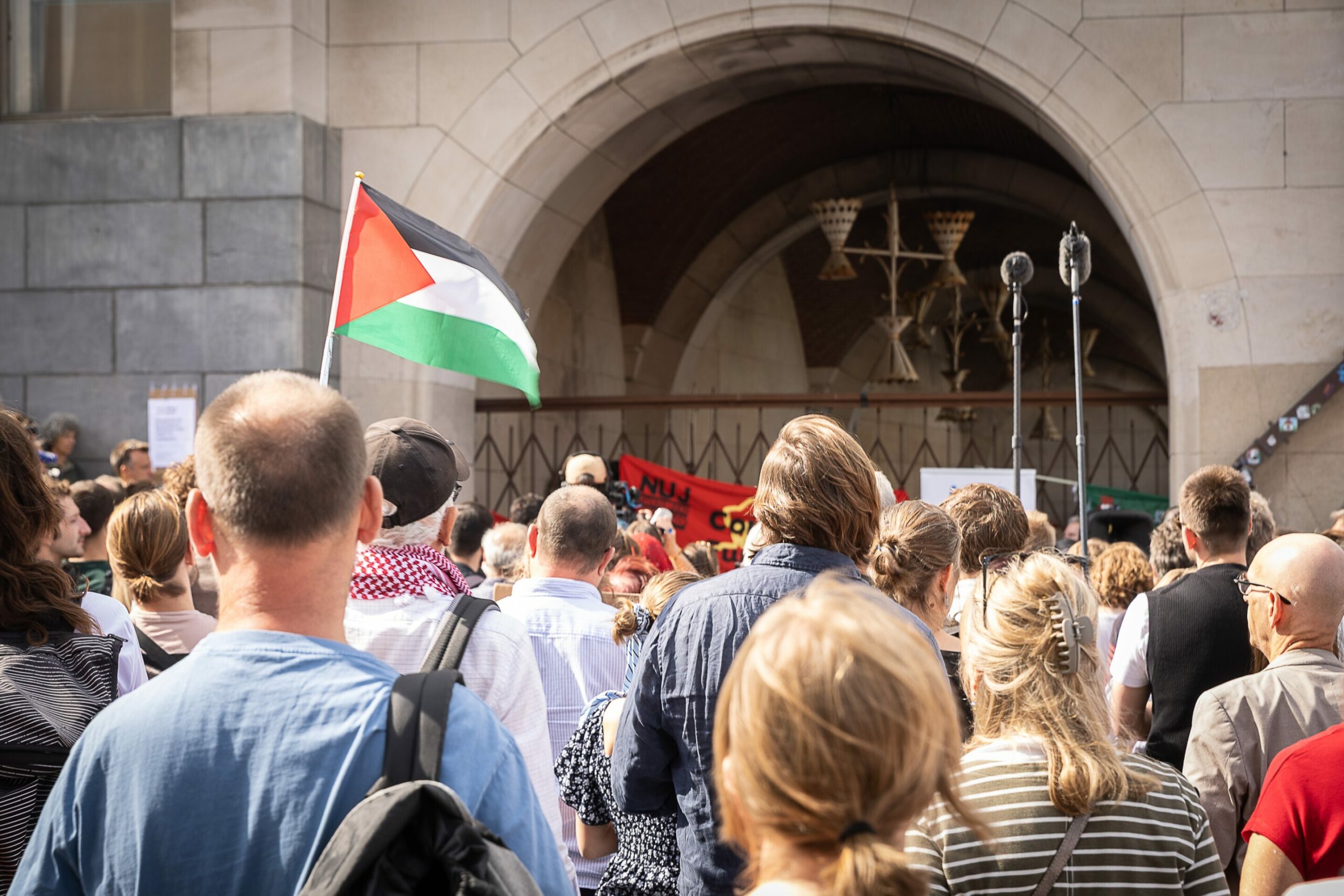
Belgian and international journalists attend "Stop killing journalists" protest in solidarity with Palestinian journalists and condemn the killings committed by the Israeli government, in Brussels, on Tuesday 26 August 2025. Credit: Belga / James Arthur Gekiere
They were looking to the two largest parties in the coalition: Flemish nationalist N-VA and (especially) Francophone liberal MR. They have been accused of blocking any progress on the issue. De Wever has aligned with Germany’s stance on the recognition of Palestine, calling it "pointless" unless certain conditions are met, including the full disarmament of Hamas. Many other countries take a similar stance and include the return of the remaining hostages as a prerequisite.
The Flemish nationalists have shown themselves to be more open to toughening Belgium's stance against Israel. However, MR was much harder to persuade to take a harder line against Israel, let alone to recognise Palestine.
The inner cabinet briefly considered the issue for the first time last Wednesday. Foreign Minister Maxime Prévot (Les Engagés) was allowed to propose a memorandum containing a series of sanctions against Israel, but also stipulating swift recognition, and the ministers met again about the topic on Monday.
The meeting ran until after midnight, but the different government parties were finally able to reach a long-awaited agreement on the issue. It concerns, among other things, additional humanitarian aid for Gaza, sanctions against Israel and Hamas and, albeit very conditional, recognition of a Palestinian state.
With these conditions in mind, Belgium will also support the New York Declaration on 5 September. This is the French-Saudi initiative aimed at peace between Israel and Palestine, which includes the recognition of Palestine
Burdensome budget
A divided Federal Government is not an ideal way to restart the political year for the Arizona coalition, particularly as De Wever is aiming to pass the abovementioned wide-ranging socioeconomic cuts and reforms through parliament.
De Wever has stated that his core political mission is tackling the country’s budgetary unbalance while restructuring the country’s finances. In the coming weeks, the budget work will also gradually get underway.
This year, Belgium has faced an Excessive Deficit Procedure (EDP), an EU rule forcing Member States to limit their deficits to 3% of GDP and public debt levels to 60% of GDP, either by cutting spending or increasing taxes.
But there is still work to be done. A report from July by the Federal Monitoring Committee, formed by a group of senior civil servants who monitor the budget, delivered some bad news: the federal deficit this year was estimated at 4.1% of GDP, or €26.2 billion. Next year, it is expected to be same percentage, but rise to €26.6 billion. In 2030, the deficit is expected to reach 5.4%, or €40.1 billion.
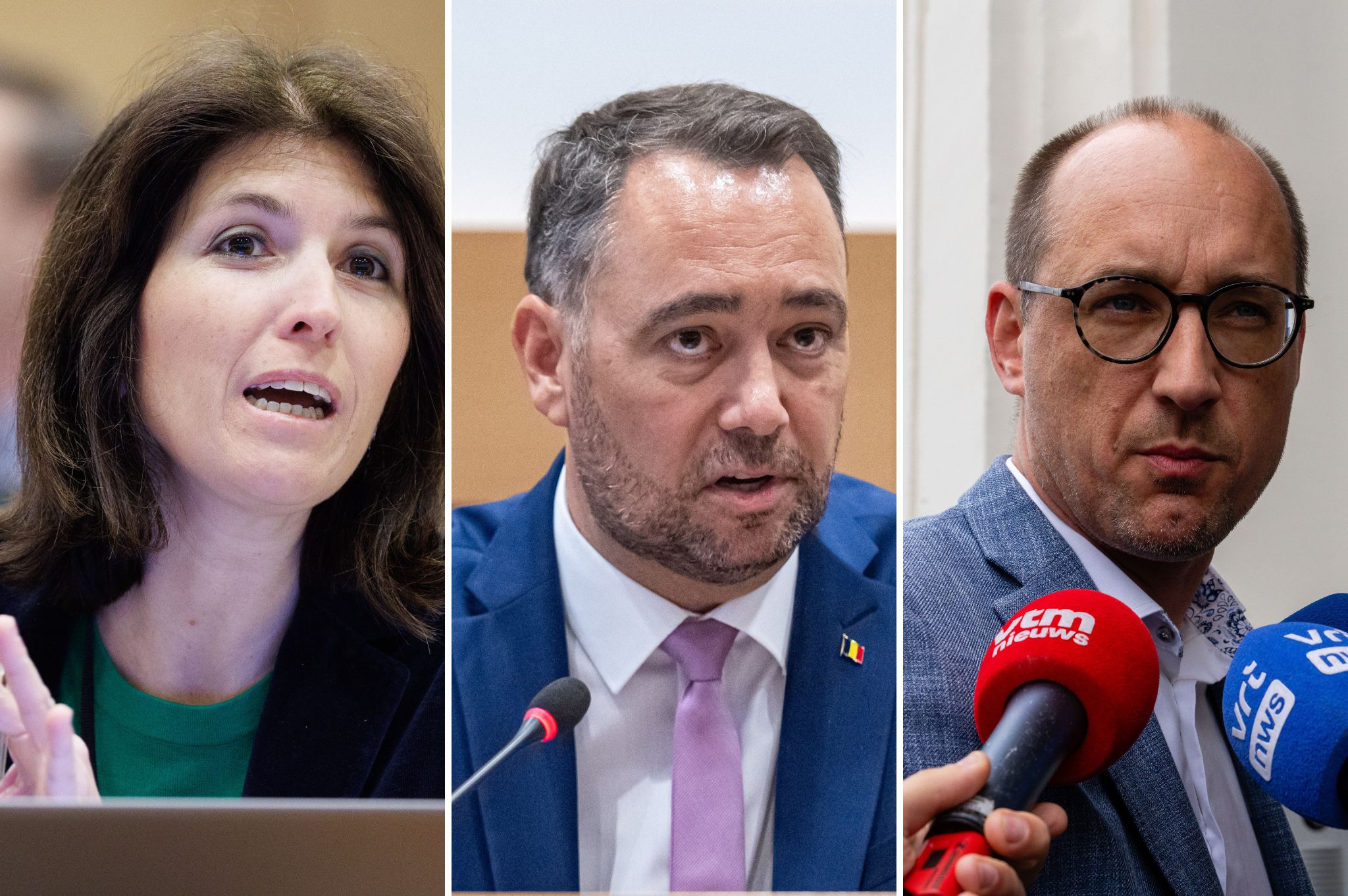
Open VLD's Alexia Bertrand, Foreign Minister Maxime Prévot (Les Engagés), Budget Minister Vincent Van Peteghem (CD&V)
"We are taking these signals seriously," said Minister of Budget Vincent Van Peteghem (CD&V) at the time. "These numbers highlight the need for a long-term focus. It must motivate everyone to bring the agreed reforms into effect as quickly as possible."
On the opposition, Flemish liberal MP and previous Budget State Secretary, Alexia Bertrand (Open VLD), took the opportunity to call it the worst budget in 25 years (with the exception of the Covid-19 year in 2020).
"This is simply a disgrace for the De Wever government," said Bertand following the report. "The big promises are in stark contrast to the achievements. The painful reality is that the debt continues to rise and the budget deficit is growing ever larger."
De Wever's office expects €8 billion from job creation and subsequent spending reductions, but in May the Federal Court of Auditors severely criticised these projections as "heavily overestimated", especially concerning employment growth.
The De Wever government will also face the fall-out for majorly cutting social spending in budgetary efforts – from unemployment benefits to pensions and asylum support services, but also for health and culture. National trade unions have strongly opposed the government's plans with regular mobilisations, which are set to continue.
Trade tensions
Geopolitical tensions have also played a role in the poor outlook for the Belgian budget under the new De Wever government.
Russia's ongoing war in Ukraine has pushed Belgium to raise its defence spending, finally meeting the 2% of GDP spending target last week. This means it will immediately rise to 2% of GDP each year during this legislative period. According to the Court of Auditors, the original calculations made far too generous claims on recoupment effects – up to as much as €8 billion – and therefore must be addressed in this area as well.
To bring the deficit back up to the set ambitions, additional efforts will therefore be required. The Monitoring Committee will soon present its traditional forecast for the budget conclave. The deadline for an agreement on this is the second Tuesday in October, when the Prime Minister traditionally delivers his State of the Union address to the Parliament.
The following weeks promise busy times in that same Parliament: numerous government reforms will have to be approved by the Chamber. The temporary limitation of unemployment benefits had been a difficult undertaking, but federal MPs will also soon be presented with measures such as pension reform and the capital gains tax.
Many reforms still have to pass through the government's table, as they only received the green light in the first reading.
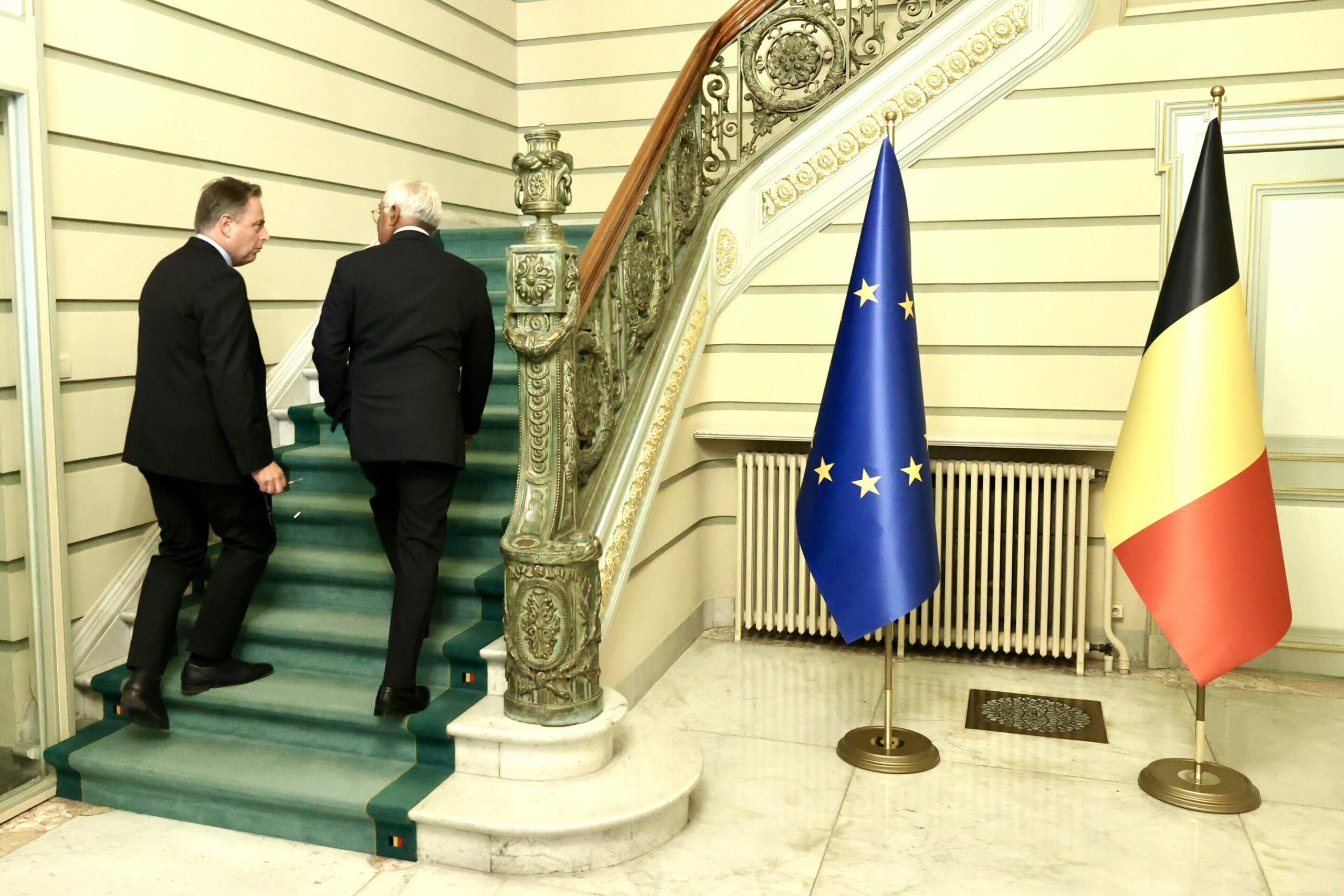
Belgian Prime Minister Bart De Wever (N-VA) with European Council President Antonio Costa, 27 August 2025 in Brussels. Credit: EU
As a key member, Belgium also finds itself caught up in the problems of the European Union, which is also facing a difficult autumn. Commission President Ursula von der Leyen will give her state of the union speech on 10 September.
The EU will be aiming to successfully boost both defence capability and industrial competitiveness as a key test for Von der Leyen's Commission, which, after having had its hand forced by the US on trade discussions, is facing a crisis of confidence.
Last week, US President Donald Trump lashed out against the EU for regulating American tech companies.
He threatened more sanctions, including trade barriers and unprecedented export restrictions – which could also have a greater impact on Belgium's economic progress and the stability of the government.
