
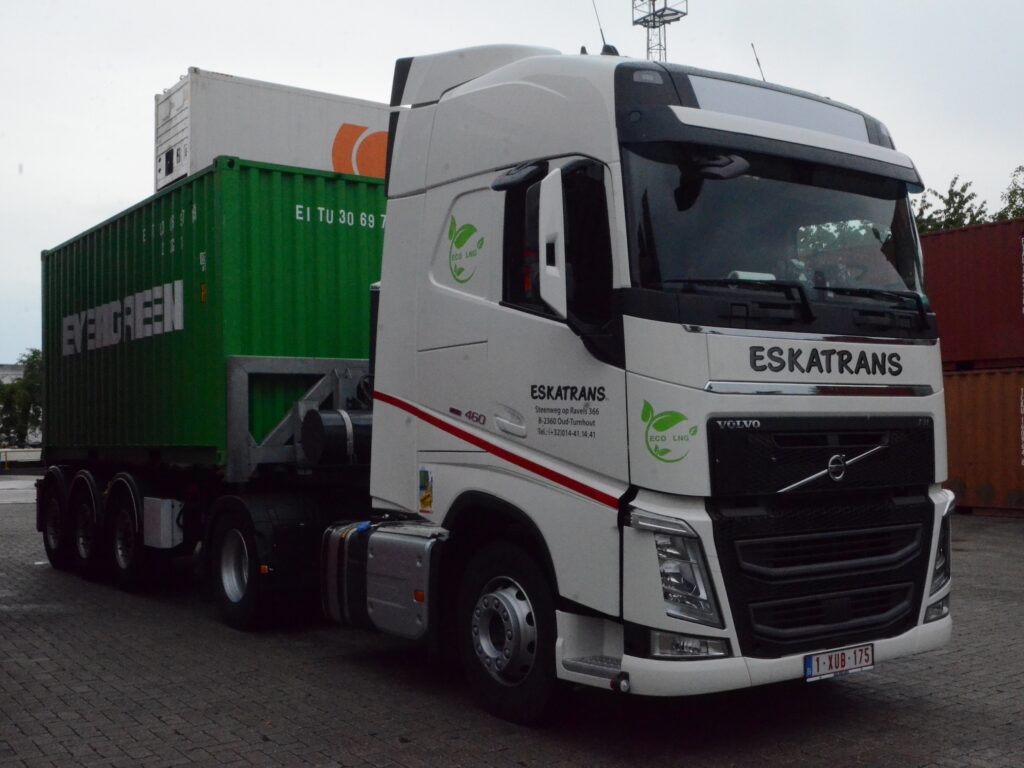
An increasing number of transport firms are imposing surcharges on clients due to growing bottlenecks in and around the Port of Antwerp, industry publication 'Flows' reported on Tuesday.
The so-called congestion surcharges aim to highlight the persistent structural issues at various container terminals. These problems affect all players in the port ecosystem, including terminal operators, shipping lines, and even the port authority itself.
Eskatrans, which was the first to implement the surcharge a few months ago, has now been joined by other major names in the sector, such as JOST, Van Moer, and Katoen Natie. The surcharges reportedly range from €20 to €35 per container.
'The port is simply too small'
“The port is simply too small, and we need to acknowledge that,” Joost Van Lierde of Eskatrans said in an interview with Belga News Agency on Tuesday. He explained that current efforts, such as encouraging night transport, do little to solve the deeper issues.
“The planned port expansion won’t be ready for several years, and that’s not even accounting for the next phase of the Oosterweel works,” he said.
According to Van Lierde, Eskatrans had been losing as much as €6,500 per day or €130,000 per month, based on 20 working days.
Logistics giant imposes conestion surcharge
As of Monday, logistics giant Katoen Natie has also introduced a surcharge of €35 per container for goods transported via the Port of Antwerp, 'Flows' reports. The fee applies to both import and export containers and is set to remain in place until the end of September 2025. While Katoen Natie did not officially confirm the measure on Tuesday, it did not deny it either.
Transport companies point to several root causes, including mandatory time slots at terminals, which are often fully booked, making efficient scheduling nearly impossible. Delayed arrivals of deep-sea vessels are another significant factor disrupting operations.
Van Lierde suggested one possible solution: adjusting the timing of the evening shift in Antwerp. “Right now, it starts at 6 p.m. Moving it forward to 4 p.m. could already make a big difference,” he argued.
