
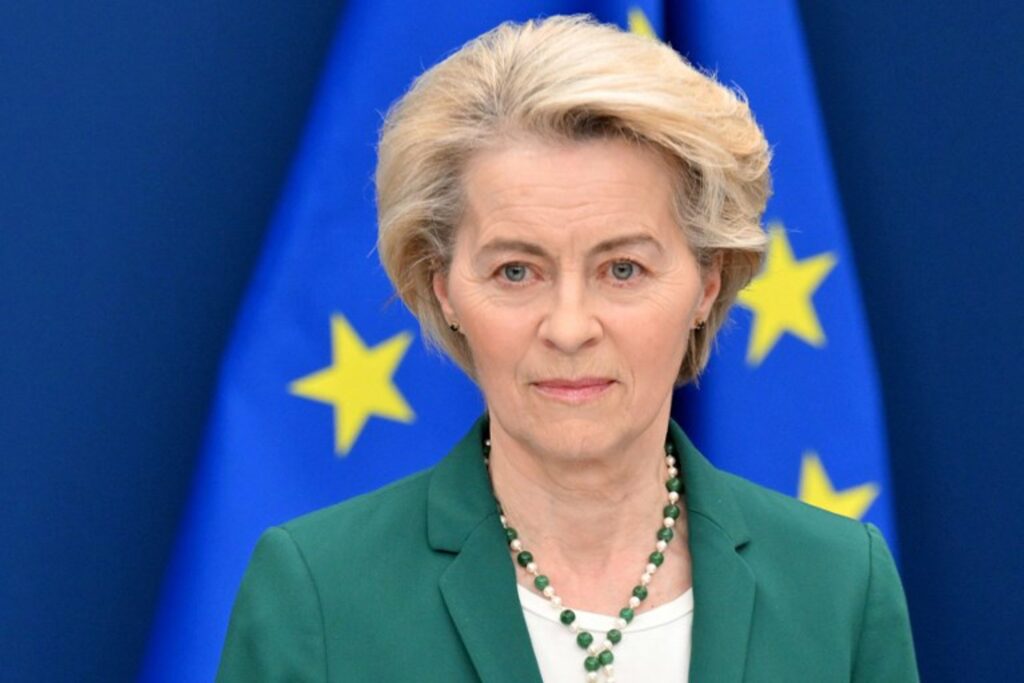
The European Commission has submitted the proposed EU-Mercosur trade agreement to Member States and the European Parliament for approval, after introducing safeguard measures to address opposition concerns.
Finalised in 2024, the agreement seeks to lower steep tariffs and boost EU exports of cars, machinery, and spirits to Argentina, Brazil, Paraguay and Uruguay.
The EU sees the deal as essential for diversifying trade partnerships and strengthening economic and political ties with countries that share similar values, according to an official communiqué. Talks are also ongoing to update a separate trade agreement with Mexico.
Lower tariffs will immediately benefit EU businesses
“We remain committed to diversifying trade, fostering new partnerships, and creating fresh opportunities,” said European Commission President Ursula von der Leyen. “Lower tariffs will immediately benefit EU businesses and the agrifood sector, driving economic growth and job creation.”
However, critics remain staunchly opposed to the proposed agreement, citing risks to European agriculture, public health, the environment, and social and human rights.
To address these concerns, the Commission outlined several protective measures. For example, agricultural imports from Mercosur will be capped at a small fraction of EU production—1.5% for beef and 1.3% for poultry.
Protection from sudden surges in imports
Additionally, a safeguard mechanism, strongly advocated by France, will protect sensitive European products from sudden surges in imports. This tool will be enshrined in EU legislation to ensure enforceability.
The deal also includes strengthened environmental provisions. Notably, the Paris Climate Agreement is deemed an “essential element,” enabling the suspension of the treaty if its commitments are violated. Provisions to combat deforestation are also included.
According to the Commission, the EU-Mercosur pact would create the world’s largest free-trade area, covering over 700 million consumers. European exports to the region could rise by 39%, reaching €49 billion annually and supporting over 440,000 jobs across Europe.
'Anti-democratic loophole'
Legally, the agreements with Mercosur and Mexico are split into two parallel texts. This approach facilitates swift implementation of trade-related aspects—under the EU’s exclusive competence—while allowing more time for ratifications of the broader provisions by the individual Member States.
In Belgium, the green party Ecolo criticised this strategy as an “anti-democratic loophole” designed to prevent countries or regional parliaments from blocking the deal.
