
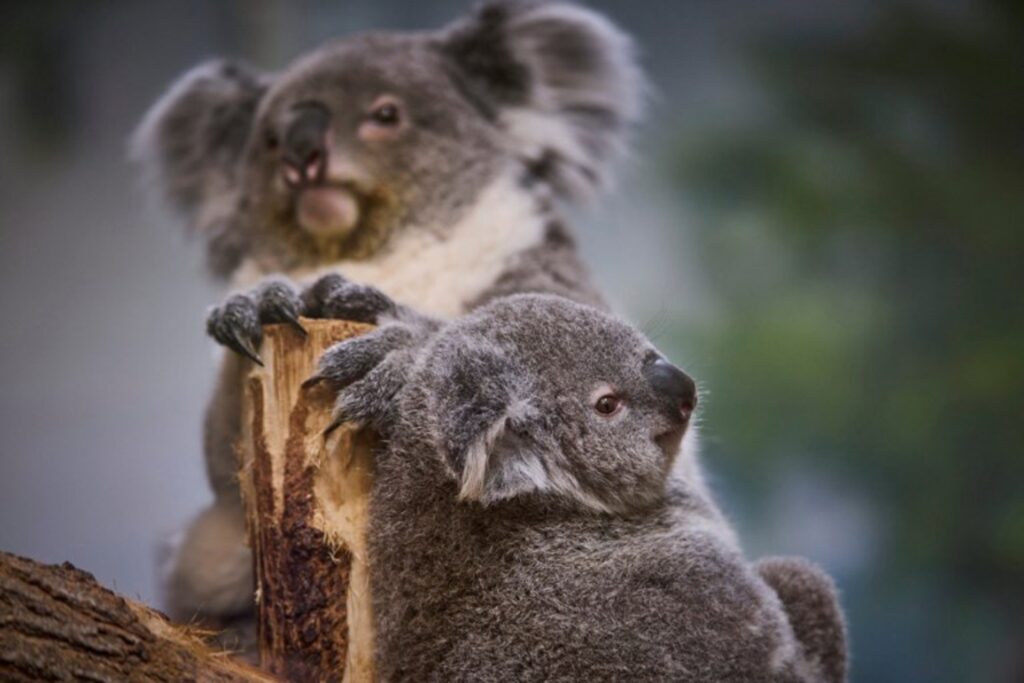
Australia’s most populous state, New South Wales, announced on Sunday a ban on logging across large areas of its eastern coastline to create refuges for koalas and combat the decline of this iconic yet endangered species.
The measure, effective from Monday, will cover 176,000 hectares. It will directly impact six sawmills employing approximately 300 workers, with government support promised for the affected businesses.
These areas will form part of the Great Koala National Park, a new nature reserve first proposed two years ago but on a much smaller scale, initially set at just one-twentieth of its now-planned size.
Koalas, found only in Australia, have become global symbols of the country’s unique ecosystem. However, their numbers have been devastated in recent years by catastrophic bushfires, deforestation, and disease.
In 2022, Australian authorities officially classified koalas as “endangered”—the highest level of protection—across much of the nation’s eastern seaboard.
In New South Wales, which includes Sydney, scientists and officials fear the species could face extinction by 2050 without urgent action to reverse its decline.
With the announcement, the new park is expected to provide refuge for over 12,000 koalas, 36,000 greater gliders (nocturnal, tree-gliding marsupials), and more than 100 other threatened species, according to government estimates.
Apart from protecting wildlife, the new reserve “will safeguard essential watersheds, protect sacred Indigenous sites, and open significant opportunities for regional eco-tourism,” said Gary Dunnett, director of the National Parks Association of New South Wales.
State authorities have nearly doubled their funding for the project, committing roughly €80 million, though final approval depends on the federal government’s environmental policies.
Combined with neighbouring national parks, the reserve—while not continuous—will form a protected network spanning 476,000 hectares, located about 350 kilometres north of Sydney.
