
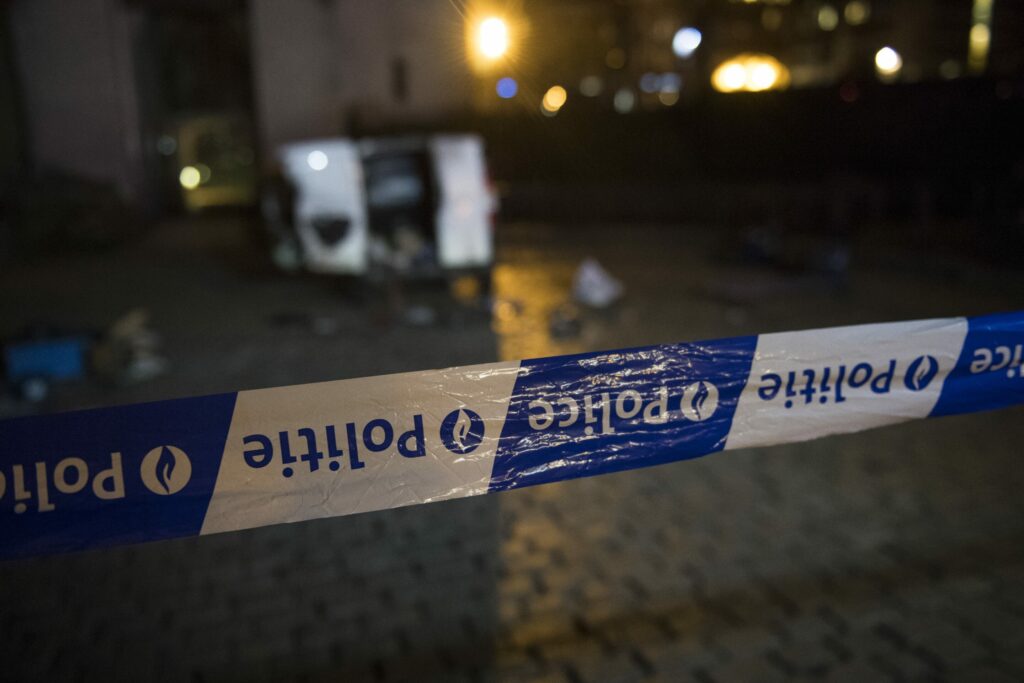
One person was injured in an explosion caused by a gas cylinder in the Brussels municipality of Molenbeek-Saint-Jean on Sunday night, the Brussels fire brigade announced. The flat where the explosion occurred is uninhabitable.
The incident occurred shortly after midnight in an apartment building on Rue de l'École, on the second floor, according to fire brigade spokesperson Walter Derieuw.
"The gas supply to the building has been cut off, and the residents are apparently making do with camping stoves powered by gas bottles. One such gas cylinder exploded in the flat on the second floor," he said.
One person was injured and taken to the military hospital in Neder-over-Heembeek with burns.
The flat on the second floor has suffered serious damage, including severe damage to the windows and interior walls, rendering it uninhabitable.
"A structural engineer has visited the site and concluded that the structure of the building itself has not been affected. As a result, the other flats remain habitable. Family is taking in the residents of the affected flat."
Gas cylinders, what is and isn't permitted?
Gas cylinders (butane or propane) can be useful for cooking or heating, but they pose a serious fire and explosion hazard if used incorrectly.
Therefore, the Brussels fire brigade published some guidelines.
How should you use gas cylinders?
-Only use where no natural gas network is available
-Place the cylinder upright in a well-ventilated area
-Use an approved regulator and hose (EN standard, not expired).
-Check regularly for leaks with soapy water.
-Always close the cylinder valve after use or when you are away.
What should you not use gas cylinders?
-Do not store in cellars, garages, stairwells, bathrooms or bedrooms
-Do not expose to sunlight, heat or open flames
-Do not use old or damaged hoses or homemade couplings
-Do not lay bottles down (always store them upright)
-Do not connect multiple bottles without a certified installation
Important to know: in apartment buildings above ground level, the use of propane gas is discouraged or prohibited. "Never store spare bottles indoors. Limit the quantity to what you really need," Derieuw said. Always check local fire regulations or ask the fire brigade for advice.
"If in doubt or if you smell gas: immediately turn off the gas tap, ventilate the room, do not use electrical switches or flames and call the fire brigade on 112," he added. "Use the natural gas network as much as possible, as it is safer and more practical than gas bottles."
