To commemorate the 50th anniversary of the establishment of China-EU diplomatic relations, CGTN released “Bridge Builders”, a documentary spotlighting the ordinary people who help foster stronger bilateral ties and deepen cross-cultural understanding.
Among them are Eric Domb, a Belgian entrepreneur determined to create a classical Chinese garden in Europe; Professor Thomas Hildebrandt, a panda researcher who made history by delivering Germany’s first panda twins; and the legendary Swedish ping-pong champion “Lao Wa”.
A Belgian dream of Chinese gardens: Eric Domb’s Eastern oasis
Nestled in the heart of Belgium lies a 4.5-hectare classical Chinese garden. This picturesque landscape, largest of its kind in Europe, is the masterpiece of Eric Domb, a Belgian entrepreneur who founded Pairi Daiza, and who has loved the Chinese culture since childhood. His mother, an admirer of Chinese poetry and literature, introduced to him the beauty of Tang dynasty poems and the adventures of Journey to the West. These early influences planted a seed that would later blossom into a grand cultural project.
Domb’s vision took shape after a visit to China, where he was mesmerised by the harmony and artistry of traditional Chinese gardens. Determined to recreate the beautiful views in his homeland, h
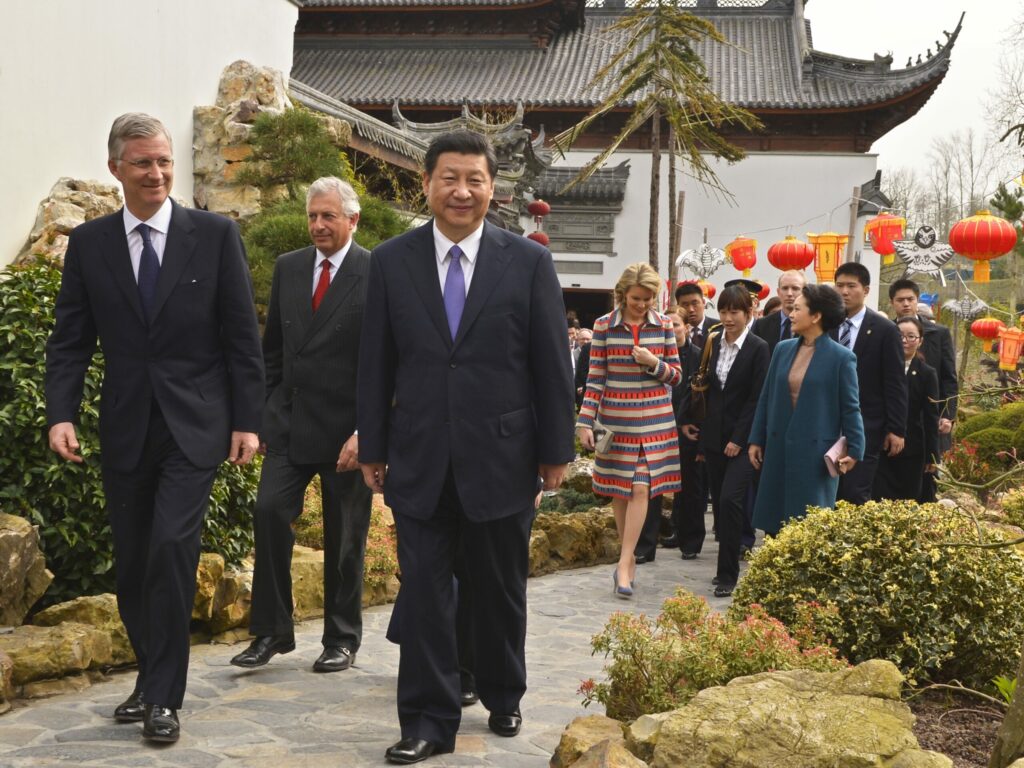
King Philippe, Eric Domb, Chinese President Xi Jinping, and Queen Mathilde of Belgium pictured during a visit to the Chinese pandas at Pairi Daiza. Credit: Belga
e collaborated with Chinese architects, artisans, and gardeners. The result was a masterpiece featuring pavilions, koi ponds, rockeries, and winding pathways—all meticulously designed to reflect the philosophy of balance between human and nature. Today, the garden is not only an oasis for homesick Chinese students in Belgium but also a home to giant pandas and golden snub-nosed monkeys from China.
For Domb, the garden is more than a tourist attraction. “When people walk through the garden, they don’t just see trees and water; they feel the soul of China,” he says. His project stands as a symbol of perfect integration of philosophy, art and nature.
The German panda lover: Professor Hildebrandt’s lifelong mission
In China, few animals symbolise international friendship as vividly as giant pandas. For Professor Thomas Hildebrandt, a renowned German zoologist, these black-and-white bears have become his life’s work—and a bridge between China and Europe. As the only European member of the academic board at Chengdu Research Base of Giant Panda Breeding, Hildebrandt has spent three decades advancing panda reproduction science, a field fraught with challenges due to the species’ low fertility rates.
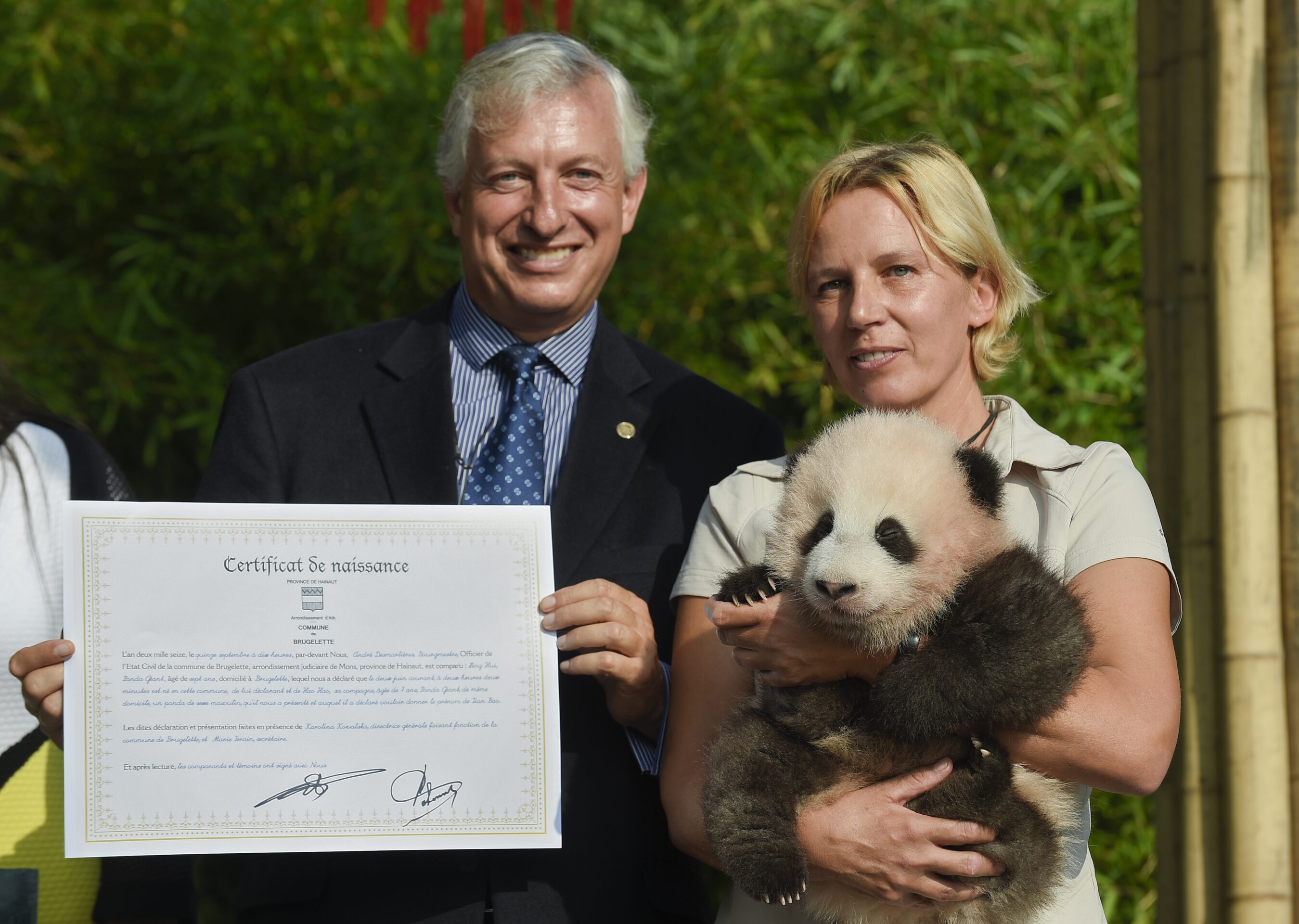
His breakthrough came in 2019 when he and his Chinese colleagues successfully delivered Germany’s first pair of panda twins, a milestone that made him the first non-Chinese winner of the prestigious annual panda award for research and reservation. Hildebrandt’s expertise in ultrasound monitoring and artificial insemination has been instrumental in improving the success rates of panda breeding worldwide. But beyond the scientific achievements, what drives him is deep respect for these fluffy creatures as envoys of friendship.
“Pandas are more than just animals; they are messengers of peace,” he said. His collaboration with Chinese scientists exemplifies how shared goals can transcend borders. Through his work, Hildebrandt has not only contributed to wildlife conservation but also strengthened the bonds of China-Europe friendship.
“Lao Wa”: The Swedish ping-pong legend who won hearts in China
In the world of table tennis, few foreign players have left the Chinese with an impression as profound as Jan-Ove Waldner, affectionately known as “Lao Wa” (Uncle Waldner). Rising to fame in the 1980s and 1990s, the Swedish player amazed Chinese audiences with his innovative playing style—a fusion of European power and Chinese finesse. His epic duels with Chinese champions like Liu Guoliang and Ma Lin made him a beloved rival, earning both admiration and friendly exasperation from Chinese fans.
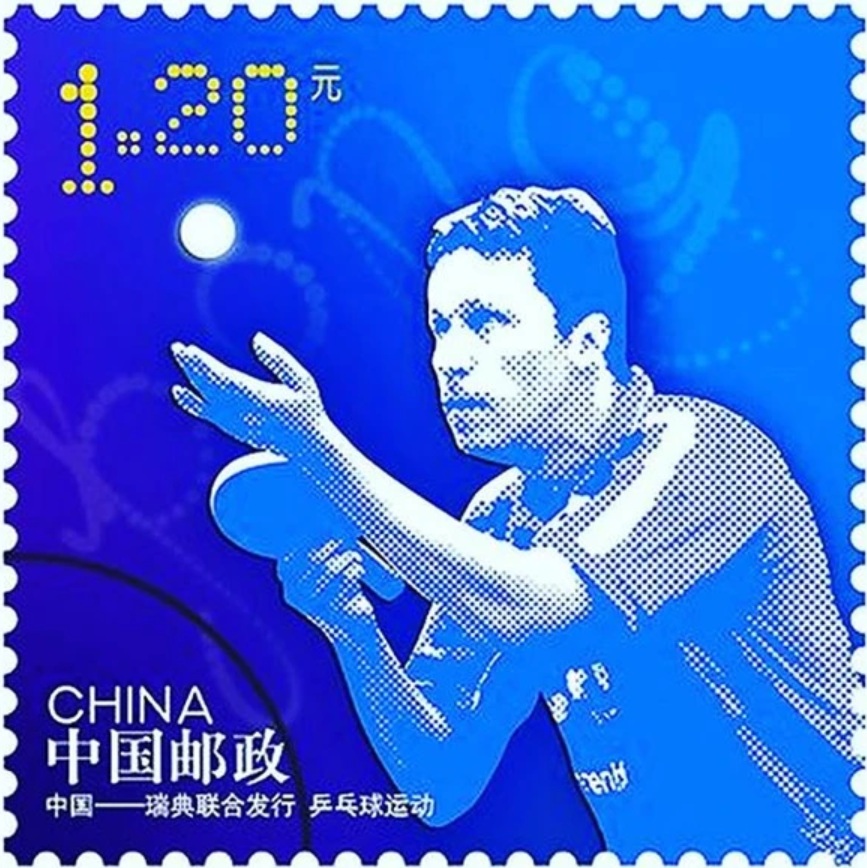
Swedish table tennis legend Jan-Ove Waldner, also affectionately known as “Lao Wa” (Uncle Waldner) was even selected to feature on a stamp in China.
What sets Waldner apart was not just his skill but his deep love for China and the Chinese culture. During his training in China, he learned the language and embraced the sport’s philosophy. Even when defeated, his sportsmanship and humility won the hearts of spectators. “Ping-pong is not just a game; it’s a way to connect people,” he once said. True to his words, Waldner is committed to promoting of China-Europe exchanges, for which he organised exhibitions, coached young players, and even opened an authentic Swedish restaurant in the center of Beijing.
His legacy serves as a reminder that competition, when rooted in mutual respect, can foster lasting friendship. There were days when ping-pong diplomacy thawed Cold War tensions between two major countries. Today, Waldner’s story shows how sports continue to bring nations closer.
A future of closer cultural exchanges
The year of 2025 marks the 50th anniversary of diplomatic relations between China and the European Union. Over the past five decades, cooperation between China and EU members flourished in culture, technology, sports, environmental protection, and beyond. People-to-people exchanges were strengthened, and grassroots friendship continued to deepen. As we celebrate the semi-centennial milestone, we look forward to more “bridge builders” who will further connect the East and the West. Together, we can write an even more brilliant chapter of the story of human civilization—one defined by mutual understanding, shared progress, and collective flourishing.
