

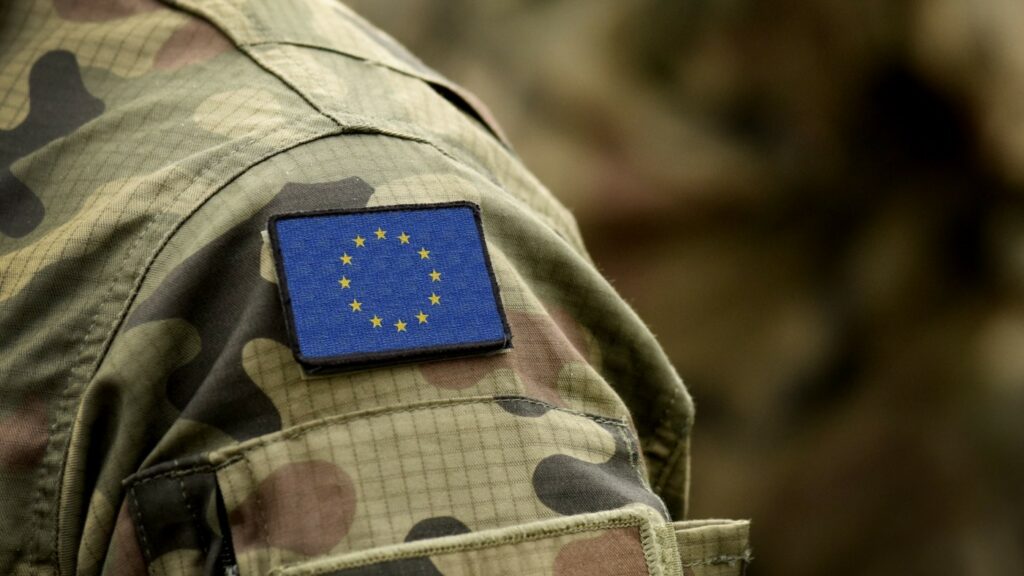
EU defence spending is on the rise. According to the European Defence Agency’s (EDA) latest 2024 – 2025 report, the 27 member states are set to spend a record €381 billion ($443 billion) in 2025, building on a 19% jump in 2024 that brought total spending to €343 billion.
This surge in defence budgets underscores a broader trend: Europe is rapidly expanding its military-industrial footprint, reshaping both economies and security priorities across the continent. Across Europe, weapons factories are growing at a pace unseen in decades. Satellite data analysed by the Financial Times reveals over 7 million square metres of new industrial development dedicated to ammunition and missile production.
This transformation comes at a moment when the world is becoming less peaceful by the year. The Global Peace Index 2025 reported a decline in average peacefulness for the 13th time in 17 years. There are now 59 active state-based conflicts. More than at any time since the Second World War. Armed conflict claimed more than 1,000 lives in a single year across 17 countries. The economic impact of this violence? Nearly $20 trillion globally, equal to 11.6 per cent of the world’s GDP with military expenditure alone accounting for $2.7 trillion. Consider this: less than 0.52 per cent of global military spending goes toward peacebuilding and conflict prevention. That’s a fraction of a fraction, despite overwhelming evidence that early intervention and sustained diplomacy are far more cost-effective than fighting wars once they have escalated. When conflicts are allowed to spiral, the costs (in lives, resources, and long-term instability) multiply exponentially.
Of course we should not be naïve: the threats are real. And the reaction of our European leaders is understandable. But will this lead to lasting safety or are we spiralling into a new arms race in which no one ever truly feels secure?
The uncomfortable truth is that absolute national security is an illusion. True peace isn’t built with projectiles, drones, and fighter jets. It’s built on trust, dialogue, and justice. And above all: prevention. Even the most advanced arsenal cannot protect against the instability bred by poverty, inequality, political exclusion, and environmental stress. We are pouring billions into addressing the symptoms of insecurity, while starving the prevention and peacebuilding measures that tackle its root causes. Peace is never easy. It is uncomfortable, requiring us to sit with those we most fiercely disagree with. But that is the only way to make it last.
Europe’s new arms boom will shape our politics and economies for decades. Once production lines are humming and the industry’s workforce has expanded, political pressure to keep the factories busy will grow. What is built for Ukraine today could feed the next conflict tomorrow. That’s the paradox: the very measures intended to safeguard peace can, if left unchecked, perpetuate cycles of violence by increasing the circulation of weapons.
To be clear: this is not a call for disarmament in the face of aggression. But we need balance. Investing exclusively in weapons without an equally robust investment in diplomacy, development, and conflict prevention is like building a fortress on a fault line: solid on the surface, but ignoring the deeper forces that could bring it down. A safe world isn’t built only with missiles and bullets, but with trust, fairness, and a shared vision for the future. No country is truly secure without peace, and no debate is truly worth having without nuance.
