
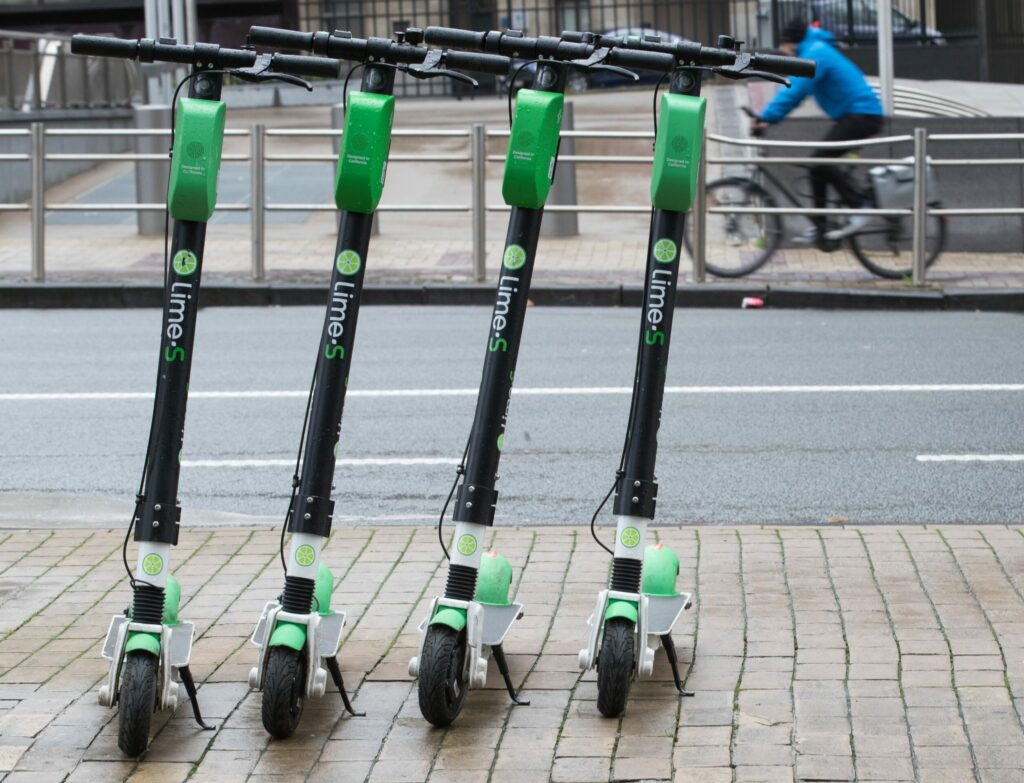
Insurance experts are concerned by the substantial rise in daily commuting accidents involving electric scooters and bicycles over the last five years in Belgium.
A new study by Assuralia, a federation of insurance companies, has found that mobility accidents are leading to an increase in people taking time off work.
A staggering 79% of electric scooter accidents leave victims temporarily incapacitated for work. For electric bicycles, the figure is 74%, while for regular bicycles it is 71% and for speed pedelecs it is 67%.
With more people regularly cycling or using scooters (referred to as soft mobility) to get to work, Assuralia looked into road accidents involving these types of vehicles to mark the start of Mobility Week on Tuesday.
In particular, Assuralia examined accidents which involved individuals on the way to work with a form of soft mobility: bicycle, electric bicycle, speed pedelec (a faster e-bike), electric scooter or others (monowheel, etc.) – over the last six years.
In general, insurers have noted a major change in travel behaviour, particularly in the means of transport in favour of soft mobility, since the Covid-19 pandemic.

Rue de la Loi on Friday 11 April 2025 in Brussels. Credit: Belga
Indeed, the growing popularity of electric scooters, electric bicycles and speed pedelecs is leading to a significant increase in accident statistics.
Assuralia found that the increase usage has also caused a 14% rise in accidents involving soft mobility options. They also estimated that these modes of transport accounted for 43% of all accidents on the way to work in 2024 (compared to 34% in 2019).
E-scooters
Overall, the vast majority – around three quarters – of accidents on the way to work cause victims to be temporarily being unable to work.
However, there are differences depending on the means of transport. In particular, the number of electric scooter accidents is causing concern among experts.
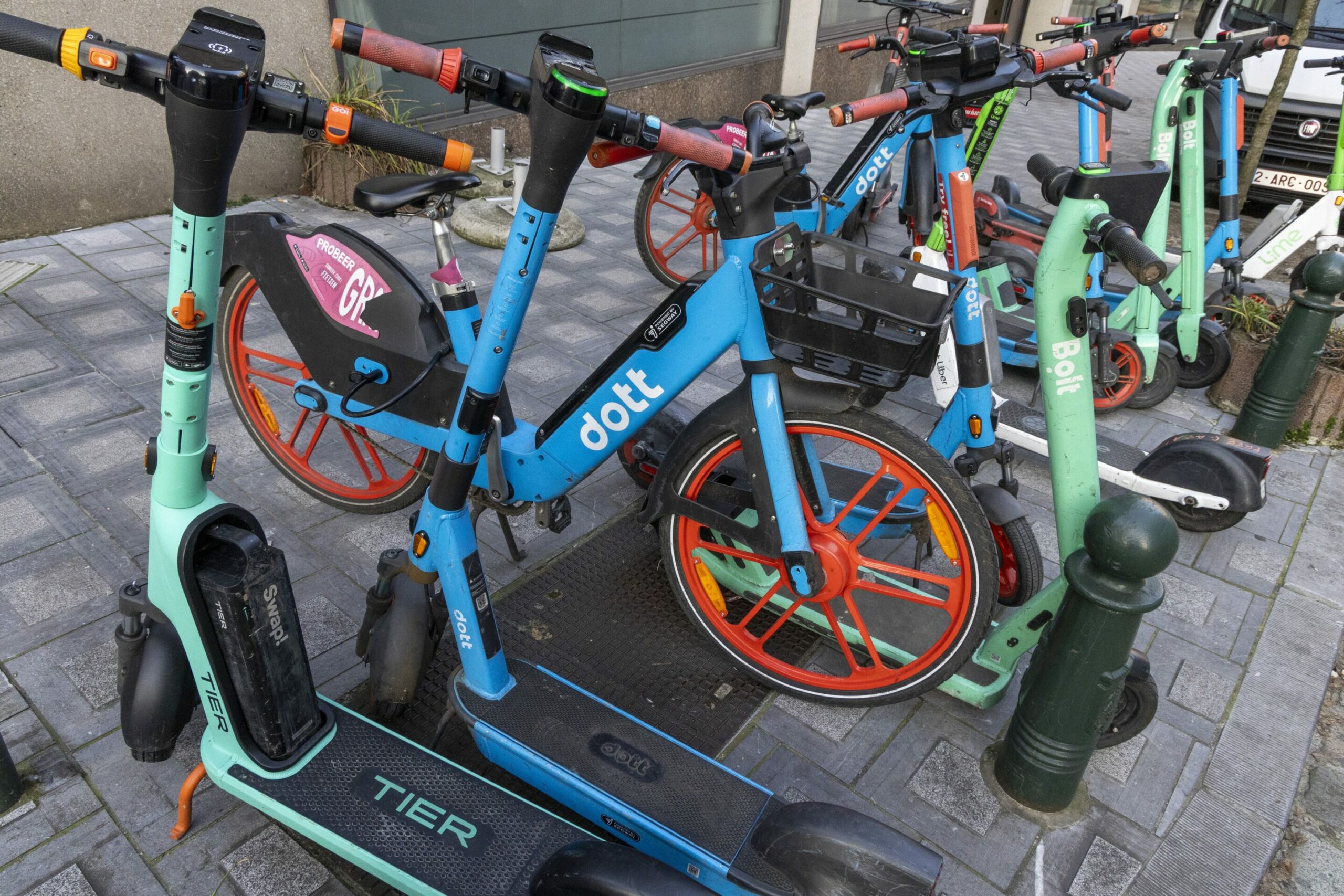
Electric scooters of the Dott and Tier platforms pictured in Brussels on Wednesday 10 January 2024. Credit: Belga / Nicolas Maeterlinck
Electric scooter accidents during the daily commute rose from 208 in 2019 to 1,254 in 2024, a sixfold increase, with most (79%) resulting in the victim taking time off work, as previously mentioned.
E-bikes
The ‘bicycle’ category accounts for the largest share of accidents with minor consequences (22%), i.e. no consequences (3%) or only medical expenses without time off work (19%).
Between 2019 and 2024, accidents on the way to work involving electric bicycles rose from 273 to 496, and those involving speed pedelecs from 113 to 371.
When it comes to very serious accidents resulting in permanent incapacity, Assuralia noted a proportionally higher number of speed pedelecs (12%) and electric scooters (10%).
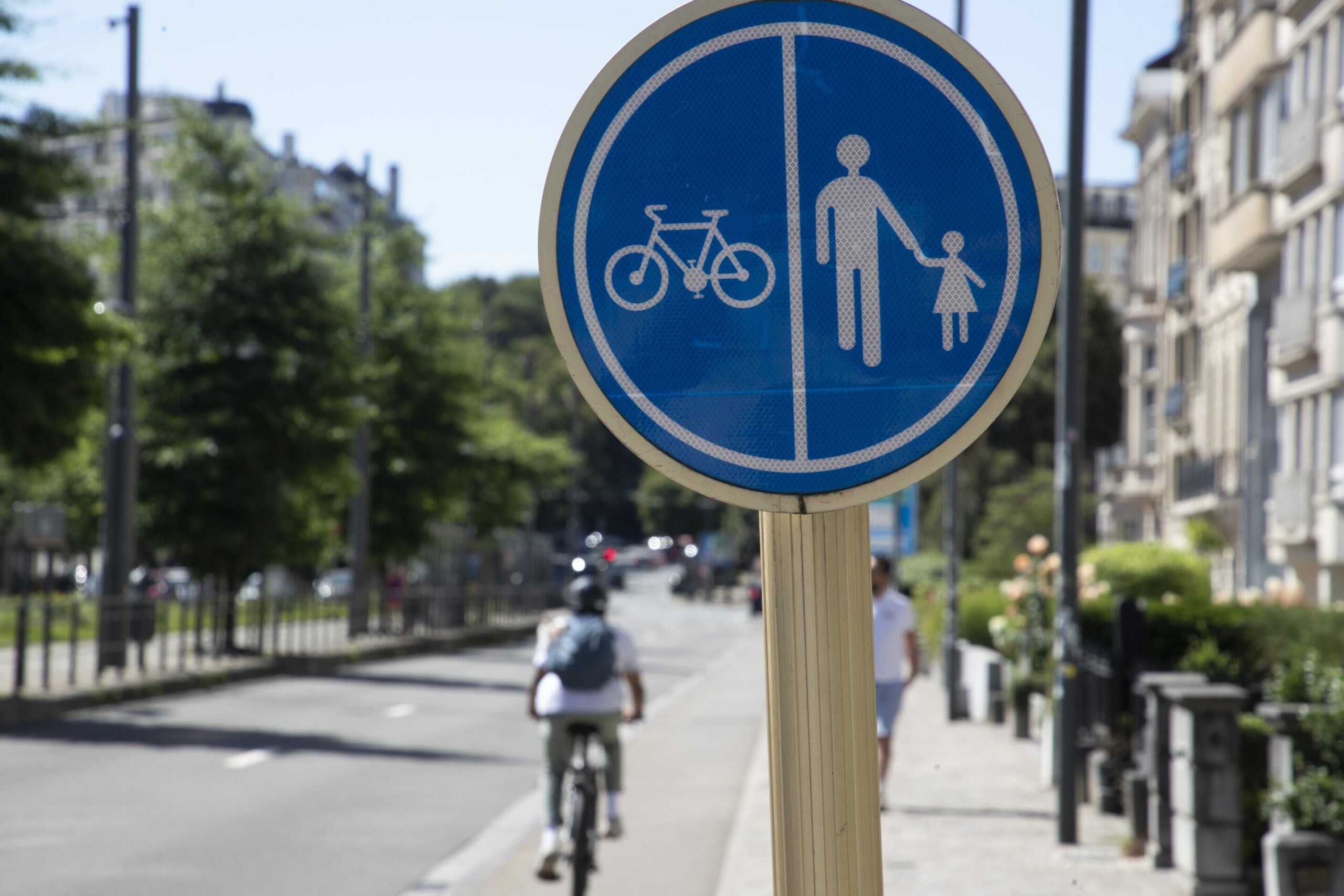
A traffic sign indicating a bicycle lane and footpath pictured in Brussels on Sunday 20 August 2023. Credit: Belga
This was worked out to one in ten victims now suffering lifelong consequences. There have also been two fatal accidents involving electric scooters in the whole of Belgium.
Long-term work absences of over over three months were also found to be highest (12%) among electric scooter and speed pedelec accidents. For ordinary cyclists, this figure is only 7%.
The autumn and winter months are when insurers receive most claims, with a peak in January (12.8%) and a relative peak in June (8.9%).
There are fewer accidents on Wednesdays and Fridays (17 to 18%) than on other working days (20 to 21%), which is not particularly surprising. Wednesdays and Fridays are often chosen for part-time work or teleworking.
'We do not want to discourage'
Following these findings, Assuralia has launched a social media campaign for the general public. They are also calling on employers to support it by helping set up their own awareness-raising initiatives in the coming months.
A number of tools (information sheets, checklists, tests and quizzes, etc) have been developed by Assuralia to make available to companies. The insurers are also offering training and assistance in drawing up prevention plans.
Tips to improve safety for soft mobility commuting:
- Find the safest route
- Choose a route without obstacles
- Check that your two-wheeler is in good condition
- Wear high-visibility clothing
- Make sure you have good lighting
- Wear a helmet
- Obey the rules of the road
- Stay alert on the road
- Do not get distracted
- Stop to make phone calls or send messages
Last week, Deputy Prime Minister and Minister for Employment David Clarinval (MR) already welcomed the insurers' initiative, calling soft mobility's rise a "positive development" which also brings "new challenges in terms of safety."
"Employers and employees must work together to ensure that commutes to and from work are as safe as possible. The recommendations made by Assuralia are a valuable tool in this regard," Clarinval added.
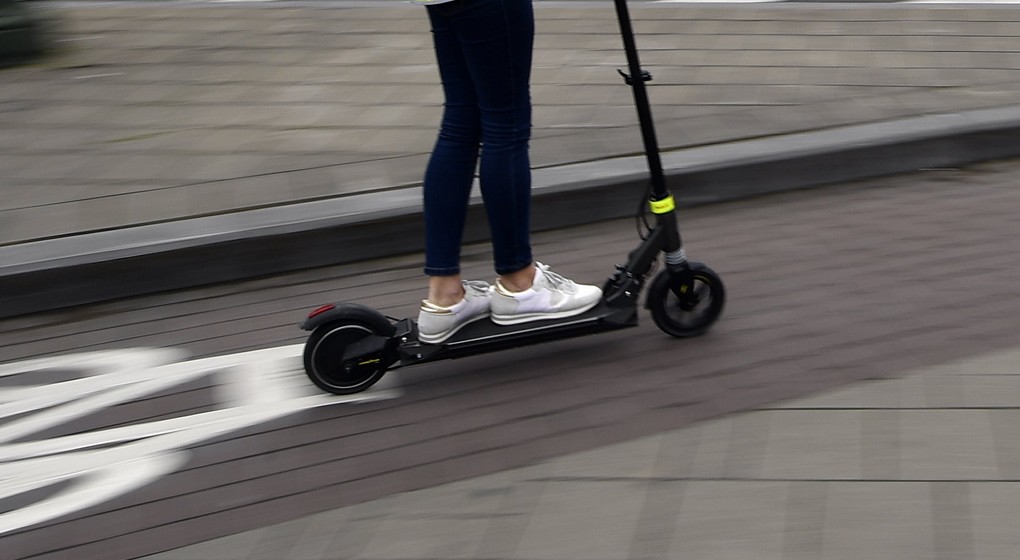
Credit: Belga / Eric Lalmand
Hein Lannoy, CEO of Assuralia, said the study and social media campaign was seeking to raise awareness among as many employers as possible.
"We do not want to discourage anyone from cycling or scootering to work, quite the contrary. Greater attention can, however, be paid to road safety," Lannoy underlined.
"If insurers and also all employers regularly share prevention advice, even more employees will be able to travel to work safely in the future."
Last month, road safety barometer for 2025 from the road safety institute, Vias, also found a substantial rise in electric scooter accidents.
The number of accidents involving electric scooters jumped by 62% in Belgium in the first quarter of this year compared to the same period last year. They average at around five per day.
