
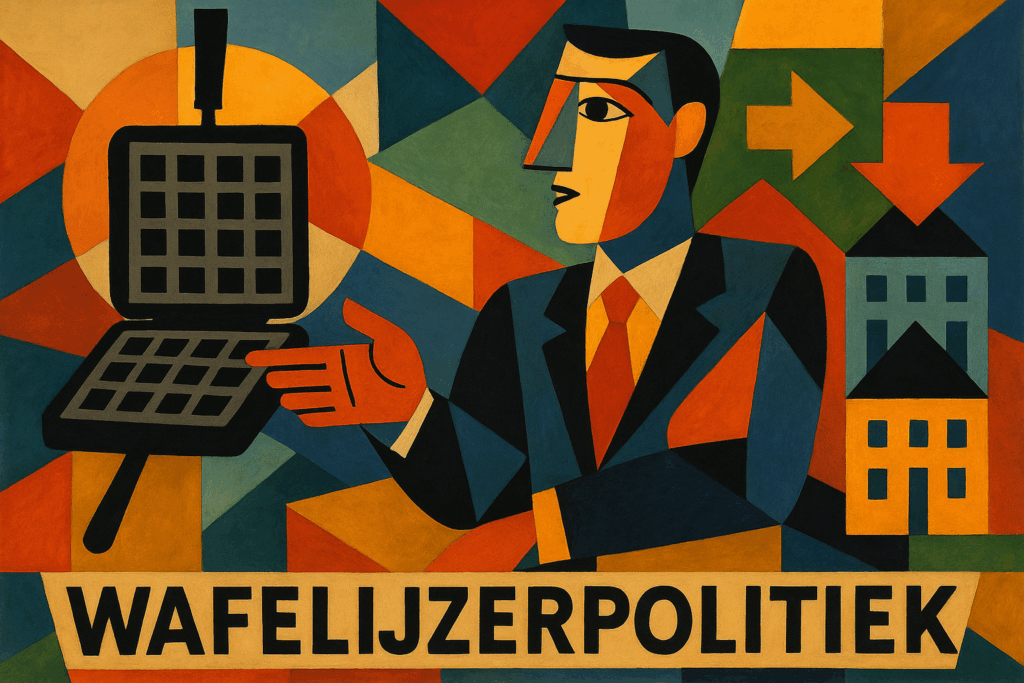
Belgium is famous for its waffles, but the expression “wafelijzerpolitiek” (literally waffle iron politics) has nothing to do with food. Instead, it’s a distinctly Belgian term that captures one of the country’s quirks in governance.
The idea comes from how politicians once divided public spending between the Dutch-speaking north (Flanders) and the French-speaking south (Wallonia).
To keep the balance, if one side got money for a project —say, a new road or a cultural centre — the other side had to get something of equal value, whether it was needed or not.
Imagine pressing both sides of a waffle iron evenly: whatever went to one community had to be mirrored for the other.
This practice ensured fairness in a divided country, but it also created inefficiencies.
Sometimes projects were built simply to balance the books politically, not because they were truly useful. The term became shorthand for the compromises and peculiar logic of Belgian politics, where consensus often outweighs efficiency.
Today, “wafelijzerpolitiek” is used critically, both in political debates and everyday conversations, to describe unnecessary spending born out of political horse-trading. It’s a word that reveals a lot about Belgium’s balancing act between unity and division.
See all our previous ‘Belgian word of the day’ features here.
