
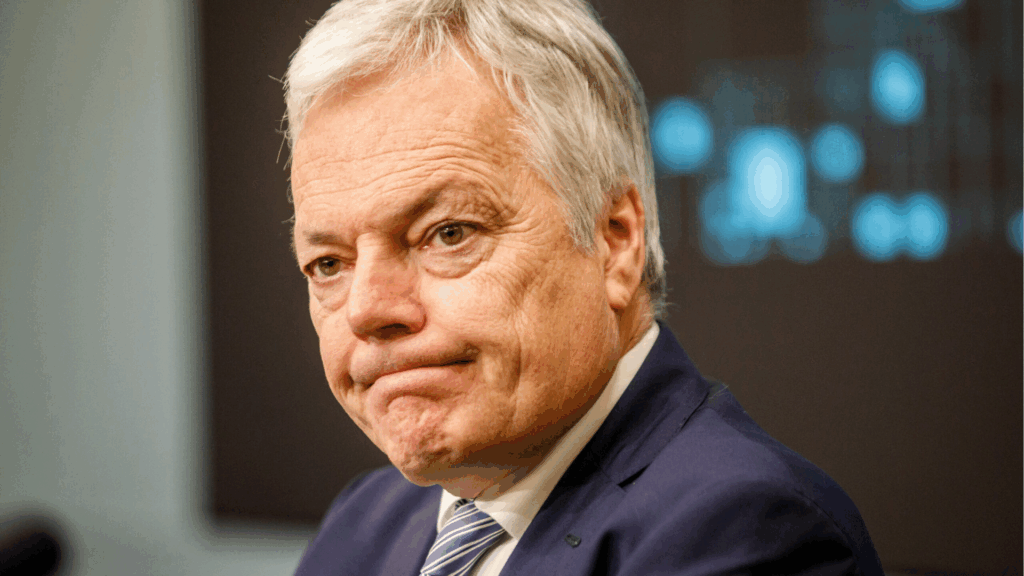
The Belgian Parliament’s Finance and Budget Commission met on Tuesday to review the implementation of anti-money laundering legislation, focusing on banking practices amid mounting concerns over oversight lapses.
Representatives from major banks, including KBC, Belfius, BNP Paribas Fortis, Argenta, Crelan, and ING, presented their risk management and compliance processes for detecting “atypical” financial transactions.
Particular attention was on ING, as the bank had processed hundreds of thousands of euros in cash deposits over a decade for former Liberal minister Didier Reynders without raising any alerts.
Olivier De Maesschalck, ING’s head of compliance, explained that their IT systems generate alerts based on scenarios indicating potentially suspicious transactions. These are then reviewed by staff, with the ultimate decision to report left to the Anti-Money Laundering Compliance Officer (AMLCO). No such report was made in Reynders’ case, however.
It was Khalil Aouasti, a Socialist MP, who first explicitly named Reynders during the hearing. He noted that nearly €700,000 in cash had been deposited over ten years without suspicion until a new directive led to a report and, eventually, an official allegation five years later.
Aouasti criticised systemic failings within the banking sector, highlighting a central bank report estimating €16 billion in annual money laundering-related fraud in Belgium. Despite this, of 90,000 reports filed with the financial intelligence unit in 2024, only 1,300 cases were forwarded to the judiciary, representing just €1.5 billion.
Sofie Merckx from the PTB party also questioned the banks’ oversight, pointing to shortcomings in how politically exposed persons (PEPs) are flagged. Referring to Reynders, she said, “It’s strange this case slipped through, especially as it involved large cash deposits without sophisticated methods. Moreover, a 90-day average processing time stretched into years.”
Merckx criticised the bank’s justification that past actions couldn’t be judged by today’s standards, asking for clarity on how such issues should be assessed.
With discussions running into their allocated four-hour session, further deliberations were postponed to a later date.
Related News
- 'Illegal practices': Very little improvement on Belgium's cashless festival scene this summer
- Brussels e-bike maker faces bankruptcy without more funding
- Didier Reynders mentioned in judicial investigation into Russian oligarch
- Protecting Didier Reynders? Investigation launched into ING's role in money laundering case
