
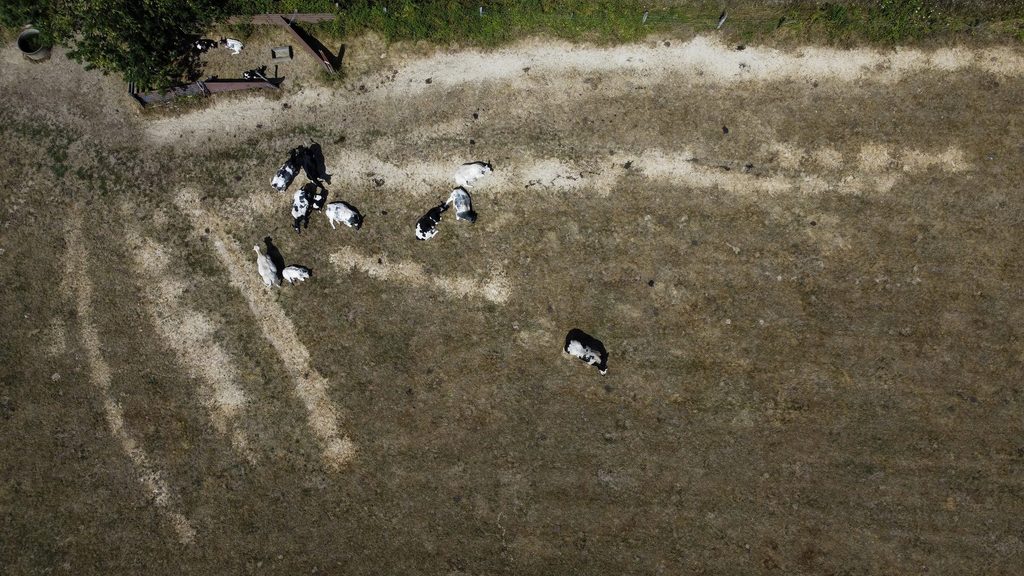
August 2025 was Europe and the Mediterranean’s driest month since records began in 2012, with 53% of soils affected by drought, according to an analysis of European Drought Observatory (EDO) data carried out by AFP.
This drought level is 23 percentage points higher than the August average of 30.1% between 2012 and 2024. Not only has every month this year set a new record for its respective period, but August 2025 also marked an all-time high.
Droughts can manifest in different forms: meteorological drought (low rainfall), soil drought (dry soils), and hydrological drought (low water levels in rivers and groundwater), which can occur simultaneously.
The European Copernicus programme’s drought indicator, based on satellite data, evaluates precipitation, soil moisture, and vegetation health. It categorises drought into three levels: “watch,” “warning,” and “alert.”
In comparison, August 2024 saw 36% of soils impacted by drought, while the previous absolute record—52%—was set in May 2025.
Eastern Europe and the Balkans have been hit the hardest. Countries such as Bulgaria, Kosovo, Serbia, and North Macedonia reported drought levels of 90% or above across their territories. Alarmingly, in Serbia, 61% of soils were classified as being at the highest “alert” level.
Western Europe has also faced significant drought impacts. In Portugal, 70% of the land experienced a lack of rainfall and soil moisture, a dramatic increase from just 5% in July.
In France, a second heatwave of the summer exacerbated the situation in August, leaving 66% of the country with insufficient water. Of this, 12% of the territory was under “alert” status.
In the eastern Mediterranean, drought has had devastating effects on countries such as Armenia, Georgia, and Lebanon, where nearly their entire territories are affected, reaching 99%, 97%, and 96% respectively.
