
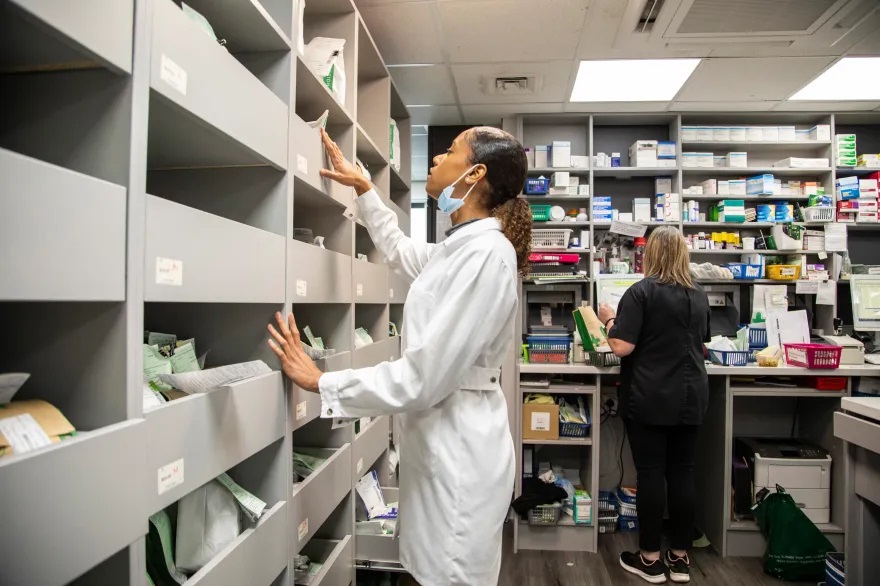
Medicine shortages across Europe have reached record levels, with 136 critical drugs running short between 2022 and 2024.
Although the EU medicines agency helped limit their impact, the EU still lacks an effective system to prevent such crises, the European Court of Auditors (ECA) warned on Wednesday in a new special report.
“Medicine shortages are a persistent issue across the EU and have grown in frequency and severity, reaching record levels in 2023 and 2024,” said Klaus-Heiner Lehne, the ECA member who led the audit.
He described the situation as not only a problem for patients and a challenge for health systems, but also a sign of the EU’s strategic vulnerability.
It was, he stressed, “high time for the Union to develop an effective remedy to cure critical shortages and tackle them at their roots.”
According to the report, Belgium was the EU country most affected by critical medicine shortages in 2024, recording more cases than any other member state up to October.
The findings underscore how national health systems, even in well-resourced countries, remain highly vulnerable despite EU-level measures aimed at securing supplies.
While the report does not provide a medicine-by-medicine breakdown at national level, the most affected categories EU-wide included antibiotics such as amoxicillin, common painkillers like paracetamol and ibuprofen, as well as oncology drugs and anaesthetics.
All of these also strained Belgian pharmacies and hospitals.
Fragile supply chains
At the centre of the problem are fragile supply chains and economic pressures. Much of Europe’s production of active pharmaceutical ingredients has shifted to countries such as China and India, leaving the EU heavily dependent on a handful of foreign manufacturers for essential medicines.
Lehne warned that price-driven procurement policies, where the lowest bidder usually wins, discourage investment in resilient supply chains and make low-margin generics especially vulnerable.
The Commission has acknowledged these weaknesses and underlined the industry’s obligation to ensure continuous supply.
But auditors found that this obligation is often weakly enforced and fails to prevent shortages in practice. The auditors concludes that the EU still lacks a reliable framework for managing critical shortages.
While the European Medicines Agency (EMA) has taken on a bigger role since the COVID-19 pandemic and the Commission has tabled new legislative proposals, structural weaknesses remain.
A major obstacle lies in the fragmentation of the single market and the absence of a comprehensive EU-wide data network, which limit EMA’s ability to act effectively.
“The single market is fragmented, with different packages, non-transparent pricing and trade barriers,” Lehne said, warning that these barriers make it harder to ensure the smooth flow of medicines across member states.
The Commission has worked to raise awareness of shortages, but coordination remains difficult without proper information-sharing. Lehne underlined that closer cooperation between member states and EMA is essential, calling for stronger knowledge exchange and more consistent collaboration at the EU level.
Will reforms deliver?
Looking ahead, auditors stress that the EU’s response remains in its early stages. The Commission’s analysis of supply-chain vulnerabilities often lacks detail, limiting its ability to design effective solutions.
Industry’s obligation to ensure continuous supply has also been weakly enforced, prompting fragmented national responses such as unilateral stockpiling, such measures that can worsen shortages in neighbouring countries.
To move forward, the auditors recommend a coordinated EU strategy built on three pillars: harmonised and timely reporting of shortages through a single EU-wide platform, consistent enforcement of industry’s supply obligations across member states, and measures to address single market fragmentation by standardising packaging, improving price transparency and reducing trade barriers.
These steps, combined with the proposed Critical Medicines Act, could begin to address the weaknesses that left Belgium and other member states exposed during recent crises. On a positive note, both the European Commission and EMA accepted the key findings and recommendations in the audit report.
For Brussels and the rest of Europe, the challenge now is whether these reforms can be implemented quickly enough to strengthen resilience before the next wave of shortages strikes.
