
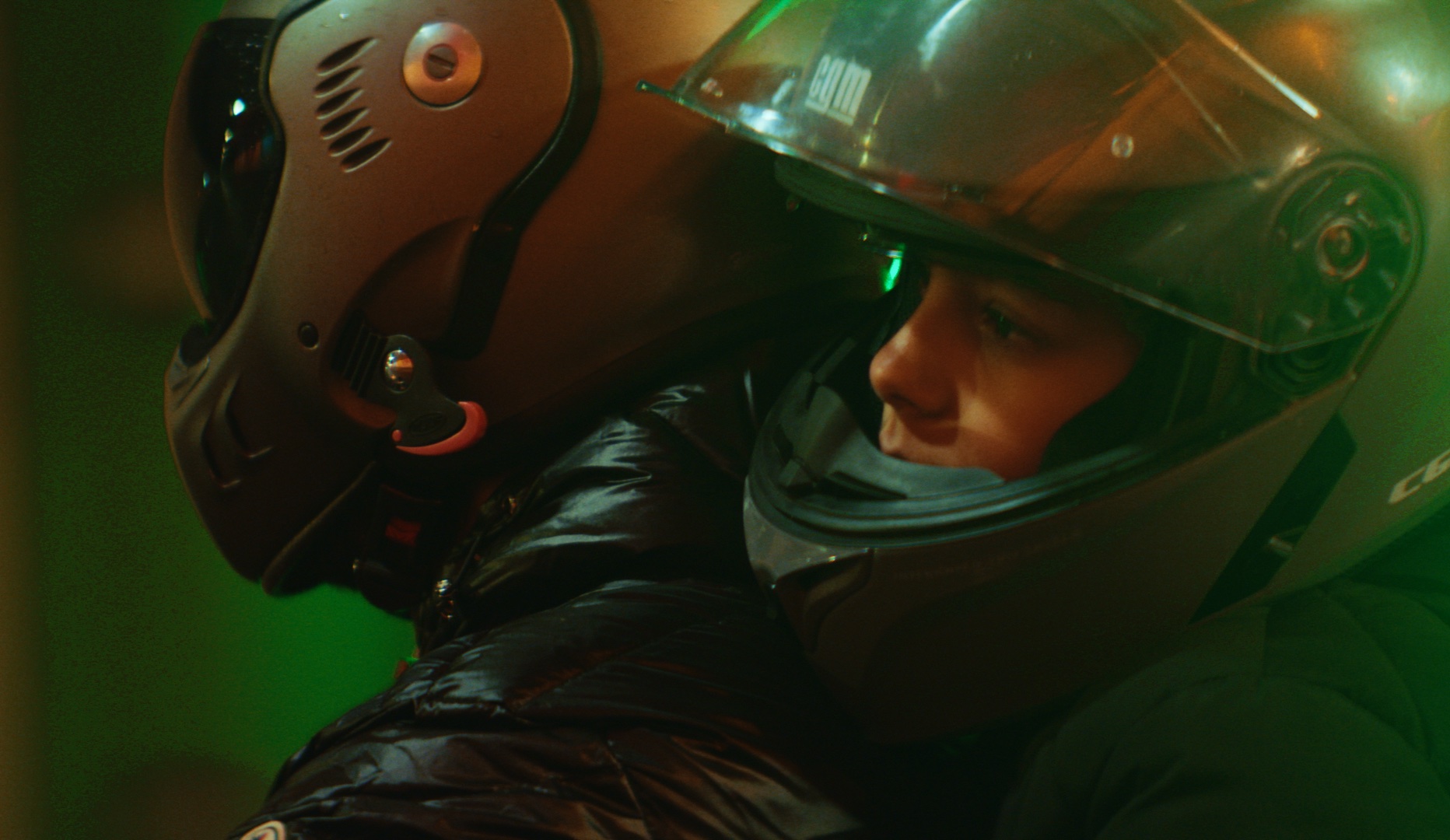
Maja-Ajmia Yde Zellama has a mixture of names, a signboard for her dual identities. She has lived her life between Danish and Arabic, Protestant and Muslim, white and brown. And now she has made a film about a girl between childhood and adolescence, who must find a balance between the two when suddenly faced with unfathomable trauma.
“It is our family’s story,” says Zellama, 31, who shot the film in Brussels, where she lives. “My three cousins were really like my older brothers. The eldest of them died when I was 11. I had such a close bond with him – just like in the film.”
Têtes Brûlées had its world premiere at the Berlin International Film Festival last February, where it received a special mention by the Generation 14plus jury. It is the story of Eya (Safa Gharbaoui), a typical 12-year-old girl who practices dance routines, sleeps over at friends and runs for class rep.
She also worships her brother Younès (Mehdi Bouziane), who, at seven or eight years her senior, is cool in every way she can conceive. In one beautiful scene over the breakfast table, he catches her wearing his shirt before they secretly concoct a plan for him to drive her to school on his motorbike rather than her taking the boring old bus. Shhh, don’t let mum find out.
“I was the only girl in the family, and I really grew up that way – kind of the princess,” Zellama laughs. “I had a younger brother, but I was still somehow always seen as the littlest. I feel so privileged to have these kinds of relationships. I don’t know exactly how it happened, but I didn’t romanticise it for the film. I really had that kind of relationship with my cousin.”
In the film, Eya loses her brother, and in real life Zellama lost her cousin. It was a turning point in her life – the moment where she learned that adults don’t have all the answers.
Between countries and cultures
The director was born in Brussels to a Danish mother and a Tunisian father. They had both come to the capital to study, and her father’s brother lived there, too, with his own family – providing all those cousins. “My mother is blonde and Protestant, like such a typical Dane. And my dad is super Tunisian.” She laughs again, and she will repeat this “I know, right?” laugh several times during our talk.
“My parents chose to stay in Brussels to find a kind of middle ground between Denmark and Tunisia. It’s not her country, it’s not his. It’s neutral.”
Zellama is in fact in Tunisia when we speak, looking impeccable even as she fights a cold. Her long black hair tangles around her big, hoop earrings. She has somewhat abandoned the street gear of her younger years for a stylish sophistication. She’s visiting extended family, something she has done her entire life.
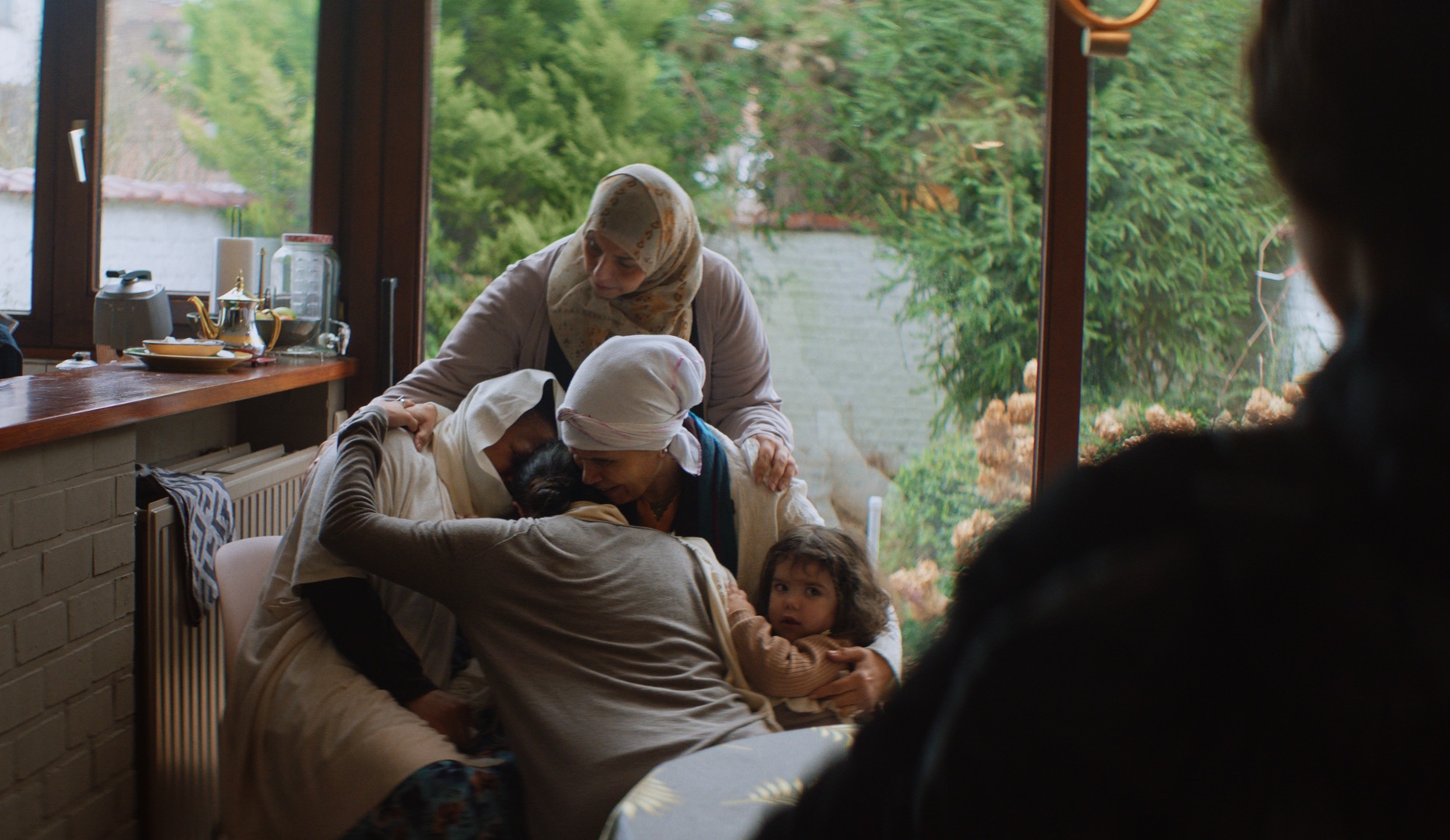
Stills from Maja-Ajmia Yde Zellama’s Têtes Brûlée
“We went to Denmark twice a year and to Tunisia twice a year. I went to church and to the mosque. I spoke Danish and Arabic. This is how I grew up. It’s the story of my life. Since I’ve been old enough to talk, people have been asking me – children and adults – ‘Oh, were you adopted?’ ‘Oh, is that your real mum?’ So identity has been a very big thing for me.”
Eya in Têtes Brûlées has no such concerns. While Zellama based the film on her family’s experience of loss, she changed several key elements, including a bicultural family. “Our situation is super unique, and I didn’t want to just recreate it.”
Though one thing from her life is exactly the same in the film. The cast is made up almost entirely of non-professional actors – including her own father, who plays Eya’s father. Oh, and her mother worked on the film’s décor, having studied scenography and textile arts.
But Zellama has a point. Recreating specifics might have distracted viewers from the core story – the experience of grief through the eyes of a girl who’s not quite a child and not yet a teenager, as the community gathers in her family’s home to collectively mourn their loss.
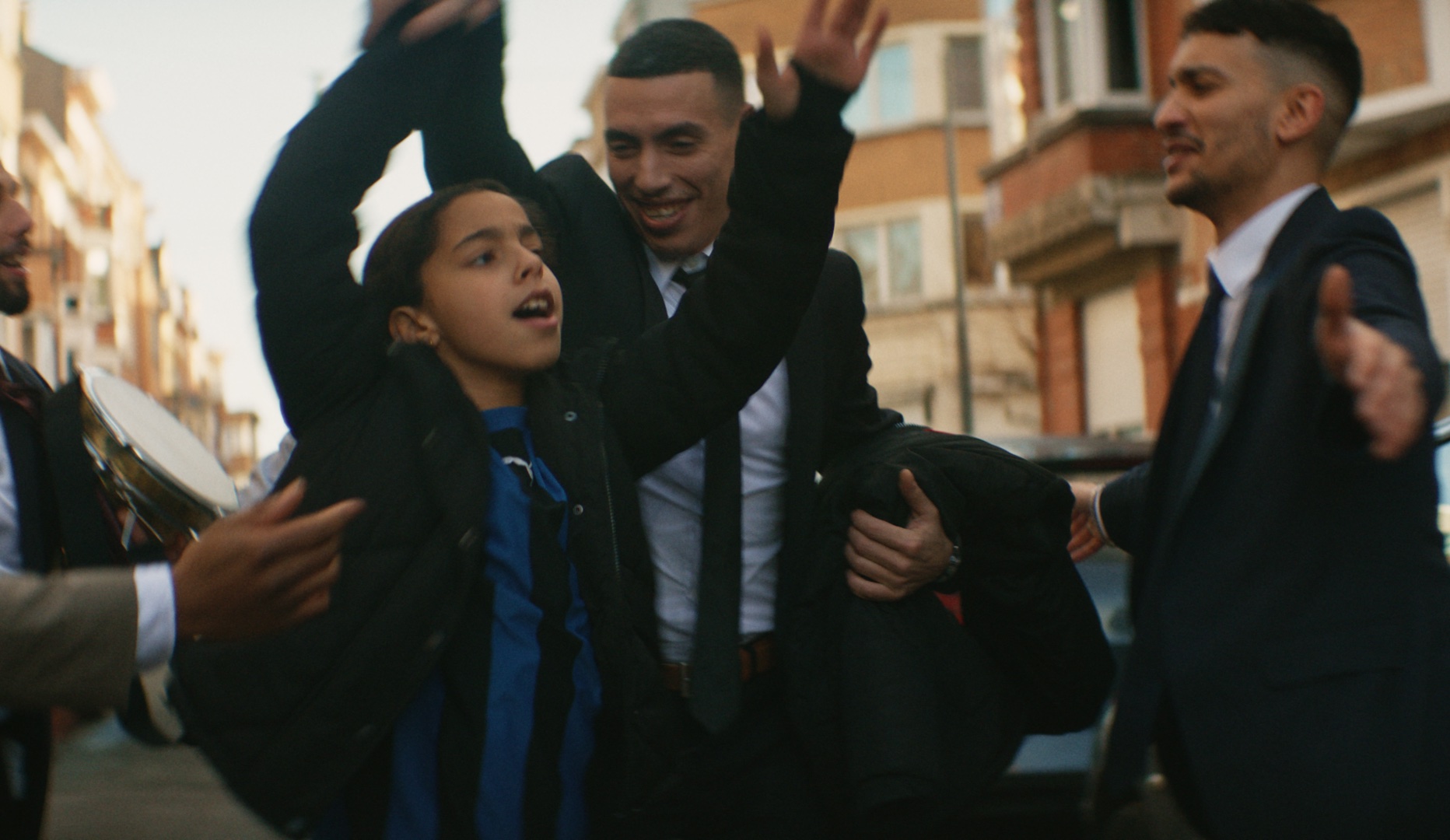
Stills from Maja-Ajmia Yde Zellama’s Têtes Brûlée
“It’s difficult for Eya to find her place in the anguish amid all these adults,” Zellama explains. “What is she supposed to do? Is she a child who is just expected to play on her own because she doesn’t understand what is going on? In fact, she understands everything. But she’s also not an adult. So it’s complex for her, and also for the adults around her. Communication is so important at times like this, to ask her, ‘What do you need?’”
But no one does this, instead delivering platitudes like “It’s God’s will” and “You need to be strong for your mother and father”. Normal things that people say, but nothing she really wants to hear. What she really wants to hear is how her brother died – which she hasn’t dared to ask and which no one has bothered to tell her.
Finally, she turns to her brother’s closest friend for the answer. Her brother’s friends have always seen her as a sort of collective little sister, and it is them she clings to for comfort.
“What I wanted to say – and what I experienced myself – is that this situation is so, so bleak for the adults that they forget to actually be adults. I saw the most trusted people in my life have no idea what to do. It’s like they’re not people anymore; they’re sort of like zombies.”
Growing pains
Têtes Brûlées, which screens at Film Fest Ghent in October, delivers a rare perspective for many Europeans – the chance to see what the mourning process looks like in the Muslim community. “My family is Tunisian, and this is what I know,” says Zellama. “I don’t know if, say, Moroccans would have exactly the same traditions, but I think in the end there are many similarities.”
The director is keen to open up this world and use aspects of it to illustrate Eya’s evolution. Towards the end of the film, a burial scene shows the women in a group, standing at a distance from the men, who are gathered around the grave. “This has nothing to do with religion,” explains Zellama.
“It’s cultural. Women can approach the grave if they want, but only Eya chooses to do this. I wanted to show that, while she’s a child to her family, she’s more adult than the adults.”
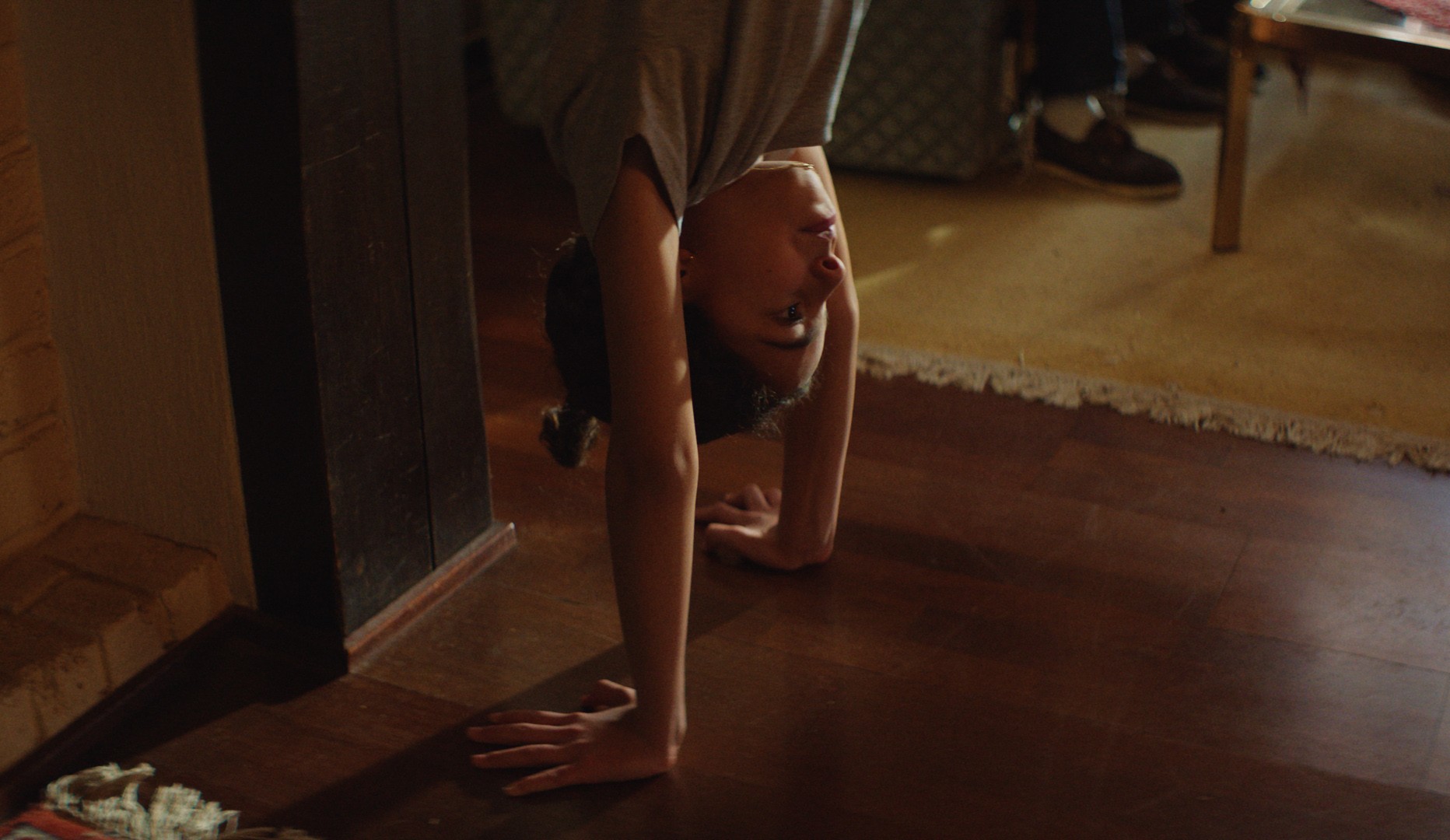
Stills from Maja-Ajmia Yde Zellama’s Têtes Brûlée
Besides completing film school at the LUCA School of Arts in Brussels, Zellama has spent a lot of time on creative and activist pursuits. In 2017, she co-founded Bledarte, a cultural/artistic space for youth with immigrant backgrounds. She is also a DJ, studied dance in Denmark and has staged multimedia exhibitions.
She also studied communications at the behest of her parents, concerned that filmmaking would not provide steady employment. They have changed their tune now. Ironically, it was also her parents who made her a filmmaker. “I grew up in a family where I always heard that anything is possible,” she says. “Also, I just don’t take no for an answer.”
How Julian’s life well-lived became a movie
In 2017, Belgian Fleur Pierets and her Dutch partner Julian Boom – both artists – made headlines around the world when they announced their plan to get married in every country that would allow it. As they were both women, that meant 22 ceremonies. It was activism, but also celebration: The number of countries grew, and they added them to their list.
There were plans for a documentary, a book and an exhibition. But it was all not to be. After four weddings – in Antwerp, Amsterdam, Paris and New York – Julian was diagnosed with brain cancer. She died six weeks later at the age of 40.
The movie of her story, Julian, premieres at Film Fest Gent, where it is the opening movie, before its release in cinemas on October 29. It is based on Pierets’ 2019 book of the same name, written when her world was coloured by grief. “I’ve had a lot of requests to adapt it – to theatre, to the screen,” says Pierets. “But it always just felt wrong. It felt like it would become a movie about grief. That’s not what I wanted. Of course, it’s a story about loss, but it’s also about love and fighting for what you want.”
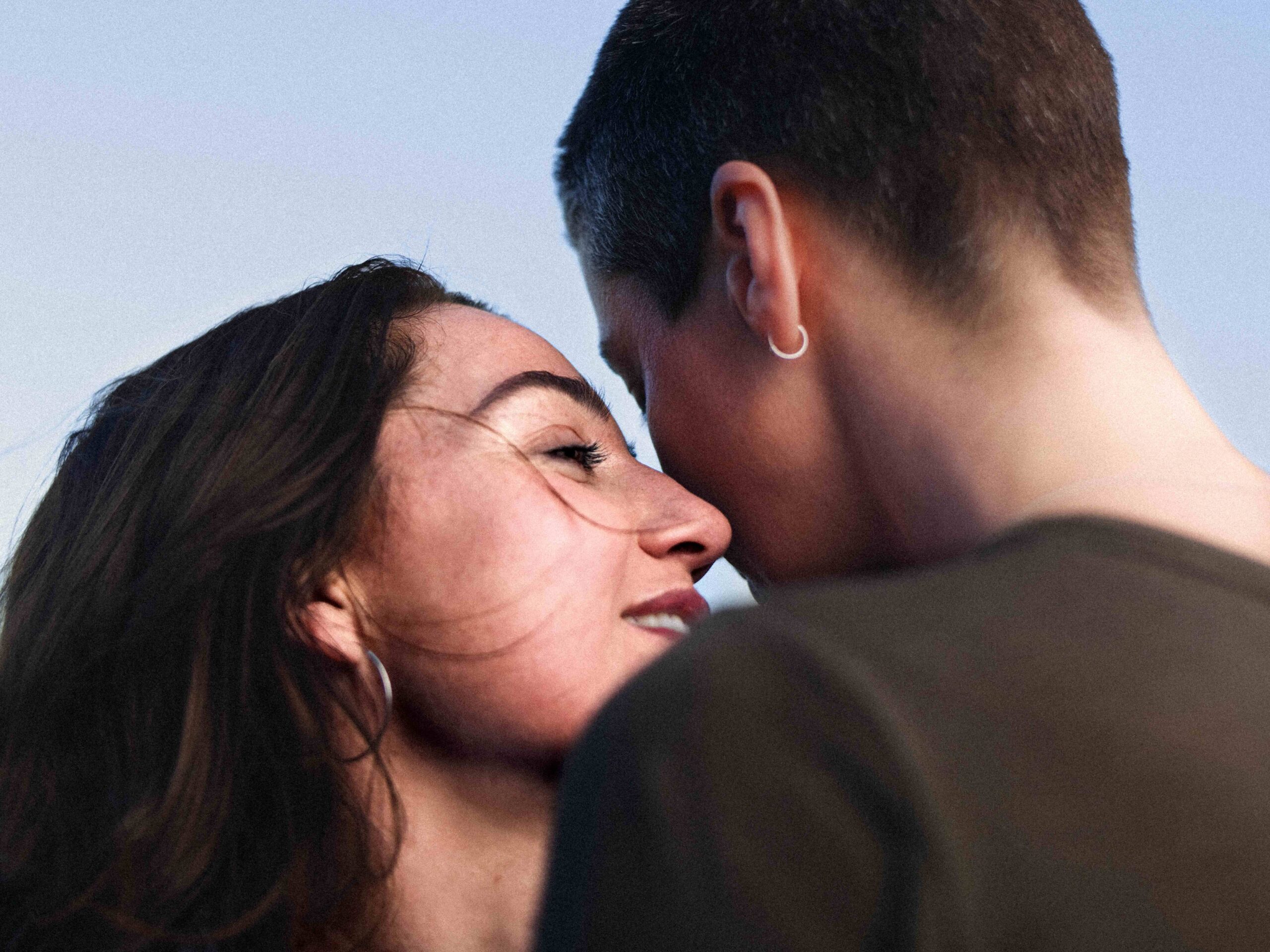
Scene from 'Julian' film
Her friend, author and screenwriter Angelo Tijssens, suggested she meet with producer brothers Lukas and Michiel Dhont (Lukas is the director of the Cannes-award-winning Girl and the Oscar-nominated Close). “There was instant trust,” says Pierets. “Thirty minutes into the conversation, I said yes.”
She was invited to help select the director – first-time feature filmmaker Cato Kusters – and look at drafts of the script, co-written by Kusters and Tijssens. She’s delighted with the final product. Still, doesn’t it force her to relive this traumatic experience? “Over and over,” she replies.
“My book is also being translated right now, into French and English. I’m doing tours, I’m on the BBC. The questions I get are framed from a perspective that it happened yesterday. And now there’s the movie on top of it. I do feel very wobbly at times.”
What keeps her grounded, she says, is working on a documentary film, the story of her current partner’s journey from pro volleyball player to potential Olympic swimmer. “It’s about ageism and sports and how it’s never too late. You can dream big,” she says.
