
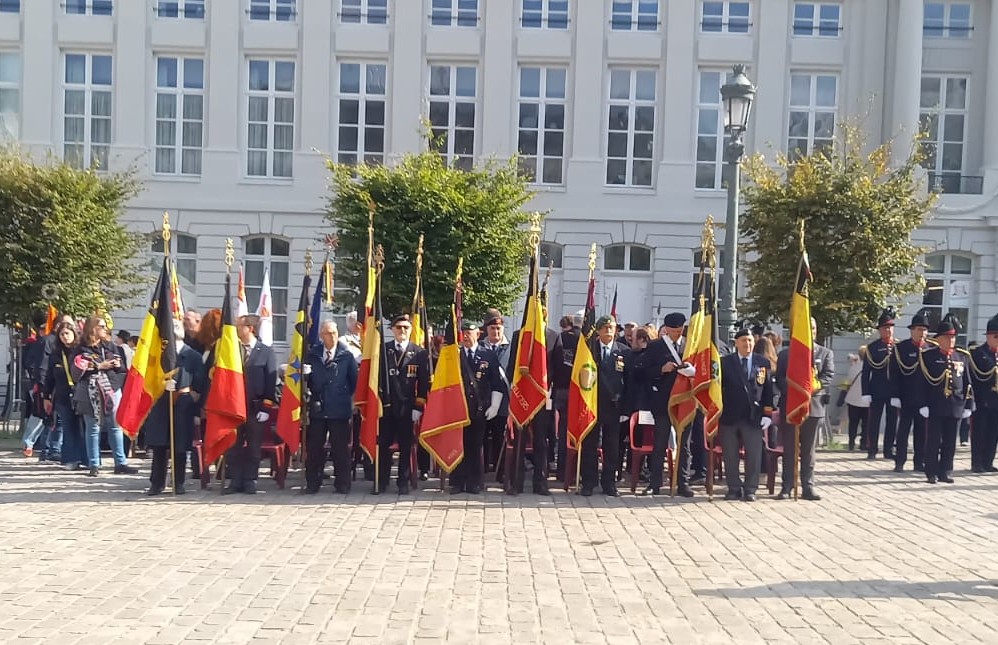
The annual commemoration of the Belgian revolution in 1830 against the Dutch Kingdom and the tribute paid to the voluntary soldiers who fell in the battle took place on Saturday afternoon at Place des Martyrs in Brussels.
446 fighters are buried in an underground crypt at the square and have their names inscribed on marble tablets. The battle resulted in the birth of the Belgian nation.
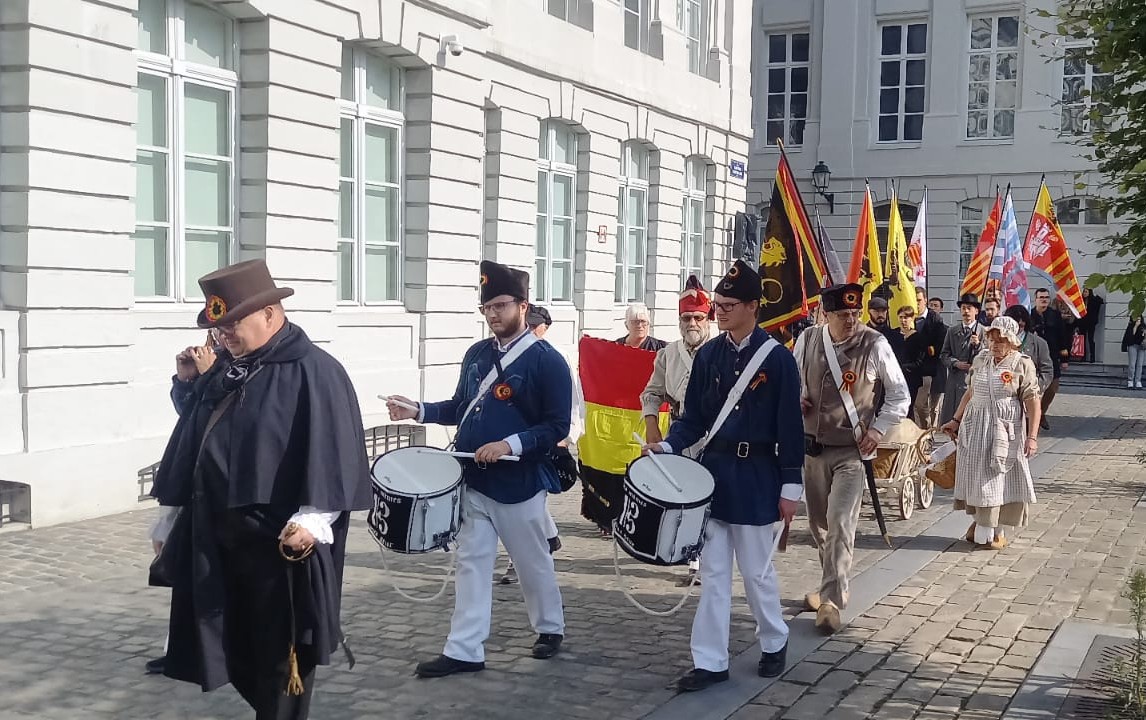
The solemn ceremony, with people dressed in uniforms from that tumultuous period, was organized by Pro Belgica. Founded in 1975 to preserve the monument and the crypt from demolition, the NGO continues to keep the memory of the rebellion alive. The only years when commemorations of the rebellion were banned and could not take place were during both world wars when Brussels was occupied by German forces.
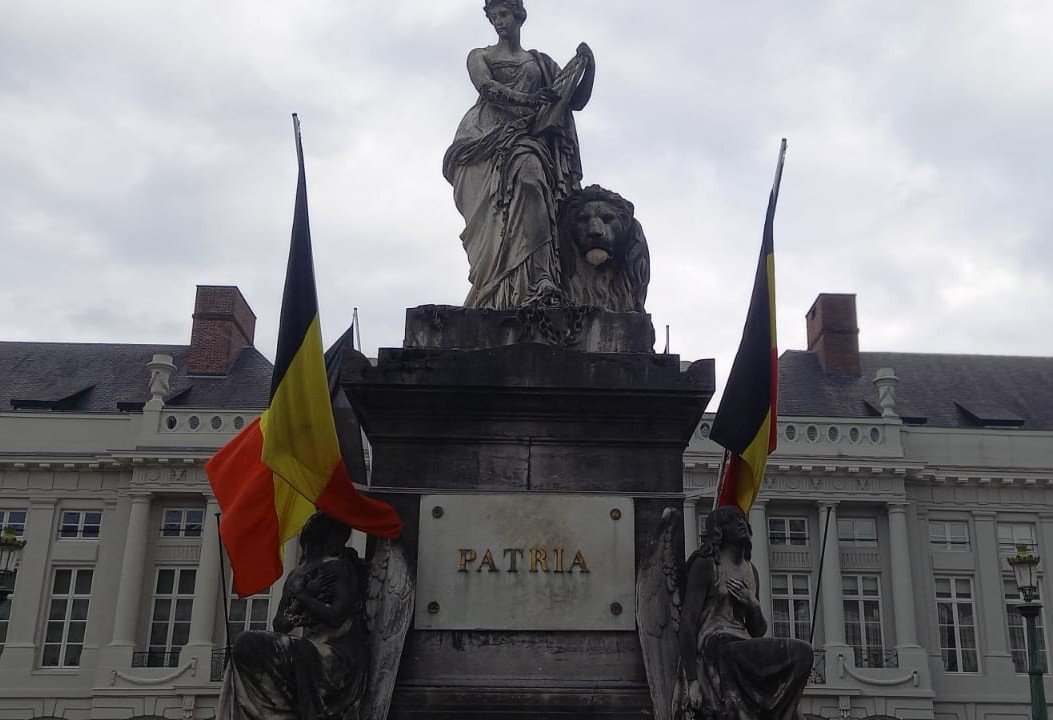
The Pro Patria Monument, Place des Martyrs
The Monument in memory of the 1830 revolution, also known as the Pro Patria Monument, was erected in 1836–1838. The monument gave the current name to the square, Place des Martyrs (Martyrs’ Square). The square, surrounded by neo-classical buildings from the 18th century, was previously called Place Saint-Michel.
“The Belgian Revolution of 1830 was not just a popular uprising,” said Anthony Milléquant, President of Pro Belgica at the ceremony. “It was the expression of a universal ideal: the thirst for freedom and democracy.”
“It allowed our country to establish institutions that respect fundamental rights and a political system where sovereignty belongs to the Nation, under the protection of a King, guarantor of unity and respect for our Constitution. The Martyrs who rest here gave their lives so that independent Belgium could emerge and assert itself as a free and just homeland.”
The ceremony took place in the presence of representatives of the Belgian King, the judiciary and government ministries. “This presence gives our ceremony a very special dimension: it underlines the deep connection between our constitutional monarchy and the ideals of 1830, and it reminds us that freedom and democracy are not self-evident, but must be cultivated and protected day after day.”
Credit: The Brussels Times
The rebellion in Brussels started already on 25 August 1830, a month after another rebellion in Paris. In both cities the rebellions targeted the regimes imposed by the Congress of Vienna after the defeat of Napoleon. In Brussels the rebellion was triggered by an opera, La muette de Portici (The Mute Girl of Portici), on the last of a three-day festival celebrating the Dutch King William I’s reign.
On 23 September, a bloody battle for four days followed and 300 Liègeois came to the aid of the rebels in Brussels. The Dutch army was stranded in Brussels and was finally driven back. On October 4, a revolutionary Provisional Government declared independence from the Kingdom of the Netherlands. In November, a constitutional monarchy was chosen by the National Congress as the form of government.
In February 1831, the Congress drafted the Belgian constitution. This constitution was considered the most democratic constitution for the time, including freedom of expression and protection of journalists, and formed the middle ground between strong authority and democracy.
Anyone of these dates could have been chosen as Belgium’s national day. Instead, 21 July was chosen as the national day or independence day. On that day in 1831, almost a year after the rebellion, Leopold I of Saksen-Coburg and Gotha swore his constitutional oath as King of the Belgians after having been offered the crown and entered Belgium on 16 July 1831.
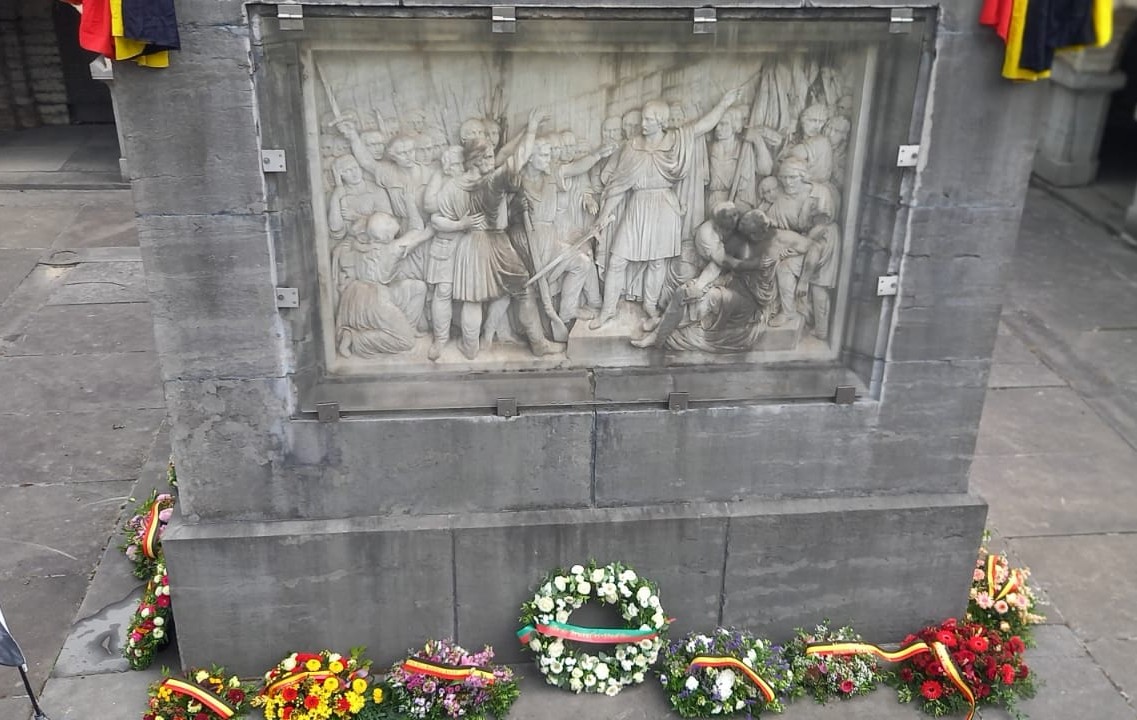
Wreaths in the crypt
In fact, from 1831 to 1880, the National Day was celebrated on Martyrs' Square in memory of the first day of fighting in the Belgian Revolution, Pro Belgica told The Brussels Times.
Between 1839 (the year the Netherlands officially recognized the young Belgian kingdom) and 1880, the Dutch ambassador left Belgium for three days each year so that his country would not be represented at the commemorations. In 1880, it was decided to adopt 25 August as National Day, in memory of the performance of the opera "La Muette de Portici".
However, the Netherlands remained reluctant about this choice of date. It was finally decided in 1890 that the National Day would henceforth coincide with the anniversary of the swearing-in of the first King of the Belgians.
