
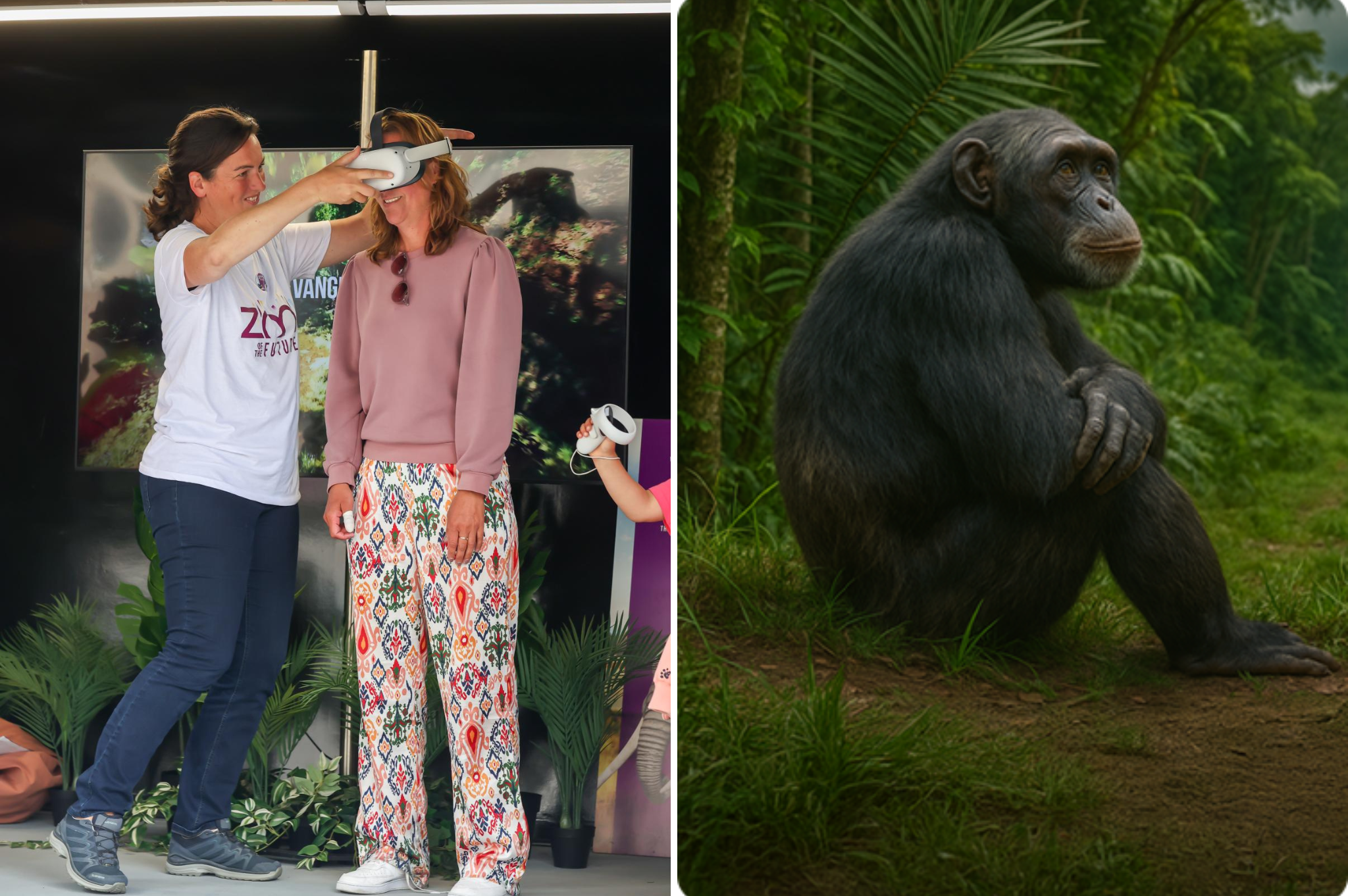
At Tour & Taxis in Brussels, elephants are roaming, penguins are waddling, and monkeys are swinging through the trees – yet not a single animal is really there.
Instead, visitors find themselves inside vast digital landscapes, wandering alongside creatures recreated in stunning virtual detail.
This is the Zoo of the Future, a bold experiment by Brussels-based animal welfare group Global Action in the Interest of Animals (GAIA), which uses technology to rethink the very idea of a zoo. Opened in early September until the end of the year, the project invites people to step into immersive VR, AR and 360° environments, offering close encounters with animals in their natural habitats – without cages, fences or captivity.
For GAIA CEO Ann De Greef, the initiative is more than a spectacle. It is a statement about what zoos should – and should not – be. “Even if zoos do their best, it is never enough,” she says. “Keeping wild animals in captivity is mainly for entertainment. They claim it is for education or conservation, but how much do people really learn when they walk through a zoo?”
She argues that documentaries or immersive experiences provide far more insight. “Ask people leaving Antwerp Zoo about a chimpanzee’s needs, and maybe ten in a hundred could tell you something beyond its colour. Yet if they watched a film like My Octopus Teacher or a National Geographic special, they would learn about intelligence, habitats, and behaviours – things a zoo cannot show.”
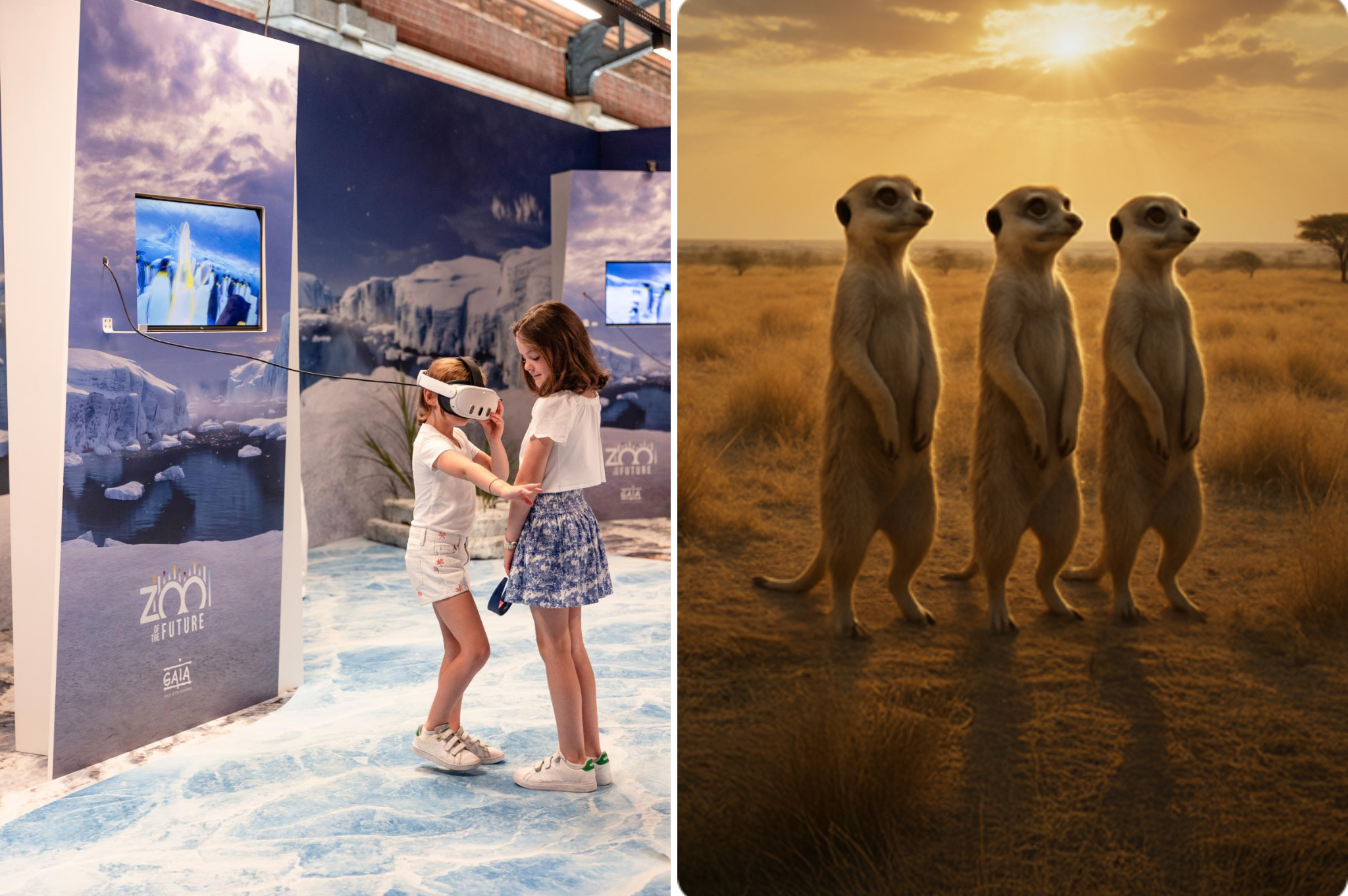
GAIA's Zoo of the Future. Credit: GAIA
The conservation case, she insists, is equally shaky. “Zoos say they protect endangered species, but how many animals have they actually returned to the wild? Very few. What’s the use of keeping giraffes or elephants in captivity while their natural habitats are being destroyed? It’s like collecting rare books while burning libraries. The real solution is protecting habitats, not displaying animals like exhibits.”
De Greef does not doubt the good intentions of zookeepers but says the model itself is flawed. “You can give animals food, toys, even lessons, but they will never have a full life. The same goes for elephants in small groups or predators in confined spaces. Happiness is not just the absence of suffering – it’s the presence of freedom, enrichment, and natural social bonds.”
That conviction underpins GAIA’s virtual zoo, where three immersive zones – the Arctic, the jungle and the savanna – allow visitors to encounter animals behaving as they would in the wild, close enough to feel their presence without ever disturbing them.
For GAIA, the project is a glimpse of a different future. “Our dream is that virtual zoos replace those species hardest to keep in captivity – elephants, giraffes, chimpanzees,” says De Greef. “In the long term, traditional zoos could transform into sanctuaries, caring for confiscated animals or those rescued from circuses and private collections. The infrastructure and expertise are there. Why not use them for animals in need rather than new displays?”
With Belgium’s own action star Jean-Claude Van Damme as GAIA’s ambassador, the campaign has no shortage of attention. But at Tour & Taxis, the real stars will be the virtual animals – roaming free and running wild.
