
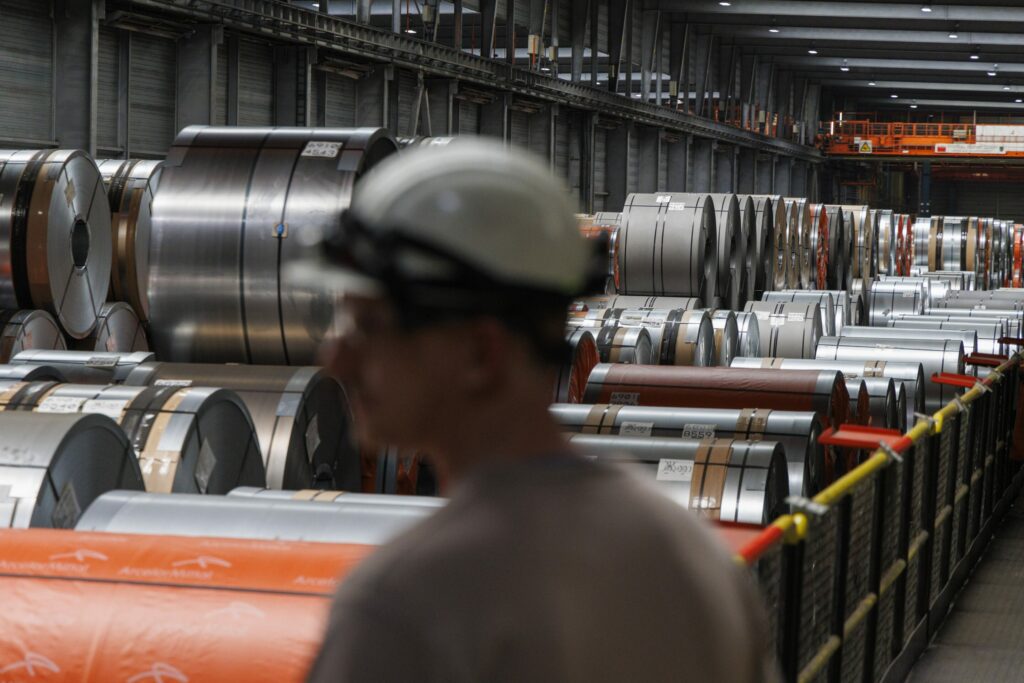
The European Commission has proposed stricter import tariffs to protect the EU steel industry from global overcapacity.
The plan includes halving the quota for tariff-free steel imports and doubling the import duty from 25% to 50%. These measures aim to safeguard the strategically vital sector within the European Union.
"We are cutting steel import quotas by half and doubling customs duties to save our European steel mills and jobs," said Vice-President Stéphane Séjourné on Tuesday afternoon via the social media platform X.
"This is the new safeguard clause for steel. This is Europe’s reindustrialisation."
The plan marks a major shift in European industrial policy. For years, Europe had remained the only major market without strong countermeasures against countries that imposed tariffs on European steel.
The new measures are designed to correct that imbalance. The EU will halve the amount of steel that can be imported tariff-free, and double the tariff on imports exceeding those quotas from 25 to 50 percent.

Press conference by European Commissioner Stéphane Séjourné on Critical Raw Materials, 25 March 2025. Credit: EU
"The European steel industry was on the verge of collapse. We are protecting it so that it can invest, decarbonise, and become competitive again," Séjourné told reporters ahead of his presentation at the European Parliament in Strasbourg.
Since 2015, the European steel industry has lost around 270,000 jobs as cheap imports flooded the market. Eurofer, the association representing European steelmakers, has long warned that Chinese steel, often sold below production cost, was undermining the market.
Much of the EU’s action is aimed at China, which has been accused of circumventing EU import rules and mislabelling high-emission steel as “green” by mixing it with smaller quantities of sustainably produced material. Brussels says those loopholes will now be closed.
Trade tensions
However, the measure also affects the United States. Despite steel representing only a fraction of US exports to Europe, the Trump administration imposed a 50 percent tariff on European steel. EU officials fear the new tariffs could reignite trade tensions with the US.
The tariffs could also be challenged at the World Trade Organisation (WTO). But according to the European Commission, the EU is sticking to WTO rules, as it is negotiating with trade partners and plans to offset the raise by lowering tariffs on other goods.
The proposal still requires approval from the European Parliament and EU member states, but the sector hopes it could take effect by early 2026.
