

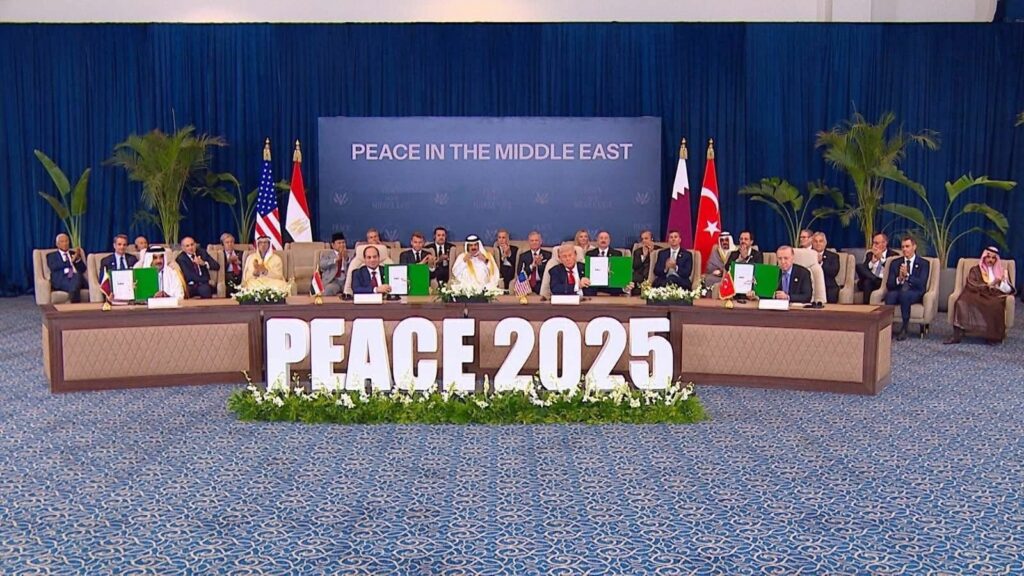
After the first phase in US President Trump’s plan was successfully carried out on Monday, in what was described as a historic day which ended the two-year devastating war in Gaza, the implementation of the rest of the plan remains fragile and will require all diplomatic, political and economic support that the EU can muster and has promised.
As agreed by Israel and Hamas last week, in separate documents signed with the US, Egypt, Qatar and Türkiye, Hamas released all 20 hostages still alive. Israel freed almost 2,000 prisoners, including 250 security prisoners, most of them convicted to life imprisonment for deadly terrorist attacks.
The Israeli hostages were immediately taken to medical exams before reuniting with their families but will have to continue to stay under medical control and receive mental health support. Most of them were found to be in relatively good health despite being held captive most of the time in underground tunnels, suffering starvation, torture, and isolation.
Since 7 October 2023, their families fought tirelessly for their release but the mass demonstrations and protests against the Israeli government for a comprehensive ceasefire-hostage deal did not succeed until President Trump noticed them and decided to pressure both Israel and Hamas to agree to his peace plan.
He is known to be unpredictable and occupied with ‘making America great again’, trade wars and other international conflicts. He will have to continue to pay attention to the conflict and the implementation of all points in the plan. After being sidelined until now, there is a momentum for the EU to play a more active role and contribute to the implementation of his peace plan.
After visiting Israel for a few hours on Monday, where Trump addressed the Parliament and received standing ovations for his successful efforts to bring about the agreement, he continued to the international summit for peace in Sharm El-Sheikh, Egypt, where several heads of state and government from among others Arab, Muslim and EU countries paid tribute to him for his achievement.
France, Cyprus, Germany, Italy, Greece, Hungary and UK were represented by their presidents or prime ministers. European Council President António Costa attended the summit on behalf of EU. European Commission President Ursula von der Leyen and High Representative Kaja Kallas had also been invited by Egyptian President Abdel Fatah El-Sissi but reported impediment due to other commitments.
EU’s support to the Trump plan
Despite the absence of two of them, all EU leaders welcomed the peace plan. “The international community is united in its commitment to a future where Palestinians and Israelis live side by side in peace and security,” said Costa.
“Hope for a just and sustainable peace, and a brighter future, grounded in the two-state solution. Together, we will help rebuild Gaza and help heal the wounds. We will not forget the horrific events of 7 October 2023, which should never be repeated.”
“The return of the Israeli hostages is a moment of pure joy for those families. And a moment of relief for the entire world,” twitted von der Leyen. “It means that a page can be turned. A new chapter can begin. Europe fully supports the peace plan brokered by the United States, Qatar, Egypt, and Türkiye.”
“We stand ready to contribute to its success with all tools at our disposal. In particular, by providing support on governance and for the reform of the Palestinian Authority. We will be an active force within the Palestinian Donors Group. And we will provide EU funding for the reconstruction of Gaza.
Kallas twitted on Monday that, “Today marks a rare moment of hope in the Middle East. The release of hostages is a major success for diplomacy and a crucial milestone toward peace. President Trump made this breakthrough possible. Securing peace in Gaza will be extraordinarily complex.”
In a statement on Friday, she wrote that the EU welcomes the agreement on the first phase of the Trump plan. “We call on all parties to fully implement the agreement without delay, allowing for the establishment of a lasting ceasefire, the release of the hostages, and the unimpeded access and sustained distribution of humanitarian assistance at scale into and throughout Gaza.”
“This is a real chance to end the devastating war and the human suffering, and to forge a credible political path towards lasting peace and security, based on the two-state solution,” she added.
Referring to EU’s multifaceted “tool box”, she underlined that, “the EU stands ready to contribute to Gaza’s stabilisation and reconstruction, including the full use of the EU’s CSDP missions EUBAM Rafah and EUPOL COPPS. The EU will continue to support the Palestinian Authority, including in its ongoing reform, and in view of its return to Gaza, and also through the Palestine Donor Group.”
The summit was largely symbolic aiming at mobilizing international support for the Trump 20-point plan. It resulted in a lofty “Trump Declaration for Enduring Peace and Prosperity”, signed by the leaders of the US and the three mediator countries, Egypt, Qatar and Türkiye. In fact, only the first phase of the Trump plan has been agreed between Israel and Hamas.
First phase most critical
Contrary to the concept that ‘nothing is agreed until everything is agreed’, the two sides, under heavy pressure, agreed on the first phase and signed separately a one-page document with only six points, called ‘Implementation steps for President Trump’s proposal for Comprehensive End of Gaza War’. It does not deal with the disarmament of Hamas, the governing of Gaza and its reconstruction.
The documented required the withdrawal of Israeli troops to new lines and, within 72 hours of the withdrawal, the release of all Israeli hostages, living and deceases. Hamas committed also to share all the information it obtained relating to any remaining deceased hostages through an information-sharing mechanism. Israel would also provide information on the remains of the deceased Gazans held.
Importantly, the full entry of humanitarian aid and relief should start immediately as determined in the agreement, and at a minimum in consistence with a previous agreement from January 2025.
A task force was also to be formed of representatives from US, Qatar, Egypt, Turkey and other countries to be agreed upon by the parties, “to follow-up on the implementation with the two sides and coordinate with them”. The Commission declined to reply to a question if the EU or any EU Member State has been invited to the task force.
The EU is fit to play a key role in the task force considering its engagement in the conflict, technical expertise and soft diplomatic outreach. The EU also always underlines its role as the largest donor of humanitarian aid and financial assistance to the Palestinian Authority and its reform programme. However, until now the Union has been more of a payer than a player.
Weaponization of humanitarian aid
The ink had hardly dried on the document until the implementation run into trouble. Until now only 9 bodies of 28 deceased hostages have been returned to Israel. Hamas claimed that it “has limitations beyond our control and constraints in the field that caused us to hand over a lower number than expected of dead hostages.” Many of them are probably buried under the rubble in Gaza.
In response, Israel decided unilaterally not to reopen the Rafah border crossing on Wednesday between the Gaza Strip and Egypt, and to temporarily reduce the amount of humanitarian aid into Gaza, which was supposed to reach 600 trucks per day. This amounts again to a “weaponization” of humanitarian aid for which the Israeli government has been widely condemned.
Despite its commitment to permanently end the war and Trump’s assurances that the war is definitely over, the Israeli government has also started to threaten to resume the fighting if not all bodies are quickly found and returned.
The release of the hostages was “a historic event, which some did not believe would ever happen,” the Israeli Prime Minister said, but “the military campaign is not over”. It appears that he still thinks that he can resume the war for political reasons and on the slightest pretext.
What can the EU do to solve the problem and support both sides in implementing the agreement in the first phase so that they can move to the other points in the Trump plan?
“By calling on all parties to abide by the plan,” Paula Pinho, chief spokesperson of the European Commission, replied at the Commission press conference on Wednesday.
The Commission was also asked about the deployment of the EU Border Assistance Mission (EUBAM), at the border crossing at Rafah. According to Anouar El Anouni, spokesperson for foreign affairs, it remains “on standby” and can be deployed on short notice as soon as the conditions allow it.
EUBAM, which was established in 2005, suspended it operations at the border crossing following Hamas take-over of Gaza in 2007. During the war, former High Representative Josep Borrell proposed its reactivation. It was redeployed temporarily in January 2025 during the ceasefire, which enabled the transit of thousands of wounded Gazans. Since March, it is on standby.
“The opening will allow the transit of civilians out and in of Gaza, including those that require medical care,” El Anouni explained, “but it is not aimed for the entry of humanitarian aid into the Gaza Strip. For that there are other border crossings.” That would indicate a problem as the Rafah border crossing was a major entry point for humanitarian aid and many people have been displaced to southern Gaza.
EUBAM is apparently a test case for the EU. “It proves the extent to which the EU is contributing in a very concrete term to the peace plan,” the foreign affairs spokesperson told The Brussels Times. He assured that the EU will and can attribute to practically all points in the Trump plan. This would require that EU will be able to influence the implementation of the plan and improve its relations with Israel.
High Representative Kallas recalled also EU’s civil police and rule of law mission (EUPOL COPPS), which currently is deployed in the West Bank, training Palestinian civil police officers and supporting rule of law projects. It remains to be seen if it can be deployed inside Gaza, considering the Israeli government’s rejection of the Palestinian Authority as an alternative to Hamas.
EU’s position on this is clear. It favors a more prominent role for the Palestinian Authority in Gaza “the day after” and clear steps towards a political horizon for Palestinian statehood and a two-state solution based on the principles endorsed by a large majority of UN member states.
Given the Trump peace plan, and the implementation of the first phase of the plan, does the Commission consider to withdraw or amend its package of targeted sanctions against Israel?
This is a question asked by several journalists at the Commission’s press conferences. The reply is that it is too early to say and that the forthcoming Foreign Affairs Council meeting on 20 October will offer an opportunity to discuss the way forward. The chief spokesperson said that the sanctions had been proposed in a given context and that a change of the context could lead to changes in the proposal.
Another subject is the Commission’s proposal for the Pact for the Mediterranean, which will be announced today. The pact is a new bottom-up EU initiative with focus on concrete actions for cooperation between the EU and the 10 southern Mediterranean countries. Will the pact contribute to the implementation of the Trump plan?
“The pact will not solve all the problems in the region and is not directly linked to the Trump plan in the short-term but his plan, if implemented, can facilitate the cooperation through the pact,” senior EU officials replied.
