

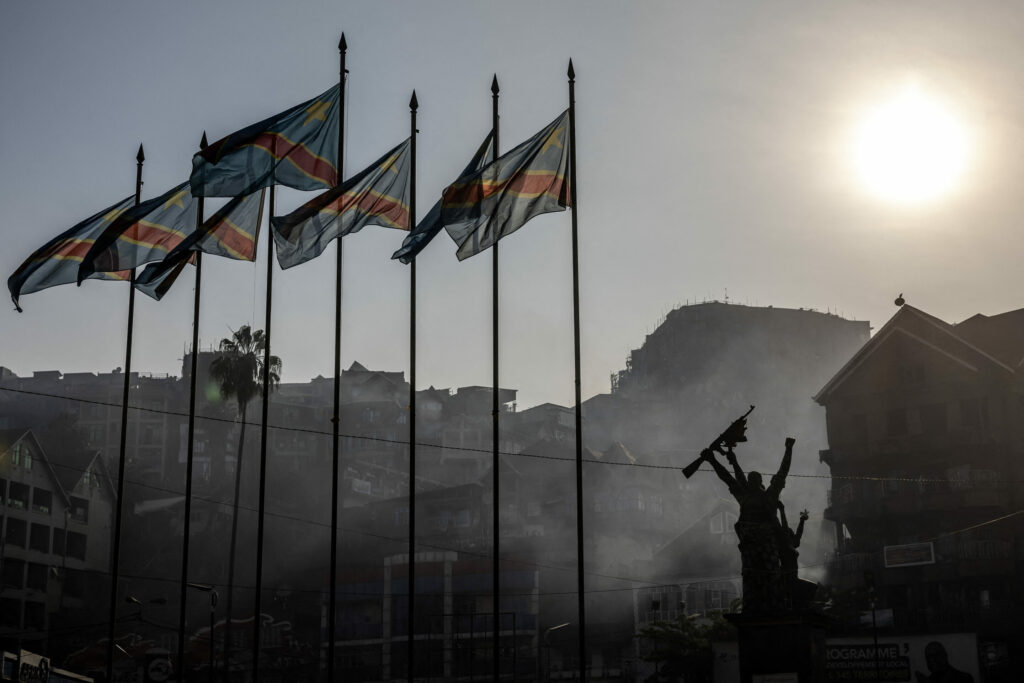
The Great Lakes region of Africa has been the epicentre of one of the continent’s most protracted and complex conflicts. At the heart of this turmoil lies the intricate and often fraught relationship between Rwanda and the Democratic Republic of Congo (DRC).
While Rwanda’s initial intervention in the DRC was rooted in legitimate and widely understood security concerns following the genocide, its subsequent and continued military presence on Congolese soil has evolved into something more troubling.
What began as a justified response to an existential threat has shifted into a pattern of unilateral action that has destabilised the region. This continued involvement has violated the DRC’s sovereignty and raised profound questions about the true motivations behind Rwanda’s interventions.
Genocide echoes fuelled regional conflict
To understand the current situation, it is essential to revisit the horrors of the Rwandan genocide.
In a span of just days, an estimated Tutsis and moderate Hutus were systematically murdered by Hutu extremists. The genocide ended when the Rwandan Patriotic Front (RPF), a Tutsi-led rebel group, took control of the country.
In the wake of the RPF’s victory, a massive refugee crisis ensued, with over a million Hutus, including perpetrators of the genocide—the former Rwandan Armed Forces (ex-FAR) and the Interahamwe militia—fleeing into the eastern provinces of Zaire (now the DRC).
These refugee camps, particularly in the Kivu provinces, quickly became militarised.
The ex-FAR and Interahamwe used the camps as safe havens to regroup, re-arm, and launch cross-border attacks against the new RPF government in Rwanda. This created a severe and undeniable security threat to Rwanda, a nation still reeling from the trauma of genocide.
The international community, which had failed to prevent the genocide, also failed to demilitarise the refugee camps, leaving the fledgling Rwandan government to fend for itself.
Faced with this existential threat, Rwanda took matters into its own hands. The Rwandan army, along with other regional allies, invaded Zaire in what became known as the First Congo War.
The stated objective was to dismantle the ex-FAR and Interahamwe bases and neutralise the threat they posed. This initial intervention, given the context, was seen by many as a justifiable act of self-defence.
From defence to dominance: When intervention loses its cause
However, what began as a defensive measure soon evolved into a more complex and prolonged engagement. The First Congo War led to the overthrow of Mobutu Sese Seko and the installation of Laurent-Désiré Kabila. Yet, the presence of Rwandan troops in the DRC did not cease.
The Second Congo War soon followed. Rwanda, alongside Uganda and Burundi, actively supported various rebel groups, most notably the Rally for Congolese Democracy (RCD), against the Congolese government.
This period marked a significant shift, as Rwanda’s involvement appeared to extend beyond merely neutralising genocidal forces, raising suspicions about other strategic interests.
A recurring criticism of Rwanda’s actions is the unilateral nature of its interventions. Decisions to cross into Congolese territory are often made without public discourse or parliamentary oversight. This opacity fuels speculation and undermines trust, both domestically and internationally.
Many Rwandan families are left in the dark about the fate of their loved ones serving in these undeclared military operations. Parents are frequently surprised by news of their sons’ deaths in the battlefield, receiving little to no official support or acknowledgement from the Rwandan government.
The pervasive lack of freedom of speech within Rwanda compels these grieving families to keep their sorrow private, unable to publicly mourn or question the circumstances of their children’s sacrifice.
Furthermore, Rwanda has been repeatedly accused of supporting various proxy groups in the eastern DRC, including the CNDP (National Congress for the Defence of the People) and, more recently, the M23 movement.
These groups, often including individuals from Tutsi communities in the DRC, claim to protect their populations from armed groups such as the FDLR (Democratic Forces for the Liberation of Rwanda), which includes remnants of the ex-FAR and Interahamwe.
However, numerous reports from the United Nations and human rights organisations have documented Rwanda’s direct military support and command over these rebel factions, exacerbating the conflict and contributing to immense human suffering.
This sustained involvement, often under the guise of security, has led many to question whether Rwanda’s true objectives are solely defensive or if they encompass broader geopolitical and economic ambitions.
The human and regional costs of intervention
The consequences of Rwanda’s prolonged involvement in the DRC have been catastrophic for the Congolese people and the stability of the Great Lakes region.
Eastern DRC has endured decades of relentless conflict, leading to one of the world’s most severe humanitarian crises. Millions have been displaced, countless lives have been lost, and widespread human rights abuses, including sexual violence and the recruitment of child soldiers, have become endemic.
The constant cycle of violence has shattered communities, destroyed infrastructure, and prevented any meaningful development. Moreover, Rwanda’s interventions have severely strained its relationships with nearly all its neighbors.
The consistent pattern of cross-border military engagements has fostered regional distrust and animosity. While the horrific genocide in Rwanda is an undeniable historical tragedy, it cannot serve as a perpetual justification for violating the sovereignty of a neighboring state.
International law is clear on the principle of state sovereignty and non-interference in the internal affairs of other nations. While a state has the right to self-defence, this right is not limitless and must be exercised within the bounds of international law, which includes respecting territorial integrity.
Minerals and motives: What else drives this war?
Beyond the stated security imperatives, many analysts and international reports have pointed to the significant economic interests that may drive Rwanda’s continued involvement in the eastern DRC.
The region is incredibly rich in natural resources, including valuable minerals such as coltan, cassiterite, gold, and diamonds. These minerals are crucial for modern technologies, and their illicit exploitation has been a major funding source for various armed groups, perpetuating the conflict.
Accusations have frequently surfaced, notably from the United Nations Group of Experts on the DRC, alleging that Rwanda has benefited, directly or indirectly, from the illegal extraction and trade of these Congolese minerals.
While Rwanda vehemently denies these claims, the consistent reports raise serious questions about whether the pursuit of economic gain, rather than solely security, plays a role in its sustained military presence and support for proxy forces in the resource-rich eastern provinces of the DRC.
This economic dimension adds another layer of complexity to the conflict, suggesting that the motivations extend beyond the initial, understandable security concerns that arose from the aftermath of the genocide.
A path to peace demands more than memories
The narrative surrounding Rwanda’s involvement in the Democratic Republic of Congo is undeniably complex, rooted in the tragic history of the Rwandan genocide and the subsequent security threats.
However, the prolonged nature of Rwanda’s interventions, the unilateral decision-making, the alleged support for proxy groups, and the devastating human and regional costs, demands a critical examination of its actions.
While the memory of genocide is a powerful justification, it cannot perpetually sanction the violation of a sovereign nation’s territory or the fuelling of a conflict that has brought untold suffering to millions.
A lasting peace in the Great Lakes region demands adherence to international law, respect for sovereignty, and a transparent commitment from all actors to address the root causes of instability, rather than perpetuating cycles of intervention and exploitation.
