
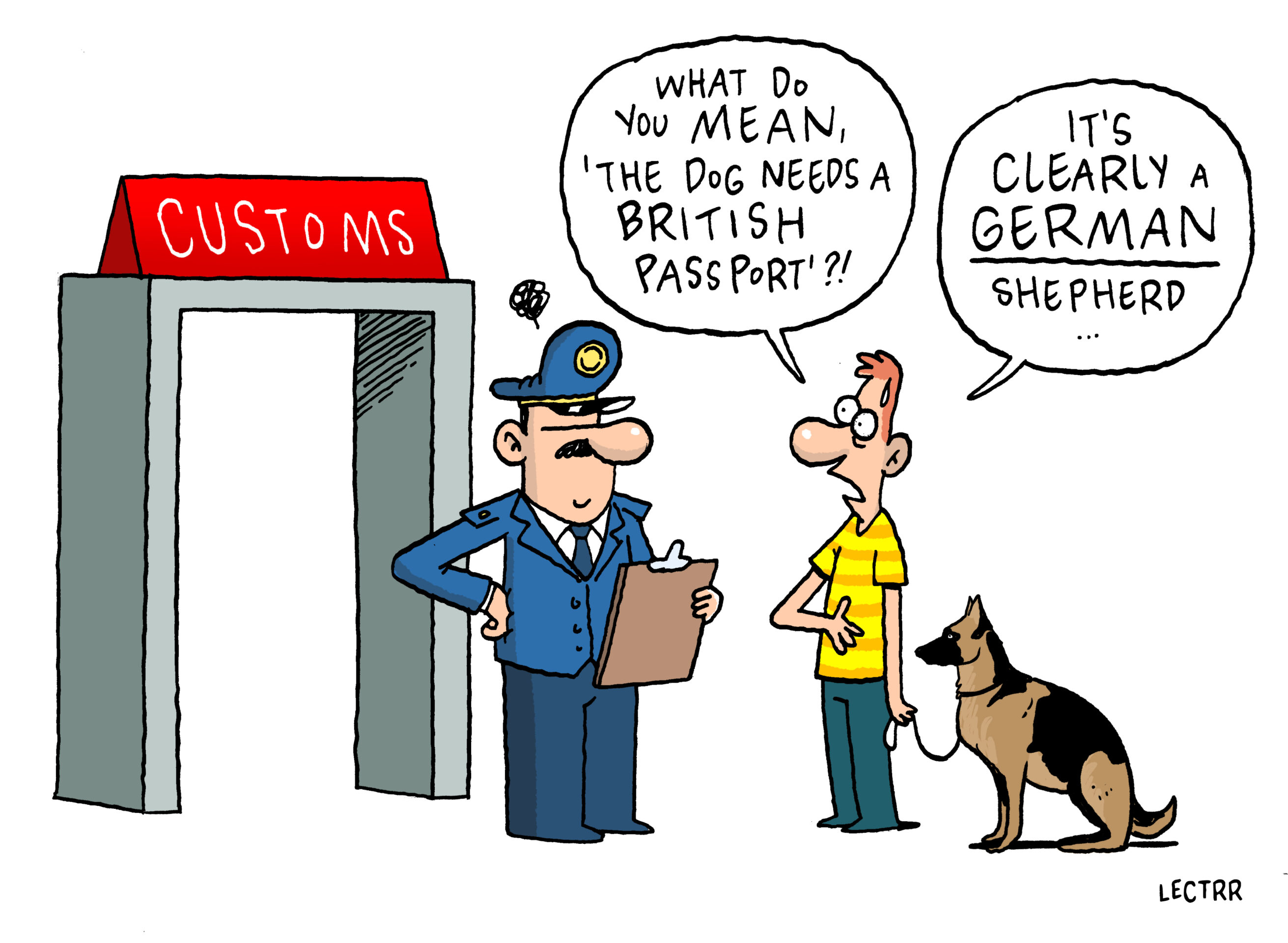
As part of this animal-themed edition of The Brussels Times Magazine, I respectfully call on all readers to paws (sorry) for a few moments and spare a thought for the almost daily turmoil faced by British dog owners wrestling with pooch-related post-Brexit bureaucracy.
You’d think things would have settled down since the UK’s departure from the EU, but I sense doggy-owning British residents are only now preparing to rise up, united by the gradual realisation that their dogs somehow managed to negotiate a better Brexit deal than the Conservative government managed for their owners.
Not many Brits, leavers or remainers, are aware of it yet, but their dogs can avoid the whole Brexit thing – and save their owners useful amounts of money in the process – by changing nationality at the drop of a poo-bag to join any of the current EU Member States.
Also, British-based dogs, even without a nationality change can, in theory, visit any of Europe’s 29 border-free Schengen Area countries for up to four months, compared with a maximum of three months for their British passport-carrying owners, unless the humans pay up for a longer-term visa than the Brexit visiting rules normally allow.
Belgian passport. Credit: Belga
No wonder lots of British dog owners who continue to holiday in the Schengeny bits of Europe have a chip on their shoulder – not unlike the one they struggle to find under their pet’s fur in those stressful minutes at pet border controls before the electronic gizmo pings confirmation of doggy identity.
I didn’t know any of this because we Schengen-based British doggy people with acquired Belgian nationality haven’t had to study the Brexit terms and conditions governing entry for UK-based dogs, cats and ferrets.
But all was revealed by British-based friends who joined us on holiday with their dog in sunny Schengen territory this summer. They had some news about the Animal Health Certificate, which has replaced the British version of the EU pet passport, and which can be issued by any qualified UK vet.
The Certificate is only valid for one visit to Schengenland, at a cost each time of anything between £170 and £250, making life expensive for Brits who regularly like to Channel-hop with their pooches from the UK.
French sheepdog, English poodle?
But the really exciting news is that if their dog changes nationality – an option which apparently few Brits are aware of – the AHC is valid for a whole year.
Our friends discovered this when they took their dog for its first post-Brexit Animal Health Certificate medical update. The vet happened to mention that if they visited a vet in the Schengen area, there was a chance that the dog could switch nationalities, potentially saving thousands of pounds for frequent visitors to Schengenville.
They didn’t think much about it until last year when they needed some routine dog medication while driving in Italy. Vets are not obliged to change a dog’s nationality, but the one they visited was happy to do so.
Other friends have since revealed that, although they have to remain British, their dog is now Belgian, following an unscheduled trip to a random vet for a minor doggy ailment while on a weekend road trip.
As for British dogs being allowed to stay in Schengen sightseeing for one month longer than the owners, that’s true but a bit technical, because the owners are unlikely to leave the dogs to fend for themselves when the human can stay with them if they pay extra for a temporary visa to boost their basic 90-day rule rights.
Oh, good grief, don’t let’s talk about the 90-day rule! That was one of the heartfelt cries from every dog-owning Brit we encountered this summer, but, of course, we did talk about it.
Or rather, they did, as they are the poor souls who have been forced to grapple with the brain-numbing maths of the European Commission’s 90-out-of-180-days rule, which involves, an online calculator explains, “the application of a ‘moving’ 180-day reference period, looking backwards at each day of the stay.”
And even if you understand what that means, customer confidence in working out how many days pets and their owners can remain in the Schengen area based on previous stays is not improved by the Commission’s warning that the calculator result “does not constitute a right to stay for a period resulting from its calculation”.
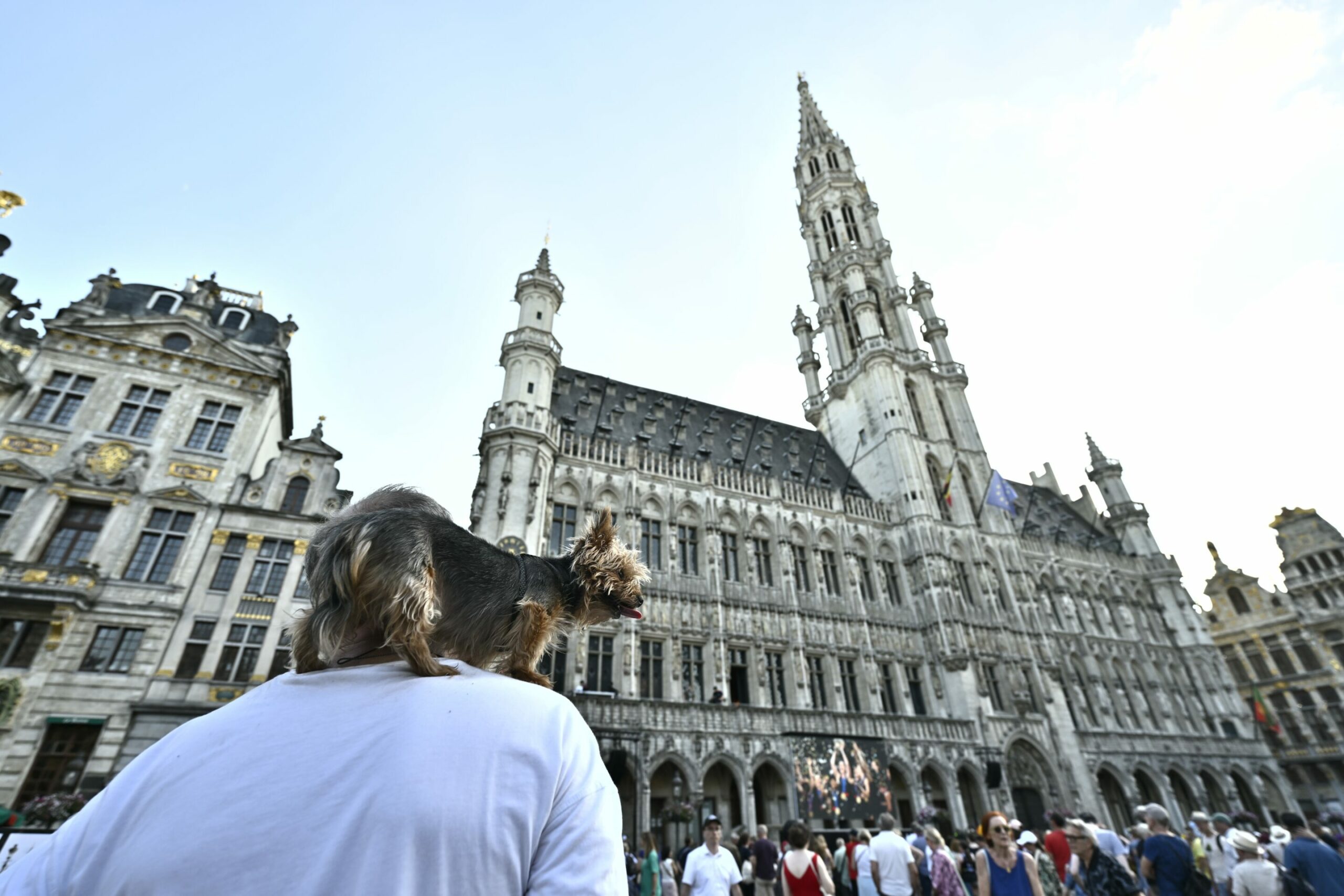
A dog on the shoulder of someone, waiting for the celebrations at the Brussels city hall and Grand Place. Credit: Belga
Of more concern to dogs, cats and ferrets, of course, is the warning that the rules restrict, “the non-commercial movement of pet animals into the Schengen area.”
More concerning to their owners is the following warning on the website: “If you set foot in France a few minutes before midnight, those few minutes will count as an entire day out of your 90 days. Similarly, if you depart in the early hours of the morning, those few hours will also count as a full day out of your 90 days….”
One disgruntled Brit described that as even meaner than hotels where you can’t check in until four in the afternoon, but you have to check out before 10 the next morning. But at least the hotels have the valid excuse of some genuine cleaning up to do.
Some of our casual dog-related encounters this summer have raised false expectations amongst Brits when we explain that being Belgian, with a Sicilian dog who has now become Belgian, means we only need the normal annual pet updates on his certificate.
A few people, sensing an opportunity, started asking how hard it would be to become Belgian while still living in Britain. Interest fades with the confirmation that, unlike their dog, they would actually have to live and work in the country for quite some time.
Some of my best friends are dogs
But that’s not our concern right now. If we have any dog-related problem at all, it’s racism. Or at least I thought it was.
Mikey’s problem is that he doesn’t like black cats. He’ll tolerate tabby cats and white cats but goes crazy when a black one strolls into view.
When I raised the issue with his (Italian) vet in Brussels, he asked if there were any other indications of racism. I said no, except for the fact that he seems very unsettled around white dogs, especially big ones.
“Ah ha!” exclaimed the vet. That isn’t racism. It’s more like size-ism. And your dog will probably be reacting to other animals partly on the basis of previous experience, such as being scratched by a black cat or mauled by a large white dog.
So he’s not racist?
No, the vet said. Dogs can sometimes pick up on their owners’ emotional cues, so if a human is tense in the presence of a particular animal, Mikey might pick up on that, whatever the size or colour. But he’s not racist – he probably doesn’t even know the meaning of the word.
I thanked him for his reassurance, although I left feeling that it’s all my fault.
After I mentioned Mikey’s black cat problem to several people, I was sent a link to a satirical website called ‘Cats that Look Like Hitler,’ which shows photos of cats that resemble Adolf - or cats with a large black patch under their noses or black patches on their heads resembling his fringe. The site hasn’t been updated since April 2014, so I suppose there’s nothing more to be said on the matter.
Except that someone I mentioned it to immediately suggested that, if Kitler is the name given to cats looking like a certain dictator, why isn’t there a similar site for Pussolinis?
