
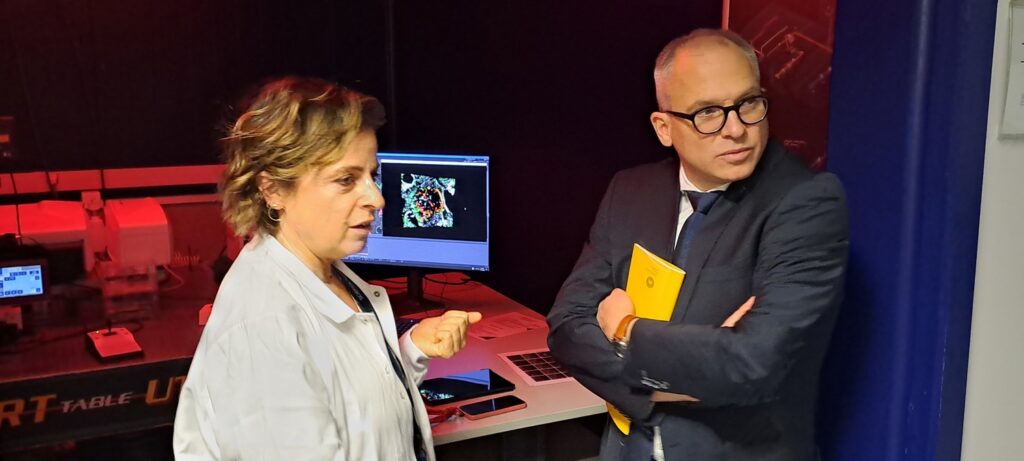
The Government of Flanders will continue to provide the Flemish Institute for Biotechnology (VIB) with investment, Flemish Minister-President Matthias Diependaele (N-VA) announced during a visit on Monday to the VIB research building in the Technology Park in Zwijnaarde, Ghent.
VIB conducts cutting-edge research aimed at developing innovations to improve lives, addressing challenges such as climate change, health issues, and geopolitical uncertainties.
Its projects range from creating a “Google Maps” of the hundreds of thousands of liver cells to developing drought-resistant maize plants. Diependaele emphasised the societal benefits of the institute's work, citing impacts on food security and climate solutions as examples.
Last year, the Flemish government invested €84.7 million in the research centre, and this figure will increase to approximately €89 million this year. According to a study by British consultancy Biggar Economics, every euro invested in VIB generates an average return of €12 for the Flemish economy and society, and €14 globally.
Diependaele credited strategic investments made since the 1980s by previous political leaders with providing long-term economic benefits for Flanders. He urged that similar investments be made today to ensure future prosperity for coming generations.
Meanwhile, the European Commission has proposed the EU Biotech Act, a new law designed to encourage innovation in biotechnology across Europe. Currently, the European regulatory environment for genetically modified organisms (GMOs) is more restrictive than in countries like the United States or China, resulting in less GMO cultivation and tighter market controls.
Diependaele stated that Flanders aims to bring the issue of GMO approval onto the European agenda, stressing its importance for fostering innovation and progress in the biotechnology sector.
