
Decades of scientific research consistently demonstrate that regular consumption of whole grains significantly reduces the risk of chronic diseases, including cardiovascular disease, type 2 diabetes, and certain cancers.
Encouraging whole grain consumption from an early age is particularly beneficial for health. Children’s eating habits are formed early in life and tend to persist into adulthood.
Introducing whole grains and switching from refined to whole grain as part of their daily diet not only supports a balanced and more sustainable diet but also lays the foundation for lifelong well-being.
Across the world, inspiring examples demonstrate that progress is achievable. The U.S. School Meals Scheme, school meal programmes in Kenya and Rwanda, and successful initiatives in European countries such as Denmark and Sweden show that increasing whole grain intake among children is both feasible and impactful.
The success of these initiatives highlights one key lesson: collaboration is essential. Only through strong partnerships between policymakers, educators, health associations, manufacturers and retailers can we accelerate the shift toward healthier diets and ensure that every child benefits from the power of whole grains.
For this reason, the 7th International Whole Grain Day will be held on the 19th of November 2025, experts and stakeholders from diverse sectors will come together to urge stronger action to build a ‘Whole Grain Generation’.
CPW’s wholegrain revolution: Leading the charge on International Whole Grain Day
As the world gears up to celebrate International Whole Grain Day on November 19, one company stands out with its purpose of making breakfast better: Cereal Partners Worldwide (CPW), maker of Nestle Breakfast Cereals. A joint venture between Nestlé and General Mills, CPW has spent decades redefining breakfast by putting wholegrain at the heart of its mission. Today, its commitment resonates louder than ever, shaping healthier lifestyles and a more sustainable food systems.
CPW’s bold vision: Wholegrain first
Founded in 1990, CPW has always believed that breakfast should be convenient, tasty, and nutritious. Over the past two decades, the company has transformed its portfolio of more than 40 Nestlé cereal brands to make wholegrain the hero ingredient.
- 90% of CPW recipes now feature wholegrain as the number one ingredient
- In ready-to-eat cereals targeted to children and teens, that figure rises to 99%
- 99% of products are a source of fiber, with many high in fiber
This isn’t just a statistic—it’s a story of relentless innovation and renovation. From 2003 to 2025, CPW increased wholegrain content by 120% and fiber by 288%, while reducing sugar by 42% in its popular Nesquik® Cereal, proving that nutrition and taste can coexist.
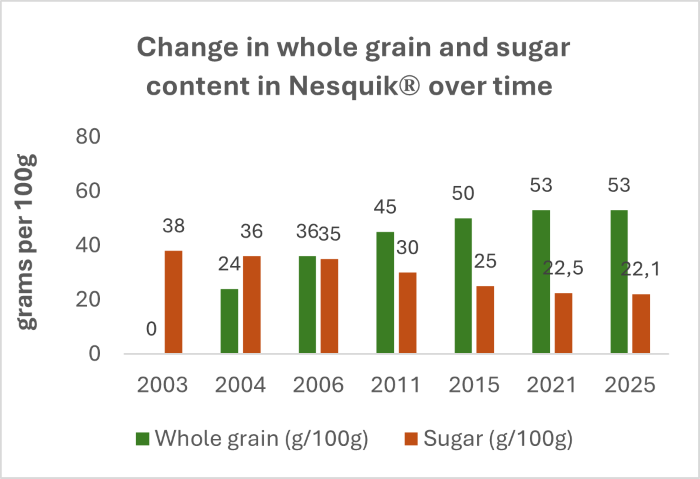
Data used in this table belongs to Nesquik recipe sold in Europe
Driving global change through collaborations
CPW’s commitment extends beyond its own brands. Since 2017, it has been an active member of the Whole Grain Initiative (WGI) - a coalition of over 50 organizations dedicated to promoting whole grains. Through WGI, CPW supports harmonized definitions, public health policies, and educational campaigns that make wholegrain accessible worldwide.
Each year, CPW plays a leading role in International Whole Grain Day, amplifying awareness through events, partnerships, and consumer engagement. This year’s celebrations include webinars on sustainable diets, policy discussions, and interactive campaigns across Europe and beyond.
Whole grains are more than just an ingredient—they’re a nutritional cornerstone and according to Global Burden of Diseases Report, low consumption of wholegrain foods ranks among the top three diet-related risk factors. Europeans average just 20–30 grams daily, far below the recommended 48–80 grams. Closing this gap could prevent millions of diet-related illnesses and ease the €1.2 trillion burden on EU health systems.
Industry plays an important role addressing this gap by providing more wholegrain options. With this purpose, CEEREAL (European Breakfast Cereals and Oat Millers Association) and FoodDrinkEurope recently joined forces to create a Wholegrain Toolkit for Breakfast Cereals incorporating case studies from industry leaders and their wholegrain expertise.
Along with nutrition and health benefits, in order to support sustainability goals, CPW is collaborating with farmers in France, Poland, the UK, Mexico, and Australia to advance regenerative agriculture—a holistic approach that restores soil health, promotes biodiversity, and strengthens ecosystem services.
Looking ahead: 2025 and beyond
As International Whole Grain Day approaches, CPW continues to set ambitious targets and inspire industry-wide change. Innovation starts with one grain, but scales through collaboration. Its partnerships with organizations like Wholegrain Initiative Platform, CEEREAL, Danish & Swedish Public Private Partnerships amplify the message that wholegrain is essential for health and balanced and more sustainable diets.
“At CPW, we believe that every bowl of cereal can be a step toward a healthier and more sustainable future. Wholegrain is at the heart of that vision, not only because it delivers essential nutrients, but because it plays an essential role across our promises for better food, better lives and better planet. From responsible sourcing to product development, policy to consumer education, CPW is part of global initiatives shaping a future where wholegrain is the easy, delicious choice for families everywhere. We are proud to lead this change and invite everyone to join us in celebrating International Whole Grain Day.”
CPW invites you to celebrate International Whole Grain Day 2025 by choosing wholegrain breakfast cereals ! You can find all the details for celebrations across the globe and the communication toolkit for you to explain the nutrition, health and sustainability benefits of wholegrains at Whole Grain Day 2025 - Whole Grain Initiative.
