
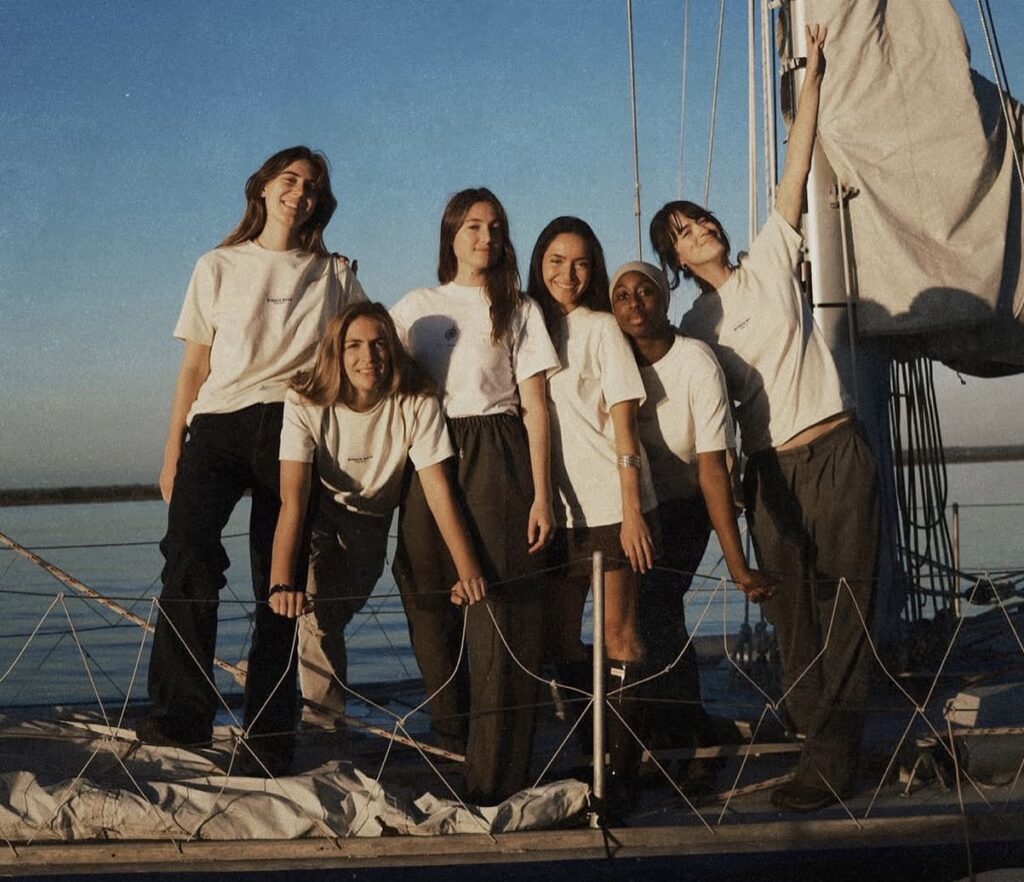
When the sailboat L’Esprit d’équipe docked in the port of Belém, in Brazil on a humid November night, the crew could hardly believe it.
After more than a month at sea – through storms, sleepless nights, but also moments of pure wonder – six young activists and four professional skippers had finally crossed the Atlantic. Their destination: COP30, the UN Climate Conference, held this year on the edge of the Amazon rainforest.
Among them was Maïté Meeûs, Brussels-based feminist and founder of Balance ton Bar and Projet Artemise, Belgian NGOs that support survivors of sexual violence. For her, this journey was as much a political act as an adventure.
"Crossing the Atlantic with women only was both intense and deeply symbolic," she says. "We wanted to embody the message we’re bringing to the COP: that women are always on the front line of crises, yet rarely at the decision table."
A 34-day odyssey across the ocean
The Women Wave Project set sail from Saint-Nazaire, France, in early October. Aboard L’Esprit d’équipe – a legendary French racing sailboat that once won a world race – the all-female crew spent 34 days navigating the Atlantic, with a stop in the Canary Islands before crossing to South America.
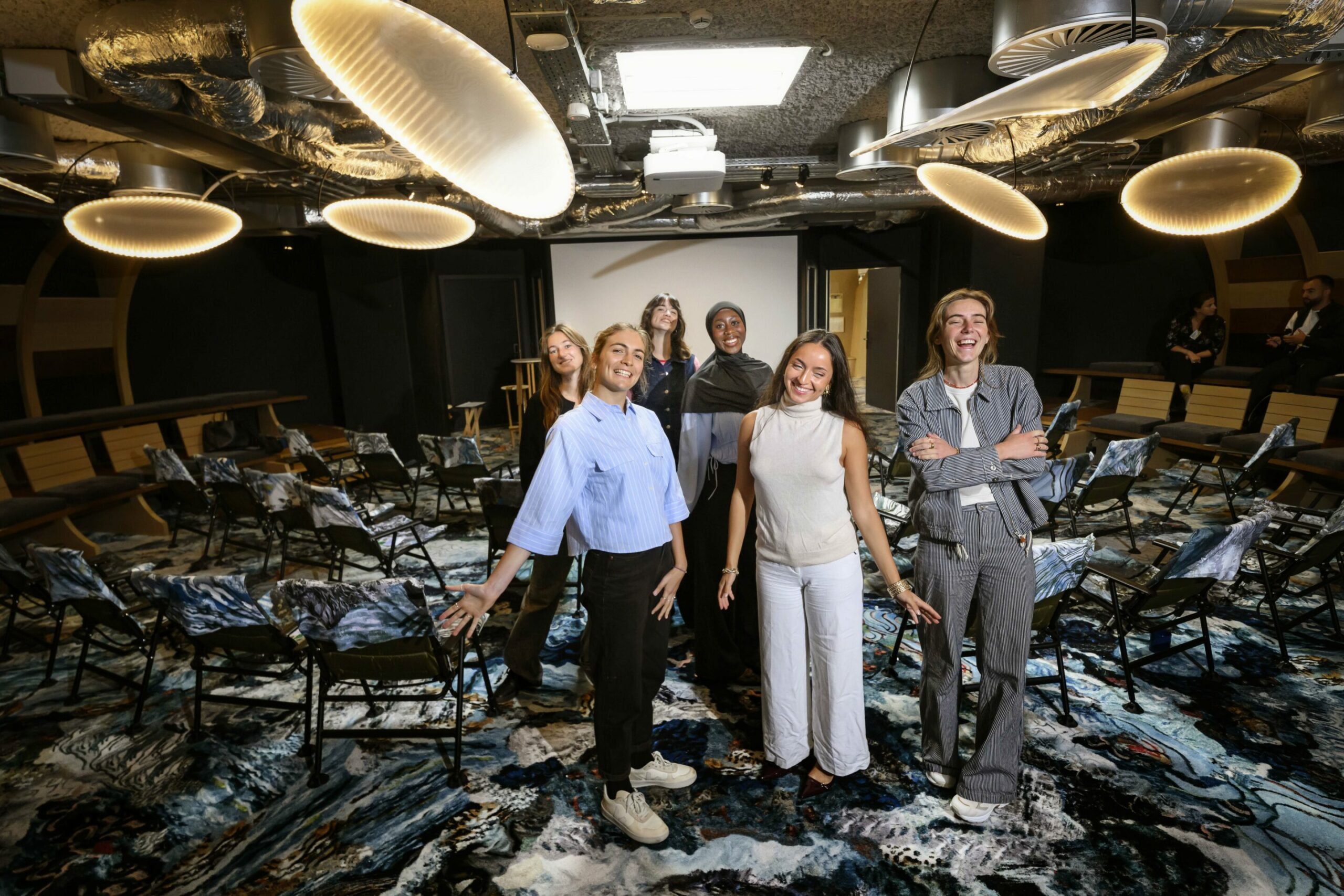
Claire Etienne, Lucie Morauw, Coline Balfroid, Mariam Toure, Maïté Meeûs and Adelaïde Charlier pictured during the official launch of the women wave project. Credit: Photonews/Philip Reynaers
"Living on a boat means adopting a completely different rhythm," Maïté explains. "We slept in two-hour shifts, shared the same tiny space, and had no showers! You laugh, you cry, you face your fears. But being surrounded by the ocean 24/7 also brings an incredible sense of peace." To wash, the women had to use buckets of seawater.
The crossing was not without its challenges. Technical issues delayed their departure, and just days before setting off, the crew had to find a new boat. "We really thought we wouldn’t make it," Maïté recalls.
“But then we found L’Esprit d’Équipe, and it turned out to be perfect. It’s a boat with history, and a spirit that matched ours.” As they neared Belém, the sailboat even had to be escorted by the Navy due to the risk of pirate attacks.
A mission rooted in solidarity and justice
The Women Wave Project brings together six activists from France and Belgium: Camille Étienne, Adélaïde Charlier, Mariam Touré, Coline Balfroid, Lucie Morauw, and Maïté.
Each member represents a different campaign, from climate justice and human rights to feminism and media activism. Together, they aim to build bridges between these different struggles.
"Our journey to Brazil is a way to link the feminist struggle with the climate movement," says Maïté. "The two are inseparable. When droughts or floods hit, it’s girls who are pulled out of school, it’s women who face hunger or violence. The climate crisis is also a gender crisis."
The group received support from Amnesty International Belgium and France, as well as various environmental and human rights networks. Their trip is part of a broader initiative to highlight the voices of women and Indigenous communities, the populations most affected by climate change, especially in the Amazon basin.
At the heart of COP30
Now in Belém, the activists will spend several weeks immersed in the twin arenas of the COP: the official "blue zone", where state delegations negotiate global climate targets, and the "green zone", open to civil society.
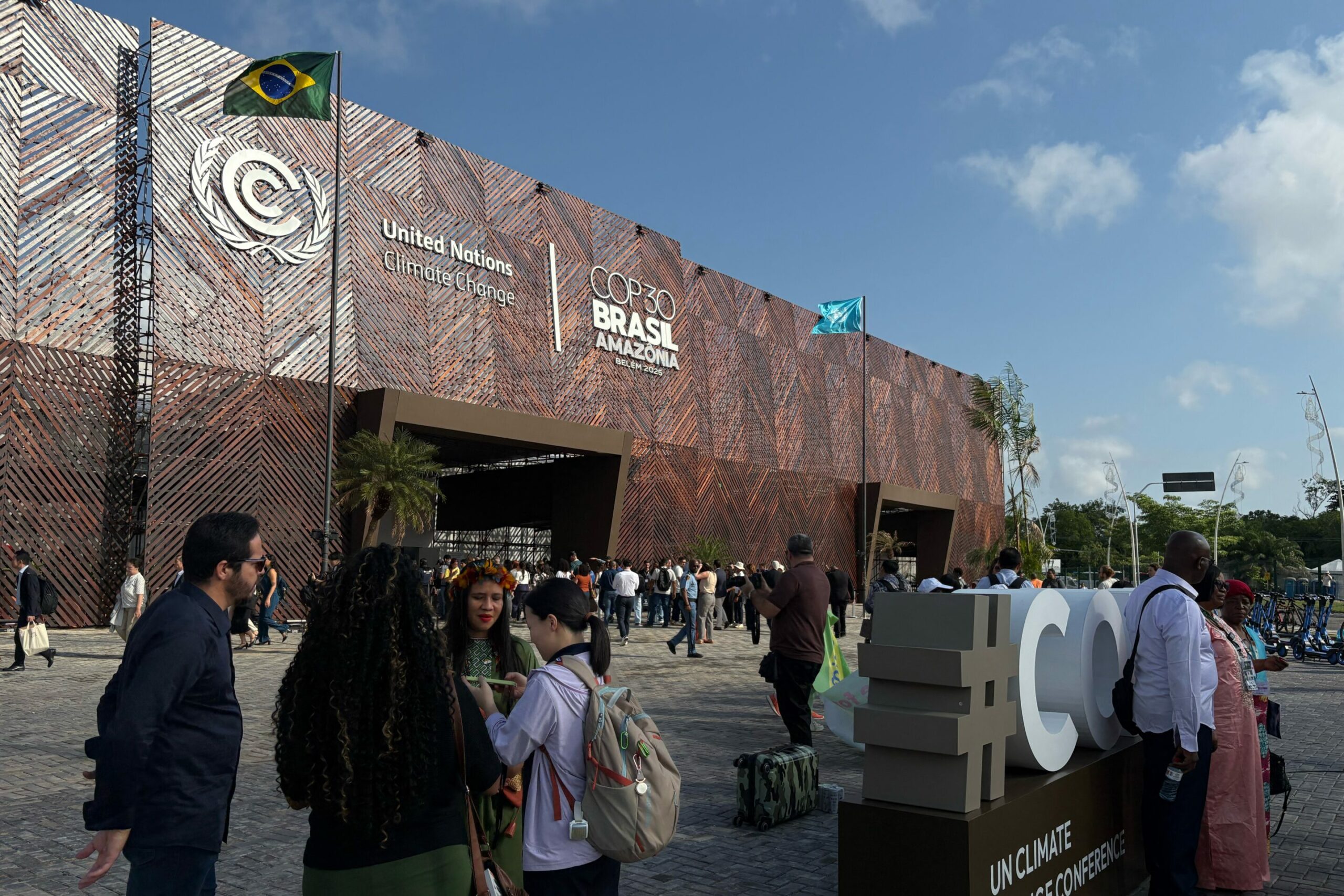
Attendees walk in front of the main entrance to the COP30 UN Climate Change Conference in Belem, Para State, Brazil on November 10, 2025. Credit: Belga / AFP
The Women Wave Project holds official accreditations within the Belgian delegation, allowing them to take part directly in high-level discussions.
"We want to bring a feminist perspective to the negotiation tables," Maïté explains. "We’ll be advocating for the end of fossil fuels, but also for social justice, for the inclusion of women and Indigenous peoples in decision-making processes."
For the six women, this Atlantic crossing was more than a voyage, it’s a statement. The Women Wave Project embodies a new generation of activism.
While the rest of the world watches from afar, these young women have chosen to take their message by wind and wave.
