
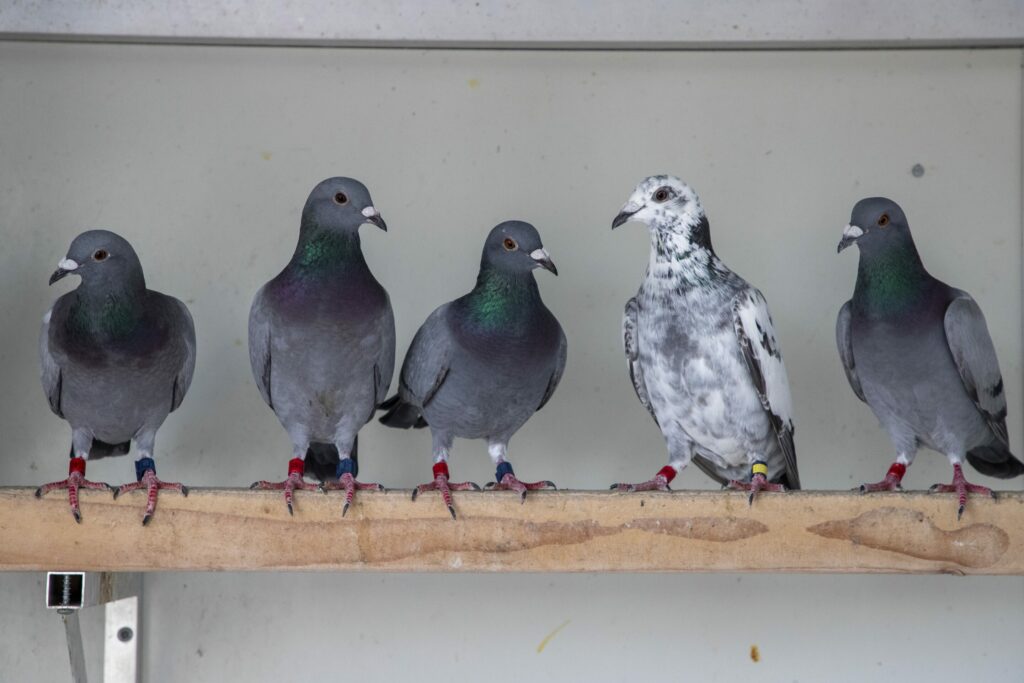
A female racing pigeon from Diest, Flemish Brabant, was sold at the end of last month for a record €400,000 at an online auction, becoming the third most expensive female pigeon ever sold, VRT reports.
Pigeon racing is a sport born in modern form in Belgium some 200 years ago, but the rise of online auctions has changed the game by opening it up to wealthy fanciers from all around the world.
The record-breaking female, New Kim 3, is related to New Kim, the world's most expensive pigeon. In 2020, New Kim was auctioned for €1.6 million, bred by a fancier from the Antwerp province.
The buyer of New Kim 3 is from China, where Belgian racing pigeons have always been highly coveted. According to auctioneer Nicolas Gyselbrecht, from the PIPA platform which organised the sale, it is not uncommon for such sums to be reached.
“In China, pigeon racing is extremely popular. Those who perform well can win large sums of money. This makes elite pigeons very valuable, a bit like Premier League stars,” he told VRT.
New Kim 3 belongs to a family from Diest, which has had an exceptional season, with four remarkable performances in just 42 days for this female pigeon. Thanks to these results, she rose to the top of the Belgian rankings for the Grande Demi-Fond, a category of Belgian pigeon racing corresponding to races over medium distances, generally between 450 and 600 kilometres.
The pigeon fancier put 18 racing pigeons up for sale via the PIPA platform, which specialises in pigeon auctions in Ghent, for a total of €523,525, with New Kim 3 remaining by far the most expensive.
However, the owners will not receive the full amount, as auction fees still have to be deducted. It is also not confirmed whether the piegon will be transferred to China, as some buyers leave their pigeons to breed in Europe via a partner, others take the risk of transport, according to Gyselbrecht.
The pigeon will also be mainly used for breeding rather than as a competitor, as the pigeons cannot race anymore as she has the instinct of returning to her original loft, meaning she would try to come back to Diest if moved.
“A female can produce up to 16 young per year,” explains Gyselbrecht. “They can then participate in races or be resold.”
