
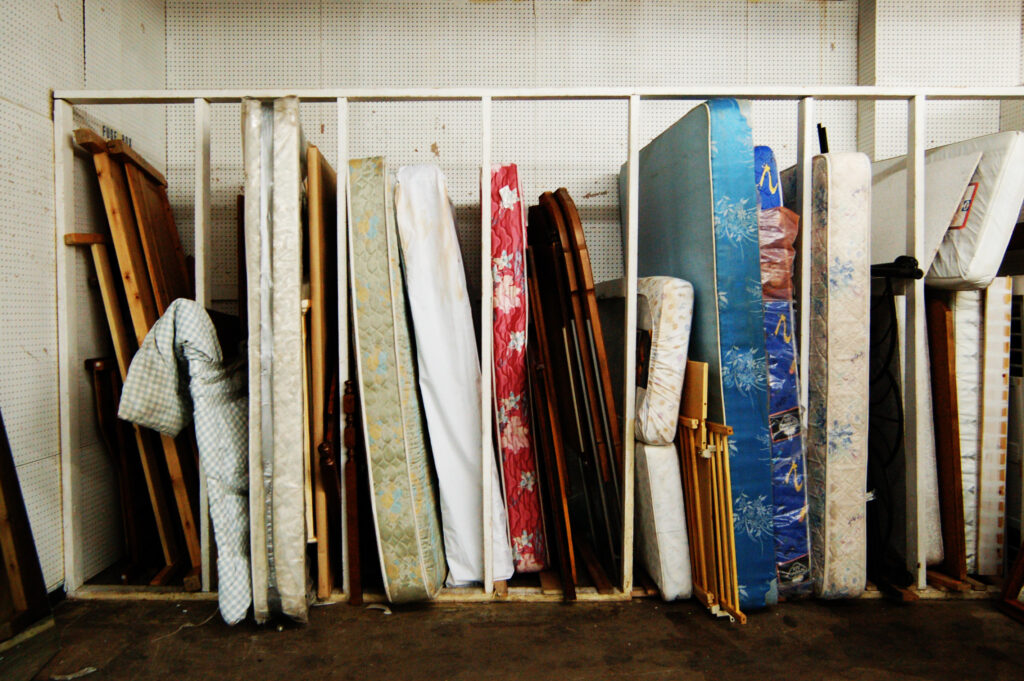
Ninety-five percent of old mattresses in Flanders are now collected selectively, up from just half three years ago, according to data requested by Flemish MP Sanne Van Looy (N-VA) from Minister Jo Brouns (CD&V).
Since 2021, producers and importers have been responsible for the costs associated with processing discarded items, marking a significant shift in how old mattresses are handled.
In 2021, 56% of old mattresses were collected as bulky waste, but by 2024 this figure has dropped to only 5%, reflecting the success of selective collection efforts.
Last year, the mattress collection rate, compared to the number of new mattresses sold, stood at 70%. However, it is unclear whether the remaining mattresses were reused or exported.
Minister Brouns highlighted the challenges in meeting the goal to reuse or recycle 75% of old mattresses by 2030, noting that 25% of a mattress’s weight is made up of textiles, which are currently not cost-effective to recycle.
Sanne Van Looy said producer responsibility is driving innovation and investment in recycling, with the aim of achieving 80% selective collection and 75% recycling or reuse by 2030.
Van Looy added that while recycling mattress textiles remains a major challenge, it also presents opportunities. Continued investment in recycling technologies and fostering a stronger entrepreneurial climate could further strengthen Flanders’ position as a recycling hub in Europe.
