
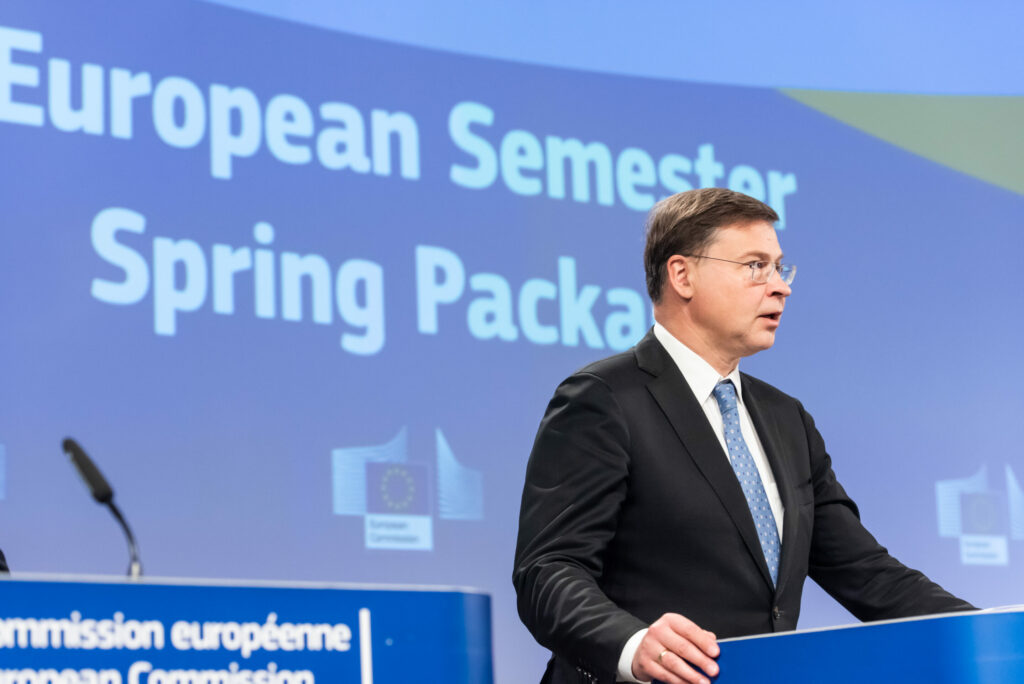
The European Commission will publish its annual stocktake of the EU’s socio-economic landscape and provide country-specific guidance to its member states this week. Here’s what the European Semester is all about.
When the European Union sets rules, regulations, directives and priority policies, there needs to be coordination among the 27 countries that make up the bloc.
If Brussels policy- and lawmakers want the Union to achieve certain objectives, then everybody has to be singing from the same hymnsheet. Or at the very least, reading from the same book of songs.
That means budgets, spending and fiscal policies need to be aligned as closely as possible. In order to do this, the European Commission issues twice yearly guidance and recommendations as part of the European Semester.
Next week, the cycle kicks off with the Autumn Package and will be followed up in the Spring with more advice for national governments.
The Commission basically analyses how countries economic plans to see where spending is earmarked, which policies are being prioritised and where improvements can be made. This is then cross-referenced with the overall EU policies that governments have endorsed.
Country-specific reports are then issued to each of the 27 member countries and an alert mechanism is also published, including the key risks and threats the Commission believes could hamper economic and social growth.
The recommendations the Commission issues are strictly-speaking not binding; however, countries are expected to take them into account when drawing up their economic plans. Certain aspects of the Stability and Growth Pact though are mandatory.
This particular edition of the European Semester is seen as being particularly noteworthy as it is the last instalment before the next long-term budget is due to kick in at the beginning of 2027.
National governments, the European Parliament and the Commission will be kept busy over the next 12 months attempting to negotiate the scope of the multiannual financial framework and the priorities it should address.
