
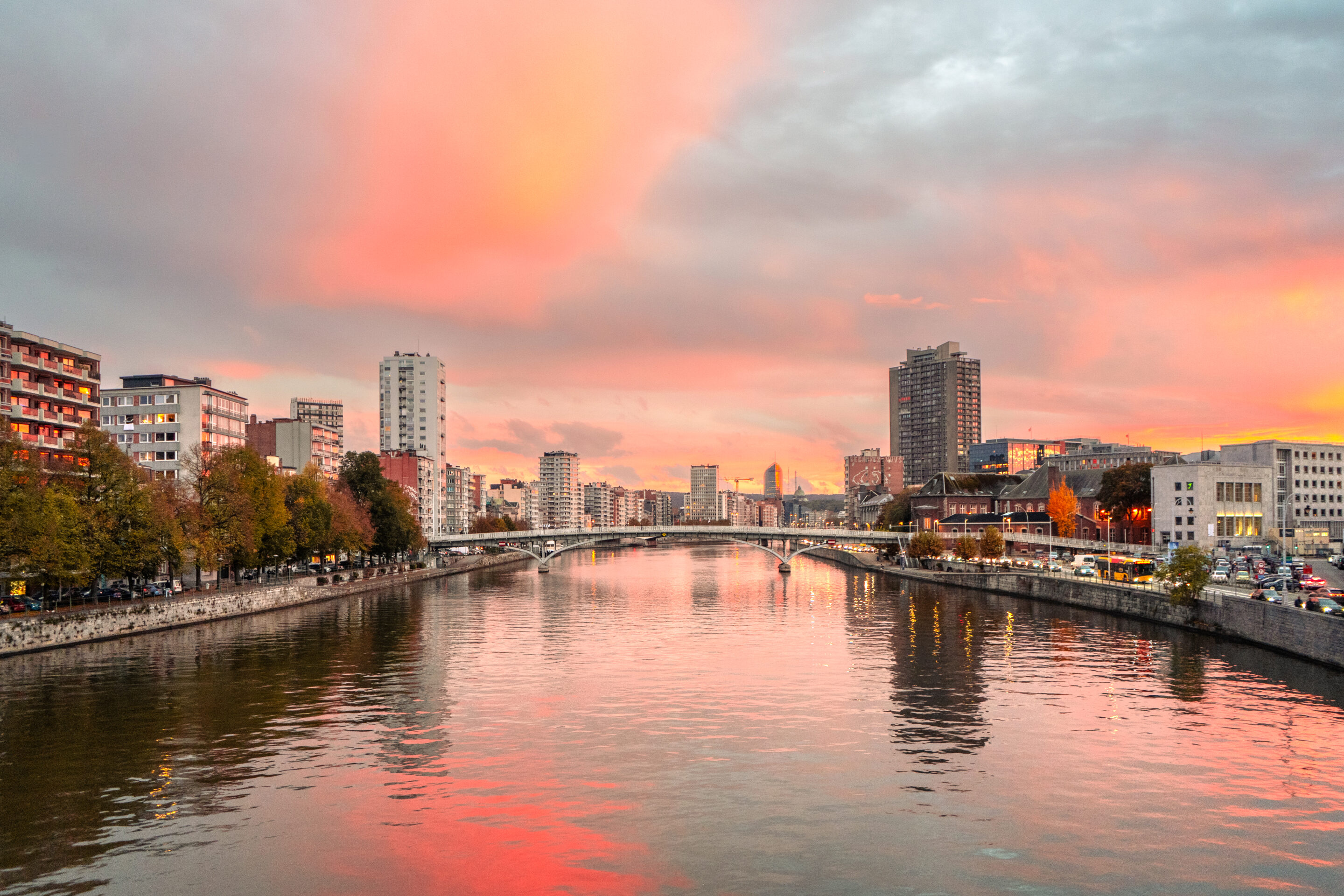
As winter settles over Belgium and city squares begin to glow with festive light, Liège quietly emerges as one of the country’s most atmospheric seasonal escapes.
Often overshadowed by Brussels, Antwerp or Bruges in international travel guides, Wallonia’s largest city has a character all its own—warm, welcoming and irresistibly lively. And there is no better moment to experience it than during its famous Village de Noël, one of the oldest and most beloved Christmas markets in Belgium.
For travellers unfamiliar with Wallonia, Liège is a gateway to the French-speaking south: a dynamic, walkable city perched along the Meuse River, with a proud industrial heritage, a flourishing cultural scene and a culinary tradition that rewards every curious visitor.
Spending a weekend here in December offers a concentrated dose of festive charm, local flavour and urban energy—enough to make even a shortstay feel like a genuine discovery.
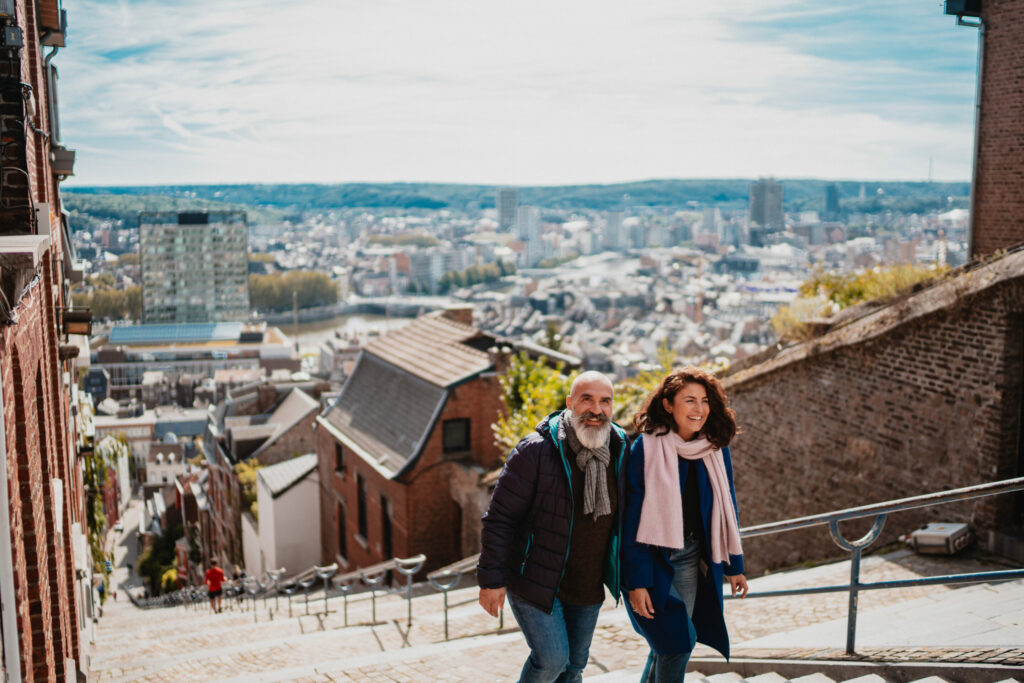
Copyright - City of Liège - Maxime Flagothier
A Christmas village with local spirit
Liège’s Christmas market isn’t just a collection of wooden chalets. It is a full-fledged “village” that sprawls across Place Saint-Lambert and Place du Marché, complete with a city hall, its own traditions and a sense of community that sets it apart from the more tourist-heavy markets in northern Europe.
ill find over 200 chalets, each offering something different: artisanal crafts from Walloon creators, handmade decorations, winter accessories, and plenty of regional food specialties.
Whether it’s a steaming cup of péket—Liège’s traditional juniper spirit—sipped around a convivial fire pit, or a portion of tartiflette savoured beneath strings of festive lights, the atmosphere remains deliciously authentic.
Children and adults alike flock to the ice rink, while the Ferris wheel offers panoramic views over the glowing rooftops. As evening falls, the entire market transforms into a cosy labyrinth of scents, sounds and colours.
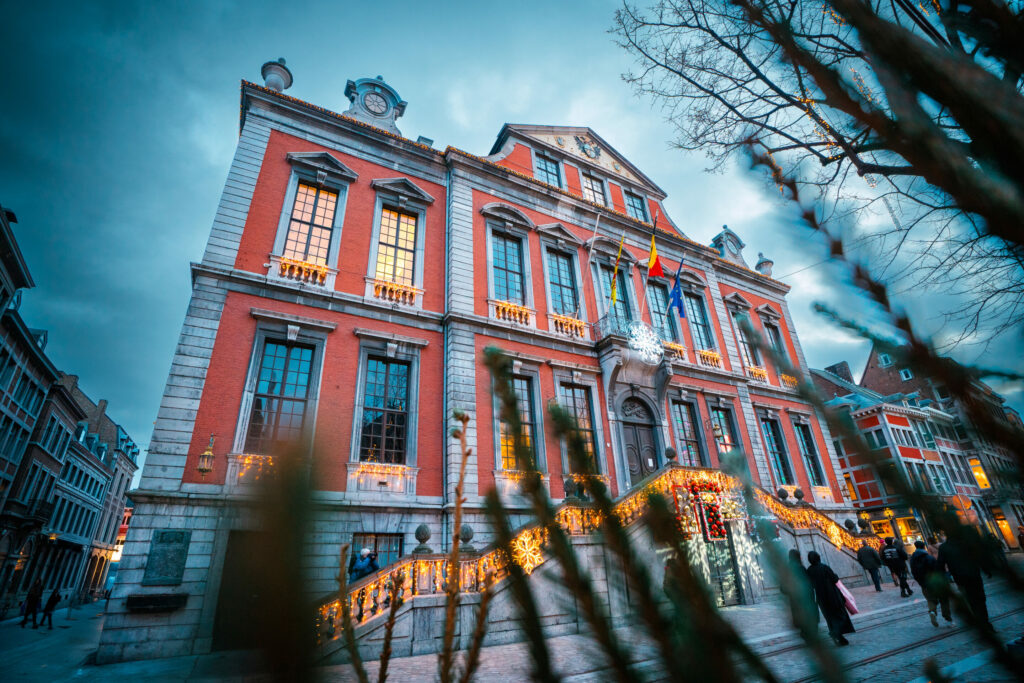
Copyright - WBT - Maxime Flagothier
Exploring the city between festive moments
Liège invites wandering. Much of the city centre is pedestrian, and the compact layout makes sightseeing easy, even in winter. Start by walking along the Meuse, where modern architecture contrasts with historic quays and bridges, then continue toward the Collégiale Saint-Barthélemy.
Famous for its red-and-white Romanesque towers and its 12th-century gilt-bronze baptismal font, the church is one of the city’s architectural treasures and a striking reminder of Liège’s medieval power. A few steps away rises the monumental Palais des Princes-Évêques, its elegant courtyards and vast façade recalling the political might of the former Prince-Bishopric.
From here, cultural highlights unfold easily on foot. The Opéra Royal de Wallonie–Liège, a beautifully restored 19th-century opera house, stands as one of Belgium’s major stages and often twinkles with activity during the festive season.
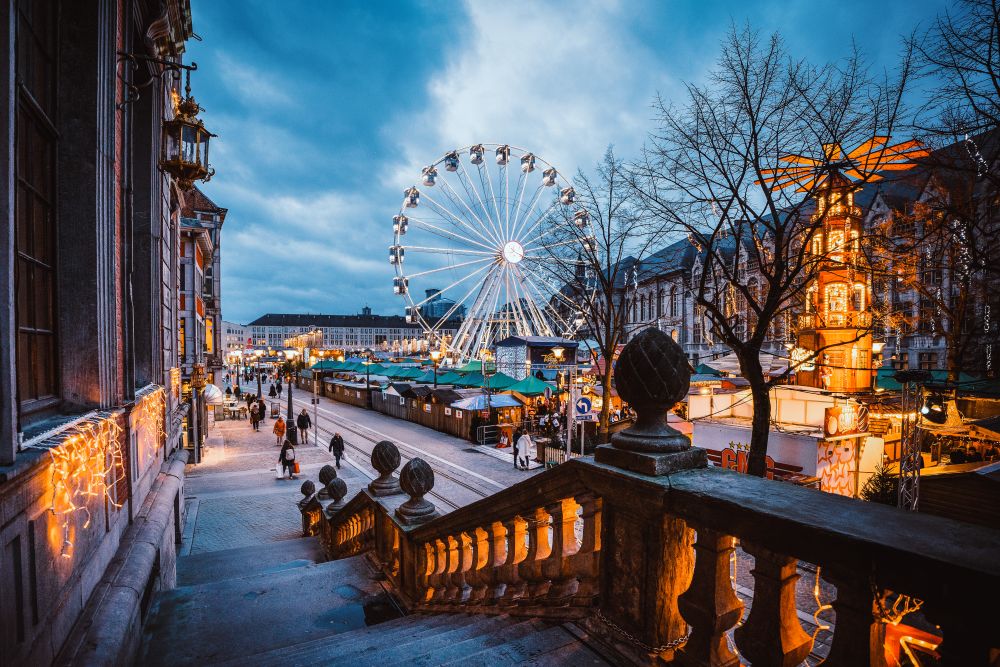
Copyright - Ville de Liege - Maxime Flagothier
Crossing the river brings you to La Boverie, a striking museum set in a landscaped park between two arms of the Meuse. Its collections range from fine arts to contemporary exhibitions, and its connection to the city’s modern quarter via the Santiago Calatrava designed footbridge makes the journey part of the experience itself—a blend of serene river views and forward-looking architecture.
These stops pair naturally with the city’s classic sights. The Montagne de Bueren, the iconic 374-step staircase, invites determined climbers to ascend for sweeping views over the rooftops. The Grand Curtius Museum, a vast complex showcasing archaeology, decorative arts and weaponry, offers an engaging indoor retreat, while the Musée de la Vie Wallonne reveals the traditions and stories of the region.
And in the heart of it all, the Gothic Saint-Paul Cathedral provides a moment of quiet contemplation before diving back into the bustling streets.
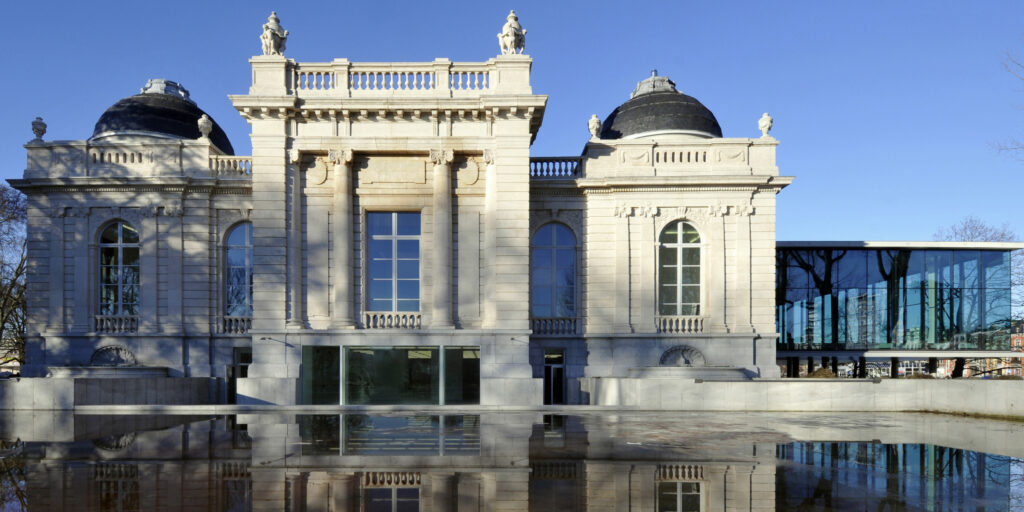
Copyright - City of Liège - Maxime Flagothier
A weekend of food, festivity and friendly encounters
No weekend in Liège is complete without indulgence. The city is famously generous at the table, and its cuisine keeps visitors pleasantly warm. Breakfast is the perfect time to taste a true Liège waffle—denser, caramelized and utterly addictive. Later, cafés and brasseries invite travellers to linger over local comfort dishes: hearty 'boulets à la liégeoise' in rich sauce, crisp fries or winter stews.
Around the Christmas market, the food stalls provide a tempting excuse to snack constantly. Try raclette scraped directly from the wheel, artisanal chocolates, or the popular 'lacquemant', a thin wafer filled with sweet syrup, a Liège fairground specialty.
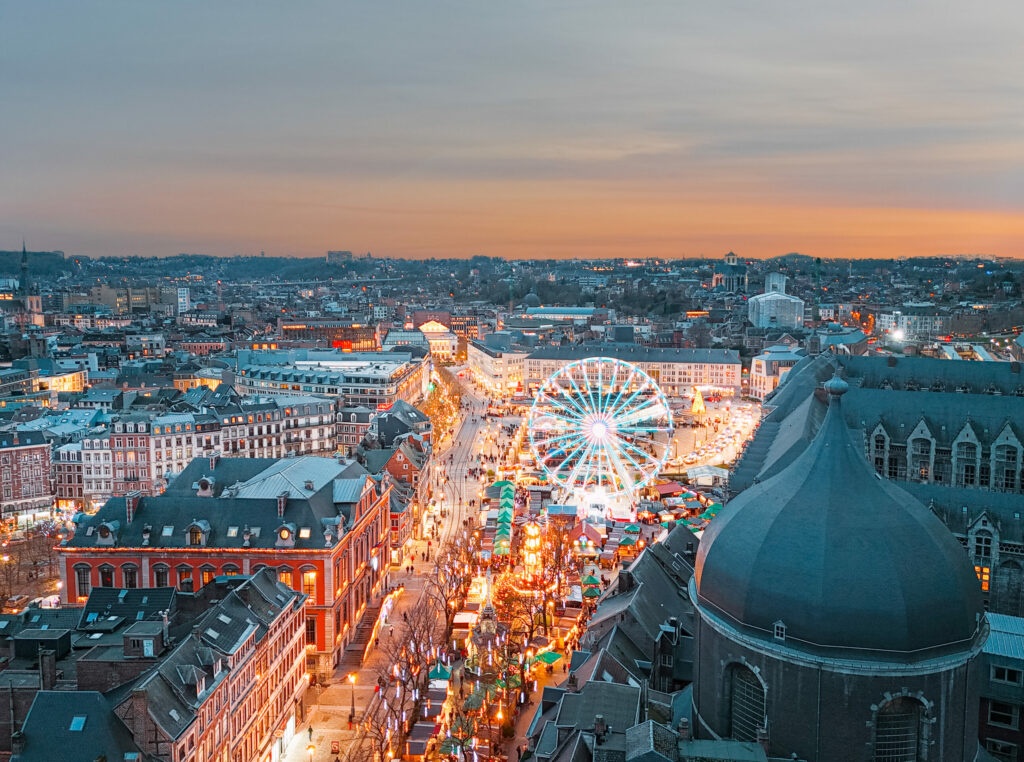
Copyright - WBT - Maxime Flagothier
Where to stay in Liège
Liège offers a wide range of accommodation options suited to every style of traveller. Visitors looking to stay in the heart of the action will find modern hotels and boutique addresses around the city centre, just steps from the Christmas Village and key cultural sites.
Along the Meuse, several riverside hotels offer spacious rooms with peaceful views, ideal for unwinding after a festive day out. Those seeking a more intimate atmosphere can opt for charming guesthouses tucked into historic neighbourhoods.
A gateway to Wallonia for curious travellers
For visitors who have never ventured beyond Brussels, Liège offers a revealing introduction to Wallonia’s blend of culture, hospitality and landscape. Just 40 minutes from the capital by train, it is an easy and refreshing escape.
Many travellers extend their stay to explore the surrounding region. But even within the span of a single weekend, Liège delivers an experience large enough to feel like a genuine getaway.
To prepare your visit and discover even more treasures in Wallonia, visit VISITWallonia.be/en/liege
