

The number of HIV diagnoses among Belgian men continued to increase in Belgium in 2024, both among men who have sex with men and among heterosexual men, the national health institute Sciensano reported on Thursday.
In 2024, 662 new HIV diagnoses were recorded in Belgium, which corresponds to an average of 1.8 new diagnoses per day – 2% more than the previous year, says Sciensano.
People who receive the diagnosis have diverse profiles, but the epidemic primarily affects Belgian men who have sex with other men, and Sub-Saharan African heterosexual men and women.
In 2024, 289 men who have sex with men received an HIV diagnosis in Belgium, the same number as in 2023. However, it is striking that the number of diagnoses in Belgian men who have sex with other men increased by 15%.
Brussels disproportionally affected
Last year, 332 new HIV diagnoses were made among heterosexuals, a 3% increase compared to 2023. The number of diagnoses remained stable among Belgian women, but decreased among women of a different nationality. The number of diagnoses increased among men, with a 33% increase among Belgian men.
The Brussels-Capital Region remains disproportionately affected by the HIV epidemic: the number of HIV diagnoses per capita in Brussels is almost three times the national average. A similar trend is also observed for other sexually transmitted infections, according to Sciensano.
Additional efforts are needed to reduce the HIV epidemic in Belgium, the health institute stressed. Sciensano emphasised the importance of action on multiple fronts and with multiple prevention strategies: condom use, regular testing, treatment to prevent sexual transmission, and preventive medication.
The health institute recommends addressing structural barriers such as social norms, peer pressure, and cultural perceptions of sexuality. It also recommends implementing a more intensive HIV testing strategy in severely affected areas, such as Brussels.
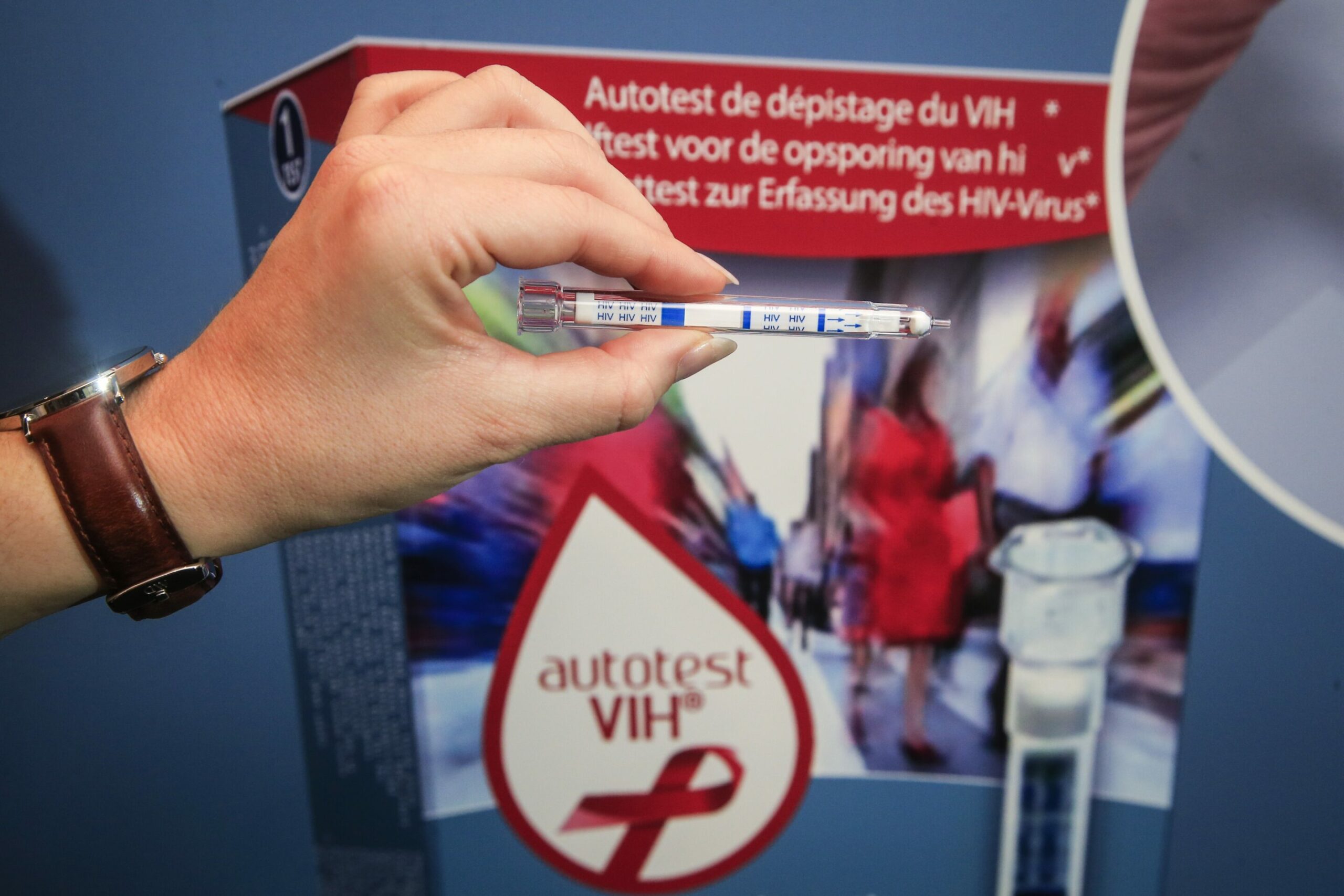
HIV autotest. Credit: Belga/Thierry Roge
The increase in the number of new diagnoses, including among heterosexual men, is striking, says the Flemish expertise centre for sexual health Sensoa. "We need to know more about who these people are and what opportunities they missed to obtain information about prevention."
In recent years, Sensoa has made extra efforts to inform men who have sex with men about PrEP – the medication that prevents HIV transmission.
The increase in PrEP users reported by Sciensano is a boost, says Sensoa. For other groups, such as people from African communities, Sensoa is making extra efforts this year to increase awareness of PrEP and its benefits in those communities.
The organisation is urging the Federal Government to make additional efforts to make PrEP more accessible, for example, through general practitioners.
