
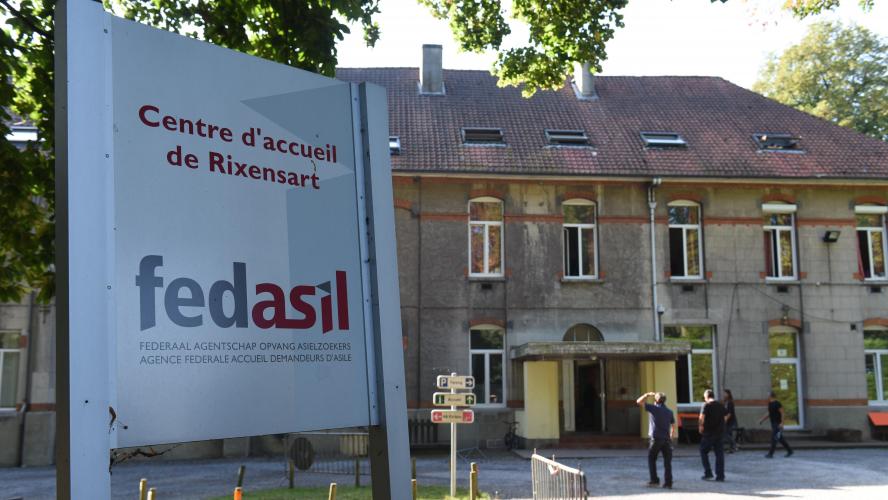
Of the 105 reception centres for asylum seekers, one-fifth do not meet the minimum standards that Fedasil (the federal agency responsible for the reception of asylum seekers) imposes on itself and other operators. Of the 40 centres operated by Fedasil itself, half do not meet their own minimum standards.
This was revealed in figures obtained by De Standaard on Friday.
In principle, each resident must have at least 4m² of sleeping space, and each room must be at least 8m². Each family must have a separate room.
Last year, in half of the centres operated by Fedasil, several families shared a room. Sometimes this is the only way to guarantee that every family can get a place, said Fedasil spokesperson Benoit Mansy.
Fedasil also reports that it struggles with the separate housing of unaccompanied minors, the cleanliness of rooms and common areas, outdated infrastructure, and child safety in older buildings.
After an annual inspection, a report is issued with concrete recommendations. The agency also identifies the centres with the greatest risks, which it then tries to address as a priority.
High-quality reception
Fedasil cannot say how often the standards are not met in how many centres. Nor can it disclose the precise minimum standards: annual reports are not available for public review. Information about the situation in the 65 other centres run by external partners is difficult to obtain and is intended for internal use, the agency stated.
"We take the report from the Children's Rights Commissioner (which denounces the conditions) very seriously and are in close consultation with Fedasil on this matter," said Asylum and Migration Minister Anneleen Van Bossuyt (N-VA).
She says that within the asylum reception network, a great deal of attention is paid to the well-being of the most vulnerable, but also acknowledges that conditions are not ideal everywhere.
"This is a consequence of the prolonged reception pressure that the centres have had to bear in recent years. Thanks to our crisis measures in recent months, the influx is decreasing, and that pressure is finally easing. This will create more space in the long term for high-quality reception for those who are entitled to it."
"When reducing the number of reception places, we will also consciously consider vulnerable profiles such as children. In the future, they would be accommodated in smaller and more adapted centres," said Van Bossuyt.
