
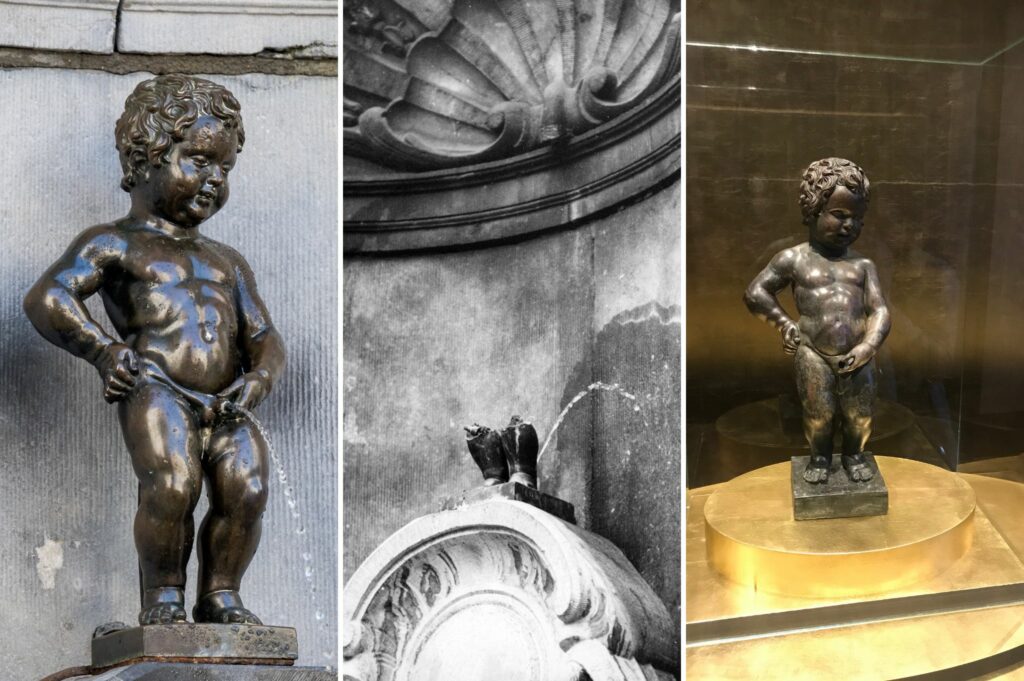
Few know that the popular Manneken-Pis, visited by thousands of tourists every year, is not the original version.
Sixty years ago this month, in 1965, the precious pissing boy was stolen in the middle of the night.
Brussels awoke on a cold November morning to find the statue had not only been stolen, but also damaged – the vandals had ripped it off its pedestal from the ankles up, leaving only his little feet.
A desperate search was conducted, but the police struggled to locate it. It would not be until a year later that it was found at the bottom of the Charleroi-Brussels canal. The Antwerp magazine De Post had received an anonymous phone call, stating where the bronze boy statue was.
The following day, they sent divers to retrieve it, finally fishing him out on 27 June 1966. Once restored, the original was placed inside the Maison du Roi in the Grand-Place, which today people can visit as part of the City of Brussels Museum.
Yet throughout its history, the Manneken was subject to numerous theft attempts. The first documented kidnapping was undertaken in 1747 by a group of French soldiers garrisoned at Brussels.
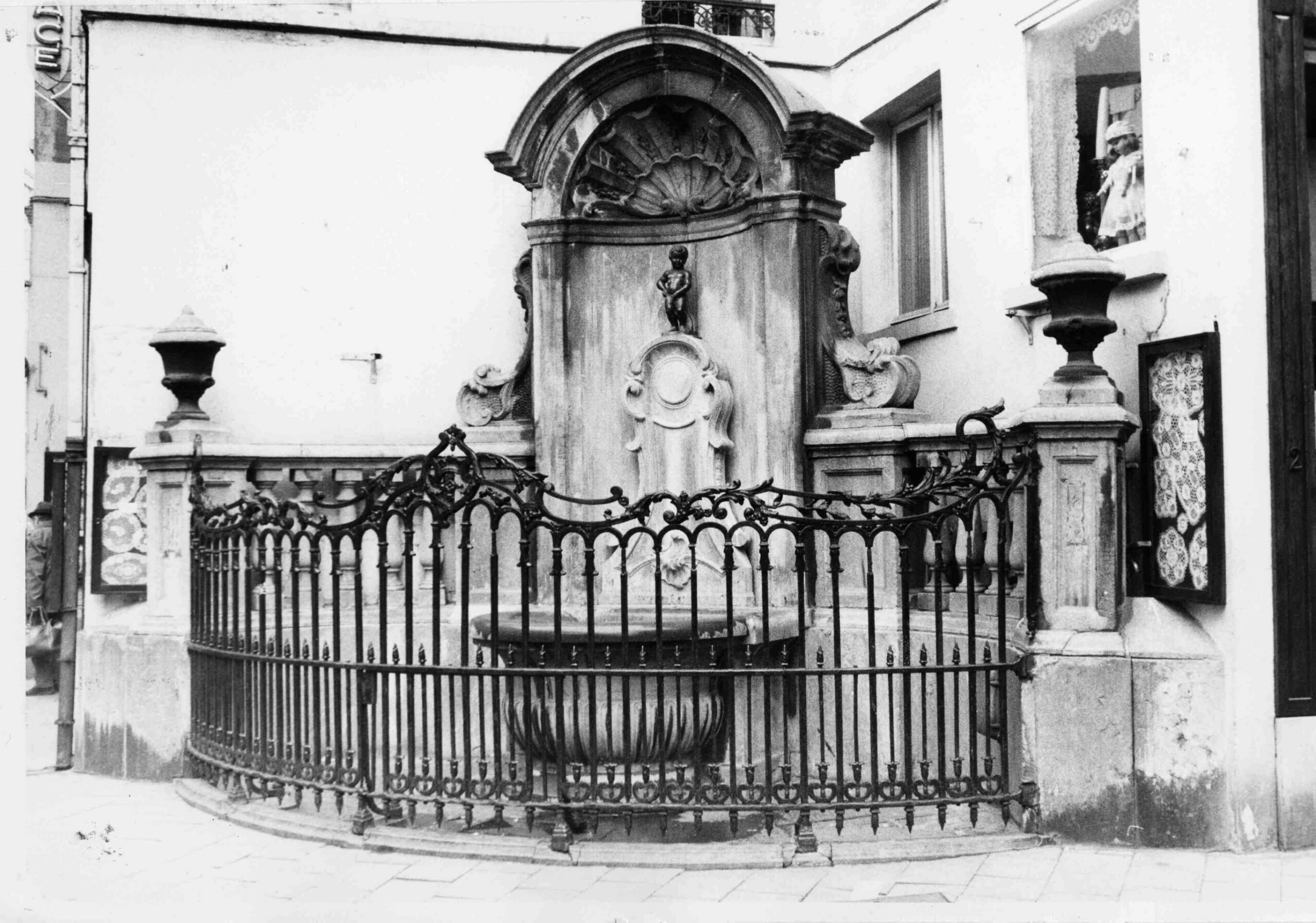
Manneken-Pis in 1975. Credit: Belga Archives
The statue was also stolen in 1817 by a convict, who was heavily punished and sentenced to forced labour for life, having been first tied for an hour to a straitjacket on the Grand-Place. The original had been broken into 11 pieces, and was restored by a specialised welder under the supervision of the sculptor Gilles-Lambert Godecharle.
In the 20th century, there were other attempts in 1955, 1957 and 1963. Yet the incident two years later, in 1965, remains the most significant and damaging episode in its history, causing the original to be shelved away inside the city museum.
Legends and folklore
The original dates from 1619, even if there was a first mention of a previous version as early as 1451. It served as a water point for Brussels’ inhabitants until it received a protective fence in the 1850s, still in place today.
The original was sculpted by Jérôme Duquesnoy the Elder, a Baroque sculptor originally from the Spanish Netherlands. There are various legends behind the legend of the Manneken-Pis.
It is said that, by urinating on it, a child extinguished the fuse of a bomb placed by Brussels' enemies who wanted to set fire to the city. Or the story of a boy who peed on a witch, who was so angry she turned him into a statue.
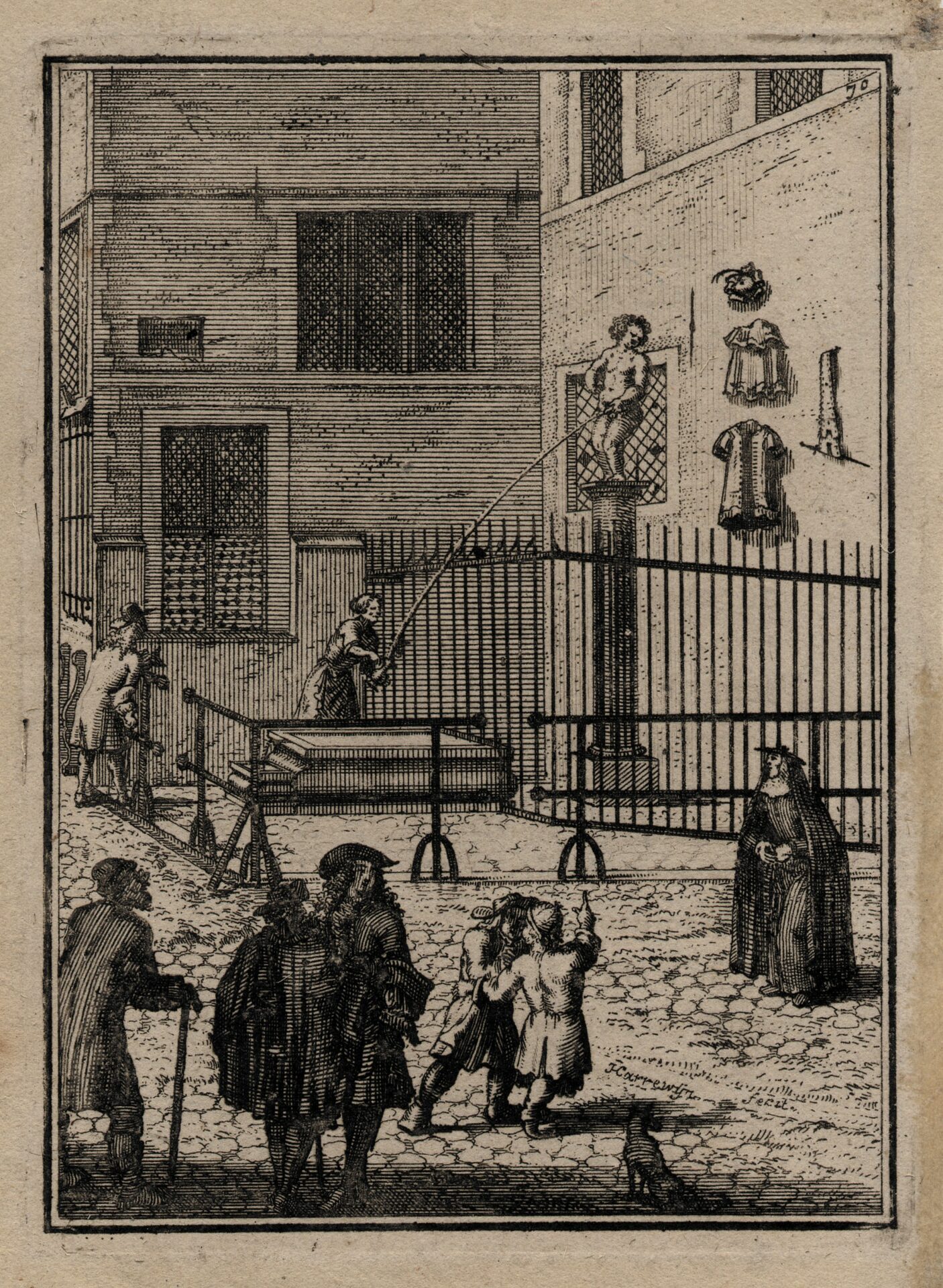
Manneken-Pis 1697. Gravure de J. Harrewijn.
Another marks the story of Godfrey III of Louvain when he was still a child in 1142. According to the tale, someone hung up the young duke's cradle on a tree during a battle, from which he stood up and urinated off the side. This gave inspiration to the ducal troops, who were under attack and eventually defeated the insurgents.
The self-deprecating nature of the statue has always represented the folk humour of Brussels, known locally as Zwanze, as well as embodying the typical Belgian spirit and identity, known as Belgitude.
Today, the version seen in its original location is a bronze replica that has been there since the infamous incident in 1965. It has become a major tourist attraction, symbolising both Brussels and Belgium.
