

Nearly all women in Belgium have experienced sexism at school or in the workplace, and almost as many men say they have witnessed it, according to new research by JUMP, a European gender-equality organisation.
The survey, published on Monday, found that 98% of women had faced sexist behaviour, while 97% of men had observed it.
JUMP gathered responses from 4,000 women and 1,000 men in Belgium and France. Despite greater awareness in the wake of the #MeToo movement, the group says inappropriate jokes and comments remain largely normalised in Belgian culture.
Two in three women report that sexism is as frequent as ever, or becoming more so. Almost half of men agree. Four in five young women view sexism as a very serious issue.
The study suggests France is faring better: both employers and employees there are reportedly more adept at identifying and reporting sexism.
They are supported by a legal framework that requires workplaces to have formal reporting procedures. This, says JUMP's Filip de Groeve, has influenced French workplace culture. The organisation argues that Belgium should adopt similar legislation.
Norms trivialise gender-based violence
Another new study by Plan International released on Monday, ahead of the International Day for the Elimination of Violence Against Women, has found that deeply-rooted gender norms perpetuate violence and restrict girls’ freedoms worldwide.
The report, titled "We Shouldn't Have to Walk with Fear", highlights how ingrained sexist stereotypes continue to shift responsibility for violence, including sexual abuse, onto its victims.
The study tracked 142 girls from birth to age 18 across nine countries and found that 91% reported experiencing some form of violence.
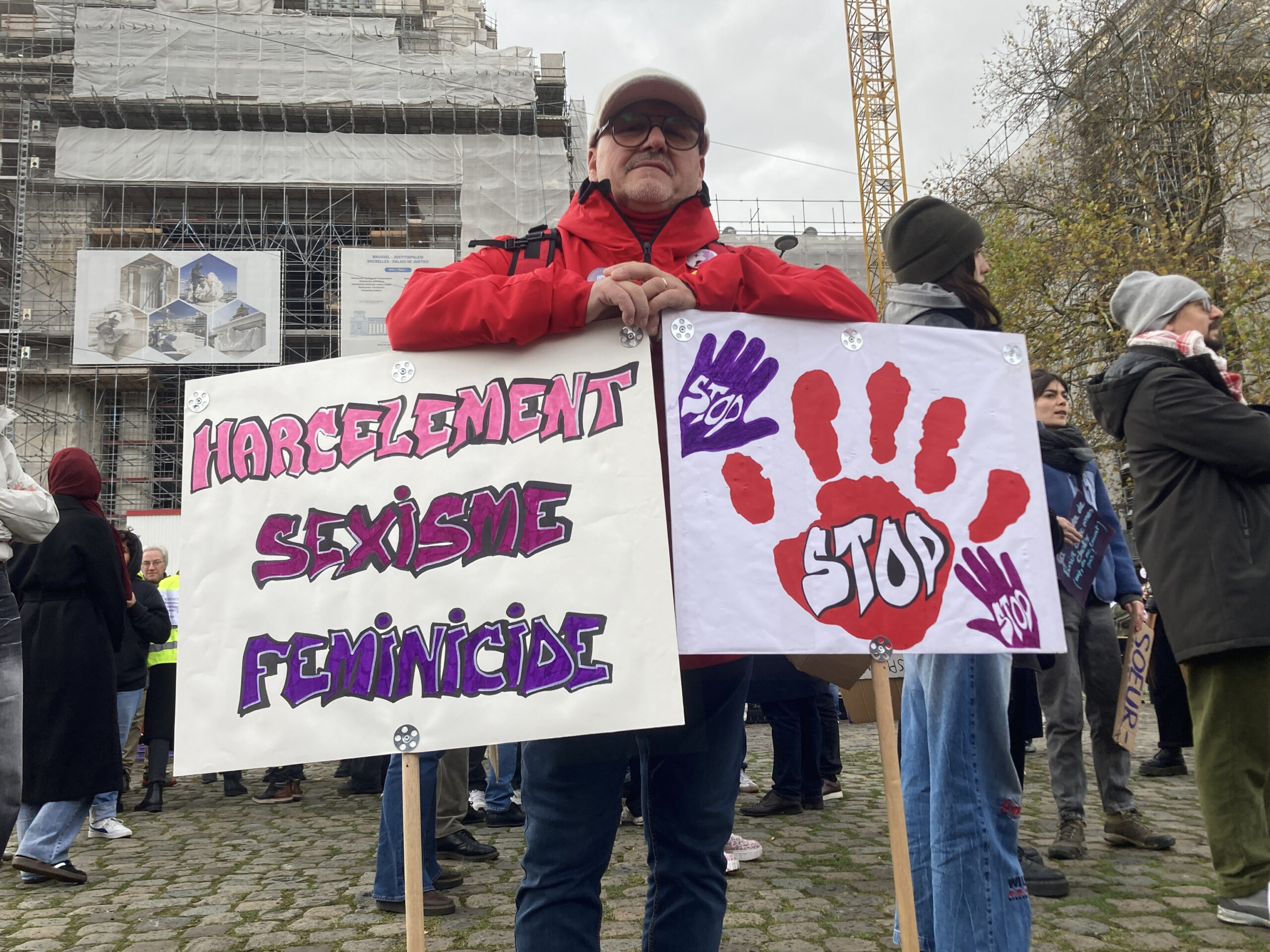
A national demonstration against violence against women organized by the Mirabal platform, in Brussels, Sunday 24 November 2024. Credit: Belga / Lou Lampert
During adolescence, many girls perceive male aggression as an inevitable part of life. Among those aged 14–15, 68% identified such behaviour as “normal,” while 57% believed it was their responsibility to protect themselves from abuse.
"Adolescent girls shouldn’t live in constant fear – they should be enjoying life," said Isabelle Verhaegen, director of Plan International Belgium, adding that Belgium faces similar challenges. "We remind our daughters to be cautious when going out and tell our sons to enjoy themselves. This shouldn’t be normalised."
The organisation is urging stronger efforts in education, prevention, and awareness as the report coincides with the start of the "16 Days of Activism Against Gender-Based Violence," an annual campaign led by UN Women which runs until Human Rights Day on 10 December.
Plan International emphasises that engaging girls in efforts to combat violence is crucial for shifting societal attitudes and breaking the cycle of victim-blaming.
Belgium has joined the United Nations campaign to end digital violence against women and girls, warning of a growing threat and pledging active efforts to tackle the issue.
Its diplomatic network is participating through actions at its embassies worldwide. Digital harassment and hate speech significantly impact the lives of women and girls, Foreign Affairs highlighted, restricting their involvement in public and political discussions.
