
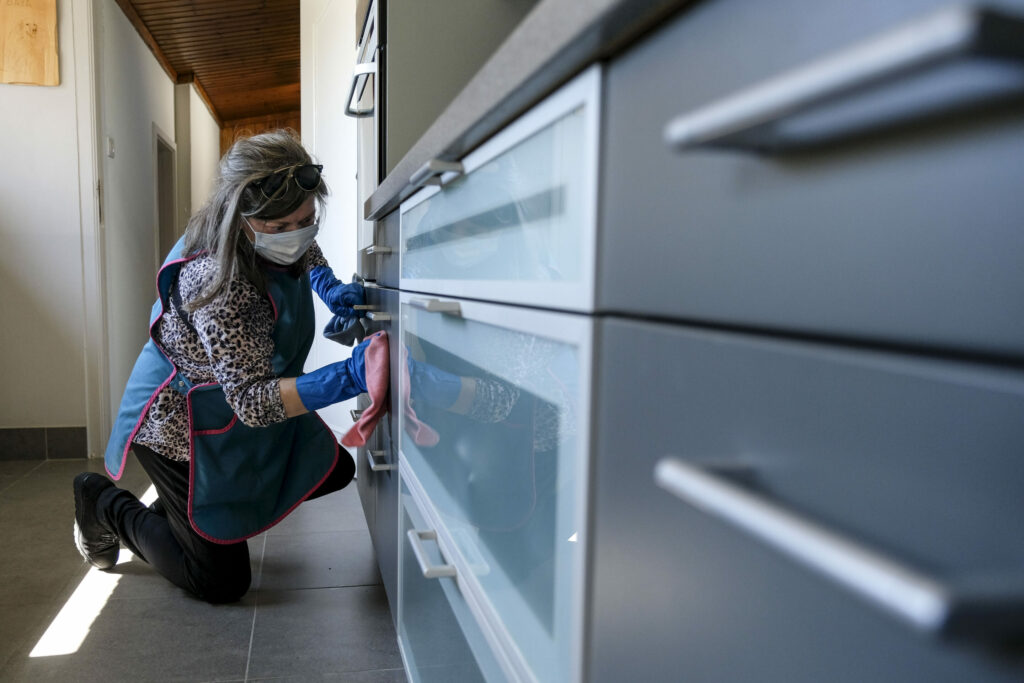
The price of service vouchers in Brussels will rise from 2026, in line with a hike in domestic workers' wages.
The Brussels Parliament’s Economic Affairs Committee approved two ordinances on Wednesday aimed at increasing wages for domestic service workers in the region by €0.77 per hour.
This will bring them in line with workers in Wallonia and Flanders, which has been the cause of numerous protests in last months.
The increase follows a prior agreement between the two other regions, which excluded Brussels.
The first ordinance will eliminate tax reductions for service vouchers from next year, saving the region an estimated €19 million by 2028.
The second ordinance will raise voucher prices starting 1 January 2026, with amended rates agreed upon by supporting parties.
The cost will increase to €11.40 per voucher for the first 300 and €14 for the next 200, compared to current rates of €10.20 and €12.40, respectively.
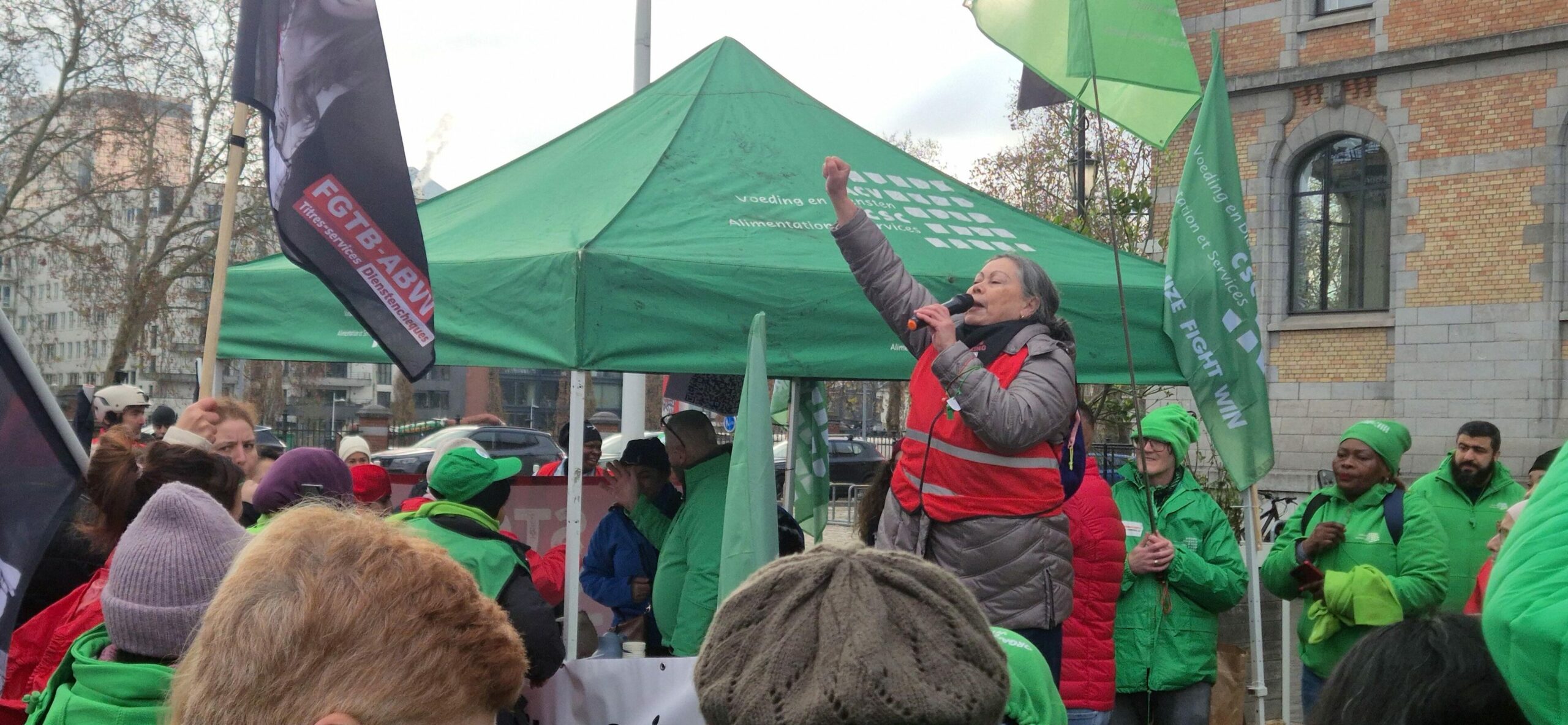
Domestic workers hold a protest action at the headquarters of the Federgon sector organization in Brussels on Wednesday 26 November 2025. Credit: Belga/Timon Ramboer
Initially, French-speaking centrists DéFI had proposed raising prices to €15 beyond the first 300 vouchers, but a compromise was reached. The ordinance also introduces liberalisation of additional fees, requiring companies to justify them.
Jonathan de Patoul, one of the deputies behind the legislation, stated the approved text fully addresses social partners’ demands, with a sector meeting planned for next Wednesday.
The ordinances will be discussed during the plenary session on Friday, 12 December.
Employment Minister Bernard Clerfayt (DéFI) expressed optimism about achieving a swift social agreement under similar terms as Wallonia and Flanders.
The measures received broad support in the committee. However, liberals MR voted against, claiming the changes pose risks to the system, while Flemish nationalists N-VA abstained.
MP Clémentine Barzin (MR) warned of a "pricing shock" and argued the reforms threaten the service voucher framework.
The Francophone liberals had proposed their own amendment, suggesting a €0.77 price increase paired with a reduction in tax benefit rates from 15% to 10%.
